

50 pence – Falkland Islands
Add to wishlist
United Kingdom
Context
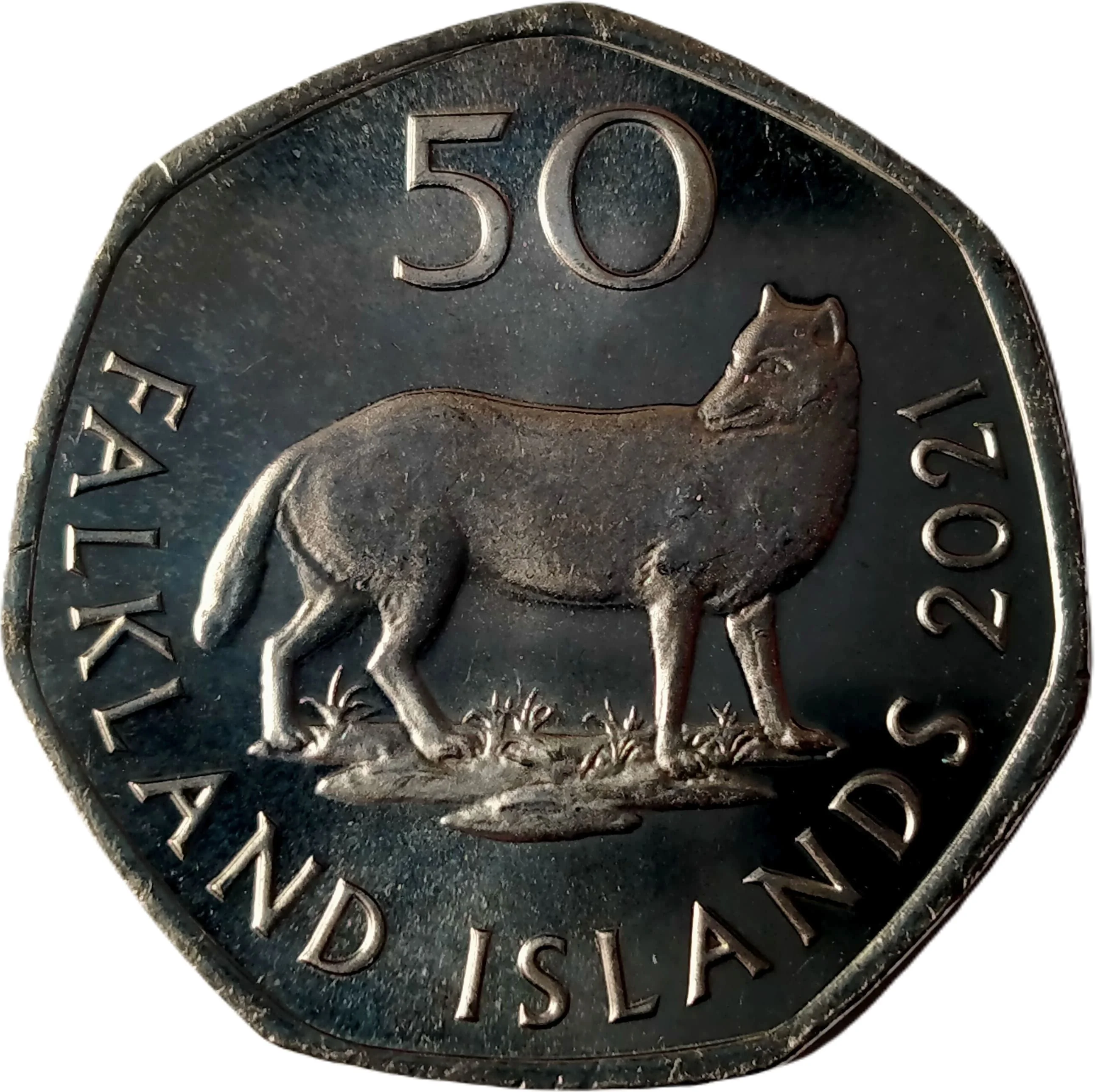
Year: 2021
Country: United Kingdom
Issuer: Falkland Islands
Ruler: Elizabeth II
Currency:
(since 1971)
Material
Diameter: 27.3 mm
Weight: 8 g
Thickness: 1.5 mm
Shape: Equilateral curve heptagon
Composition: Copper-nickel
Technique: Milled
Alignment: Medal alignment
flip
References
KM: #
Numista: #300441
Value
Exchange value: 0.50 FKP
Inflation-adjusted value: 0.63 FKP
Obverse
Description:
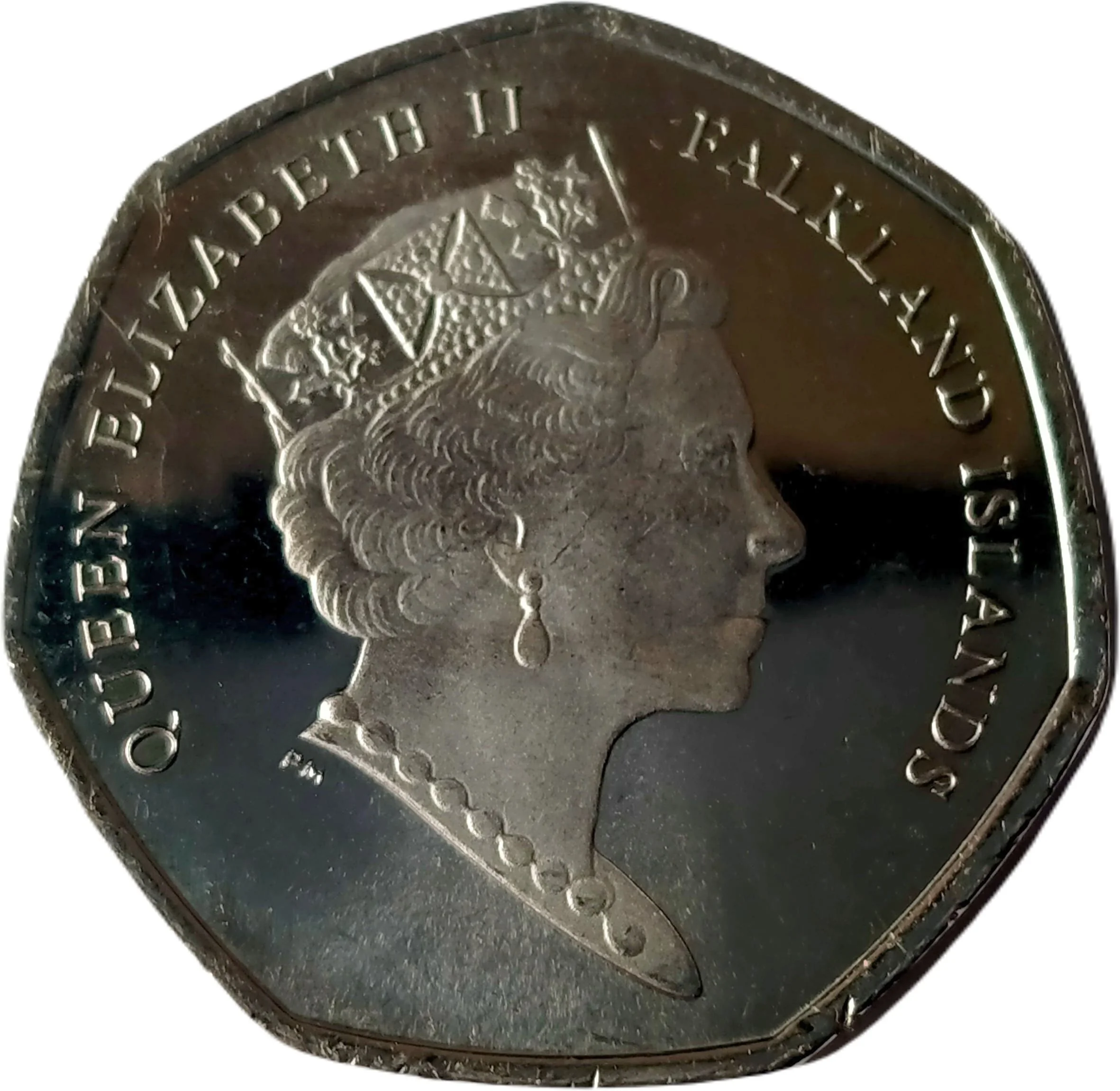
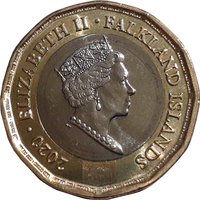
Portrait of Queen Elizabeth II in right profile.
Inscription:
QUEEN ELIZABETH II FALKLAND ISLANDS
PM
PM
Script: Latin
Reverse
Edge
Plain
Mints
| Name | Mark |
|---|---|
| Pobjoy Mint | PM |
Mintings
| Year | Mint Mark | Mintage | Quality | Collection |
|---|---|---|---|---|
| 2021 | PM | — |
Historical background
In 2021, the currency situation in the Falkland Islands remained stable and unaltered from its long-standing framework. The official currency is the Falkland Islands pound (FKP), which is pegged at par (1:1) with the British pound sterling (GBP). This fixed parity, maintained by the Falkland Islands Government, ensures monetary stability and eliminates exchange rate risk between the two currencies. Both the locally issued Falkland pound notes and coins and British sterling circulate interchangeably and are accepted for all transactions within the territory.
The economy's heavy reliance on the United Kingdom, particularly for defence, public administration, and development aid, underpins this currency peg. Furthermore, key revenue streams, notably from the sale of fishing licenses and a growing tourism sector, are predominantly conducted in major foreign currencies, especially British pounds and US dollars. This generates substantial foreign reserves, which the government holds to confidently defend the peg and support the local economy. The financial system is simple, with a single commercial bank providing services, and there is no central bank.
Consequently, there were no significant currency crises or policy changes in 2021. The fixed exchange rate regime continued to provide price stability and predictability for both residents and the important squid fishing industry. The main monetary considerations for the Islands remained external, focused on managing foreign reserves and navigating global economic conditions, rather than dealing with domestic inflationary pressures or a volatile independent currency.
The economy's heavy reliance on the United Kingdom, particularly for defence, public administration, and development aid, underpins this currency peg. Furthermore, key revenue streams, notably from the sale of fishing licenses and a growing tourism sector, are predominantly conducted in major foreign currencies, especially British pounds and US dollars. This generates substantial foreign reserves, which the government holds to confidently defend the peg and support the local economy. The financial system is simple, with a single commercial bank providing services, and there is no central bank.
Consequently, there were no significant currency crises or policy changes in 2021. The fixed exchange rate regime continued to provide price stability and predictability for both residents and the important squid fishing industry. The main monetary considerations for the Islands remained external, focused on managing foreign reserves and navigating global economic conditions, rather than dealing with domestic inflationary pressures or a volatile independent currency.
🌟 Limited