

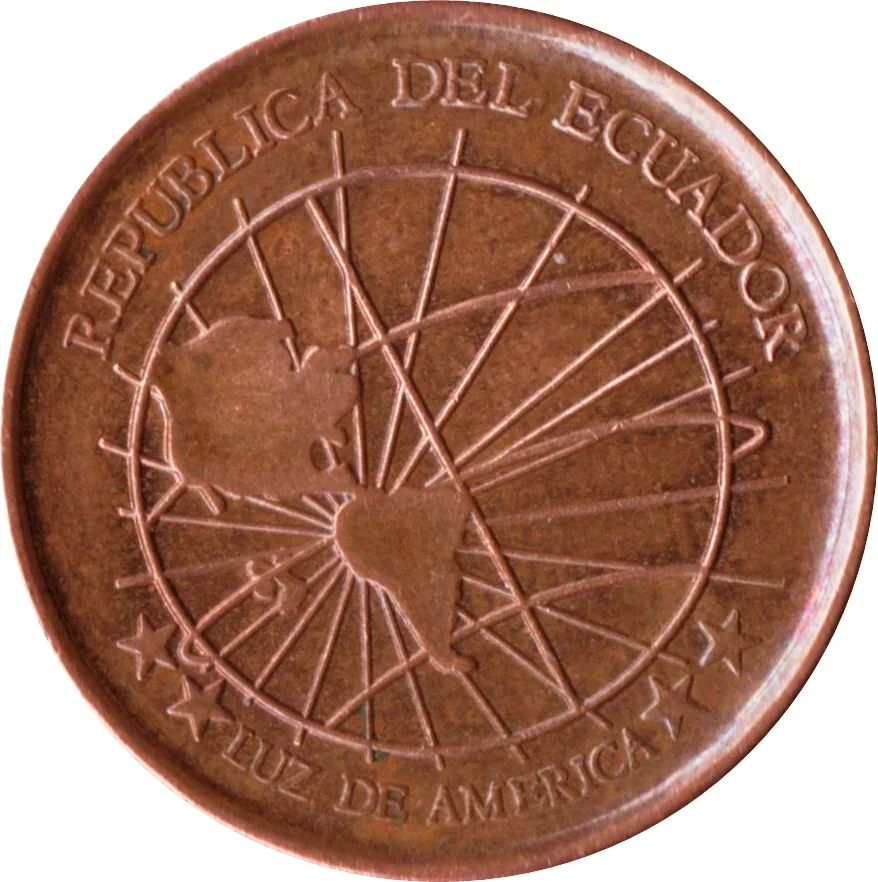
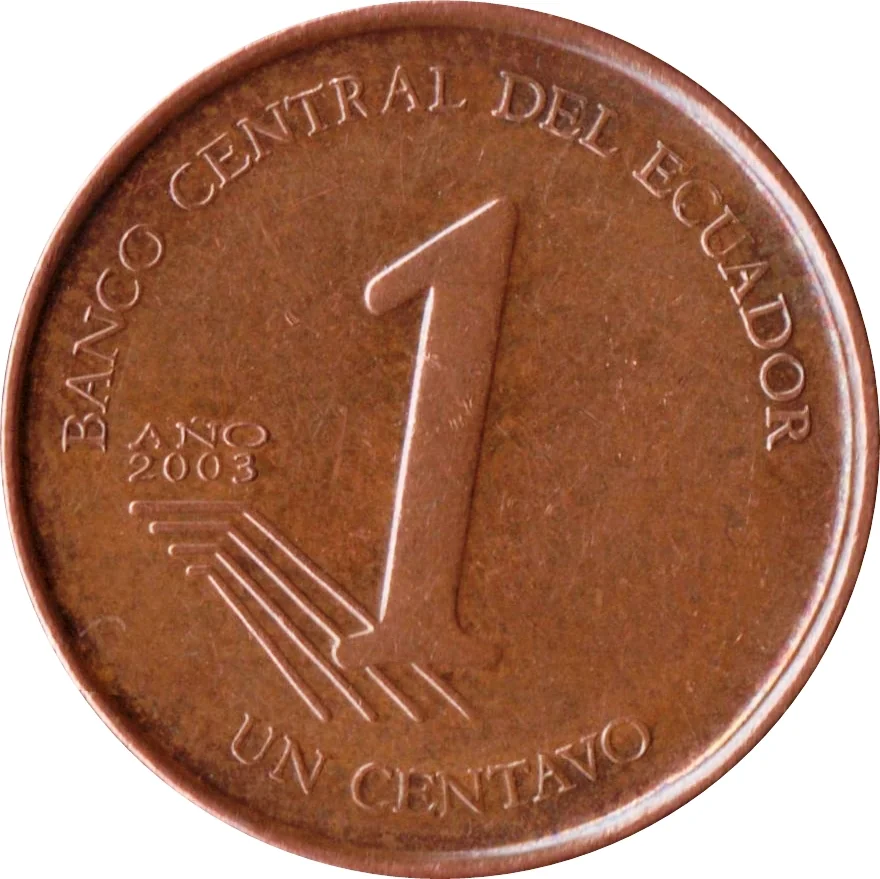
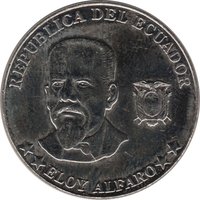
Obverse
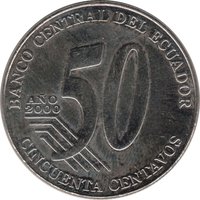
Reverse
Edge
Plain
Categories
| Map |
Mints
| Name | Mark |
|---|---|
| Mexican Mint | — |
Mintings
| Year | Mint Mark | Mintage | Quality | Collection |
|---|---|---|---|---|
| 2003 | — | — |
Historical background
In 2003, Ecuador was navigating the complex aftermath of its dramatic 2000 economic crisis and the subsequent adoption of the US dollar as its official currency. This process, known as dollarization, was implemented in January 2000 to halt hyperinflation, stabilize a collapsing banking system, and restore basic economic order. By 2003, the country was in a consolidation phase, with the US dollar having fully replaced the former national currency, the sucre. The immediate benefits were clear: inflation had plummeted from over 90% in 2000 to under 10%, and the economy was showing tentative signs of growth after a severe contraction.
However, the dollarization regime came with significant and persistent challenges. The fixed exchange rate (at 25,000 sucres per dollar) eliminated monetary policy tools, meaning Ecuador could not devalue its currency to become more competitive. This placed immense pressure on the export sector and domestic industries, which struggled against cheaper imports. Furthermore, the government's inability to print money constrained its fiscal options, exacerbating public debt issues and limiting its ability to stimulate the economy during downturns. Socially, the transition was harsh for many, as wages and prices adjusted unevenly to the new dollar standard, contributing to widespread poverty and underemployment.
Thus, the currency situation in 2003 was one of fragile stability. While dollarization had succeeded in providing macroeconomic stability and curbing inflation—its primary goals—it had locked the country into a rigid system that exposed structural weaknesses. The economy was growing but remained vulnerable to external shocks and dependent on remittances from abroad and oil exports. The fundamental question in 2003 was not about reversing dollarization, which enjoyed broad public support as a necessary anchor, but about how to build a more competitive and inclusive economy within its strict confines.
However, the dollarization regime came with significant and persistent challenges. The fixed exchange rate (at 25,000 sucres per dollar) eliminated monetary policy tools, meaning Ecuador could not devalue its currency to become more competitive. This placed immense pressure on the export sector and domestic industries, which struggled against cheaper imports. Furthermore, the government's inability to print money constrained its fiscal options, exacerbating public debt issues and limiting its ability to stimulate the economy during downturns. Socially, the transition was harsh for many, as wages and prices adjusted unevenly to the new dollar standard, contributing to widespread poverty and underemployment.
Thus, the currency situation in 2003 was one of fragile stability. While dollarization had succeeded in providing macroeconomic stability and curbing inflation—its primary goals—it had locked the country into a rigid system that exposed structural weaknesses. The economy was growing but remained vulnerable to external shocks and dependent on remittances from abroad and oil exports. The fundamental question in 2003 was not about reversing dollarization, which enjoyed broad public support as a necessary anchor, but about how to build a more competitive and inclusive economy within its strict confines.
🌱 Very Common