

3 marks (Albrecht Dürer) – Germany
Add to wishlist
Circulating commemorative coins
Commemoration: 400th Anniversary of the Death of Albrecht Dürer
Germany
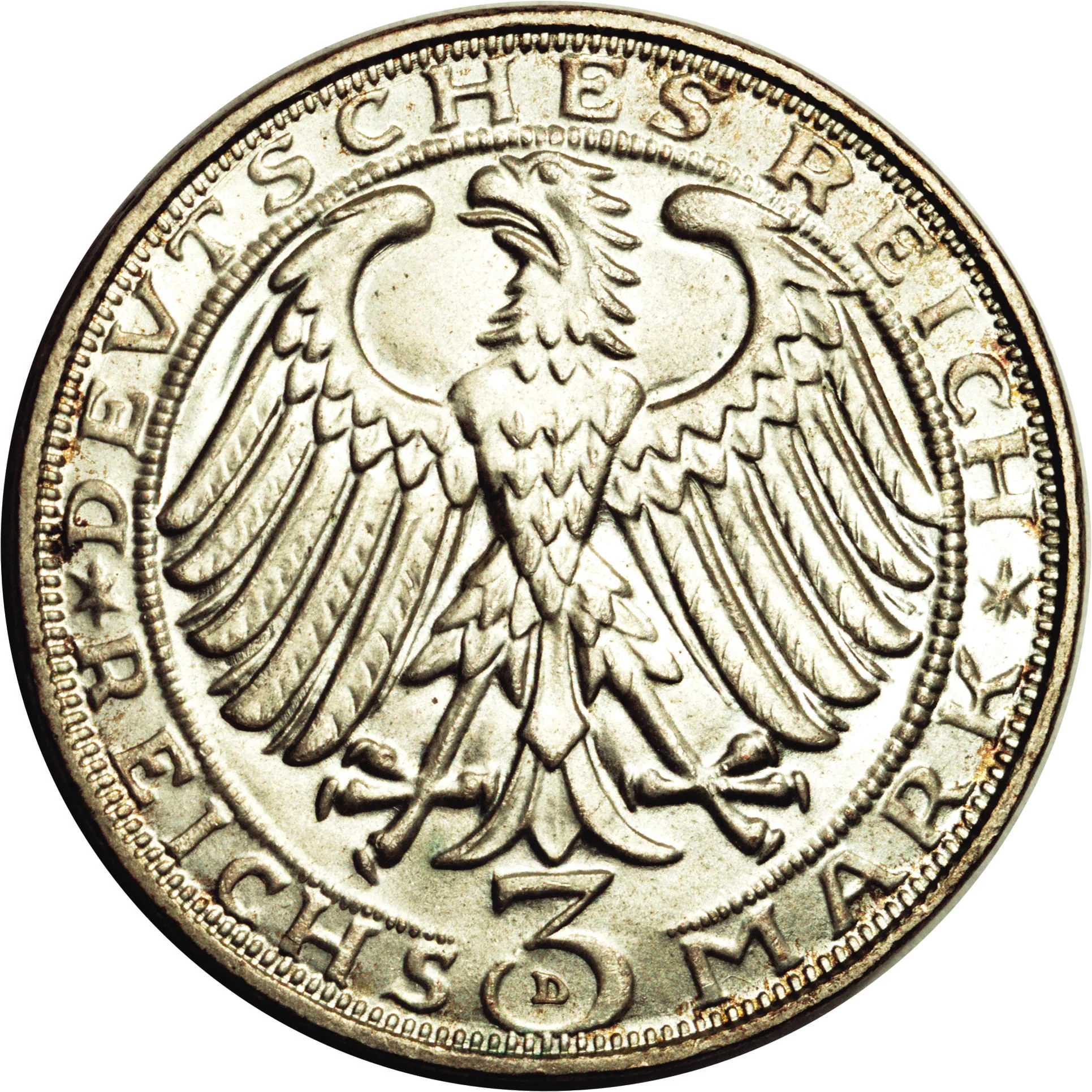
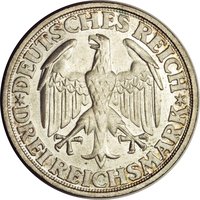
Obverse
Description:
Imperial eagle centered, surrounded by legend.
Inscription:
*DEUTSCHES REICH*
3
REICHS MARK
D
3
REICHS MARK
D
Translation:
GERMAN REICH
3
REICH MARK
3
REICH MARK
Script: Latin
Language: German
Engraver: Wilhelm Nida-Rümelin
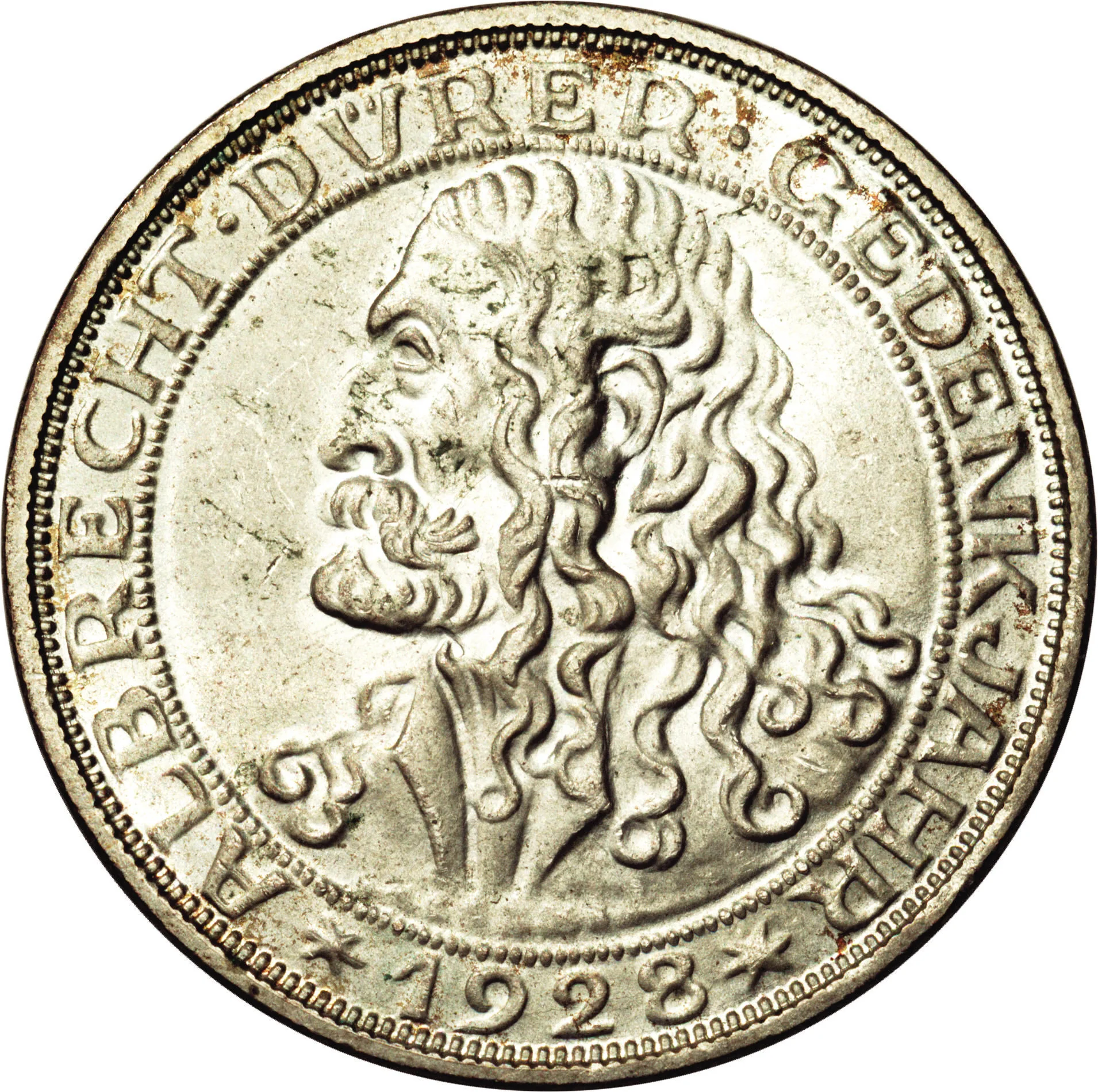
Reverse
Description:
Dürer's bust left, encircled by legend, date below.
Inscription:
*ALBERT DÜRER GEDENKJAHR*
1928
1928
Translation:
*ALBERT DÜRER MEMORIAL YEAR*
1928
1928
Script: Latin
Language: German
Engraver: Wilhelm Nida-Rümelin
Edge
Mints
| Name | Mark |
|---|---|
| Munich | D |
Historical background
By 1928, Germany appeared to be a model of Weimar stability and economic resurgence. The hyperinflation crisis of 1923 had been decisively ended by the introduction of the Rentenmark, later solidified as the Reichsmark, under the leadership of Hjalmar Schacht at the Reichsbank. This new currency was backed by the Dawes Plan of 1924, which restructured reparations and provided substantial American loans. Foreign capital, particularly from the United States, flooded into German industry and municipalities, fueling a period of renewed growth, cultural flourishing, and political calm known as the "Golden Twenties."
However, this stability was profoundly fragile and built on precarious international dependencies. The German economy was effectively functioning on borrowed time and foreign money, with short-term American loans constantly needed to service long-term reparation debts and fund domestic spending. The Reichsbank maintained a restrictive monetary policy to defend the new currency's value, but this contributed to underlying structural weaknesses, including high unemployment and agricultural distress. The prosperity was uneven and superficial, masking a dangerous reliance on the continued flow of Wall Street credit.
Consequently, the currency situation in 1928 was a calm before the storm. The Reichsmark was stable, but the entire financial structure was acutely vulnerable to any shock in the global credit system. When the New York Stock Exchange crashed in 1929, the cascade effect was immediate and catastrophic for Germany. American loans were recalled, the capital inflow reversed, and the Reichsmark came under severe pressure, leading within three years to banking collapses, deflation, mass unemployment, and the political collapse that brought the Nazi Party to power. The solidity of 1928 was thus an illusion, predicated on an unsustainable and externally financed equilibrium.
However, this stability was profoundly fragile and built on precarious international dependencies. The German economy was effectively functioning on borrowed time and foreign money, with short-term American loans constantly needed to service long-term reparation debts and fund domestic spending. The Reichsbank maintained a restrictive monetary policy to defend the new currency's value, but this contributed to underlying structural weaknesses, including high unemployment and agricultural distress. The prosperity was uneven and superficial, masking a dangerous reliance on the continued flow of Wall Street credit.
Consequently, the currency situation in 1928 was a calm before the storm. The Reichsmark was stable, but the entire financial structure was acutely vulnerable to any shock in the global credit system. When the New York Stock Exchange crashed in 1929, the cascade effect was immediate and catastrophic for Germany. American loans were recalled, the capital inflow reversed, and the Reichsmark came under severe pressure, leading within three years to banking collapses, deflation, mass unemployment, and the political collapse that brought the Nazi Party to power. The solidity of 1928 was thus an illusion, predicated on an unsustainable and externally financed equilibrium.
⭐ Rare