

1 Tola – Nepal
Non-circulating coins
Commemoration: Coronation of King Mahendra
Nepal
Context

Material
References
KM: #Click to copy to clipboard791
Numista: #296808
Value
Bullion value: $1947.41
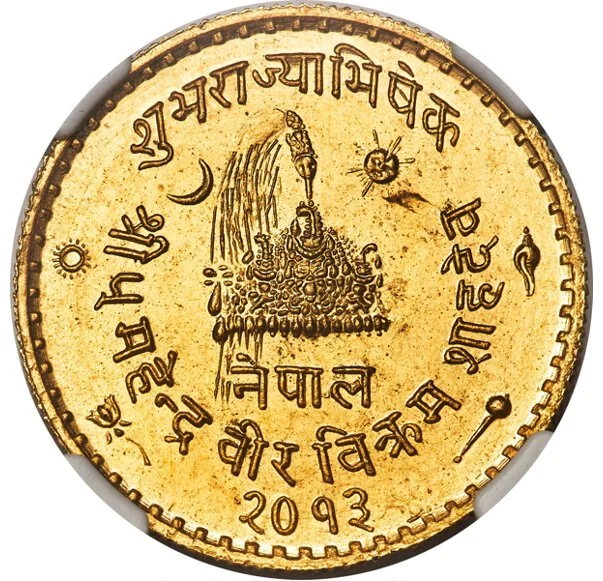
Obverse
Description:
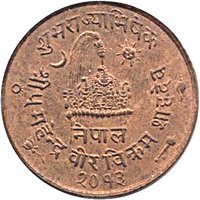
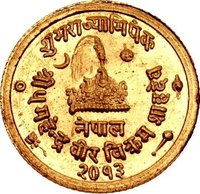
Crescent, crown, and sun centered with surrounding lettering and symbols.
Inscription:
महेन्द्र वीर विक्रम
Translation:
Mahendra, the brave and valorous.
Script: Devanagari
Language: Sanskrit
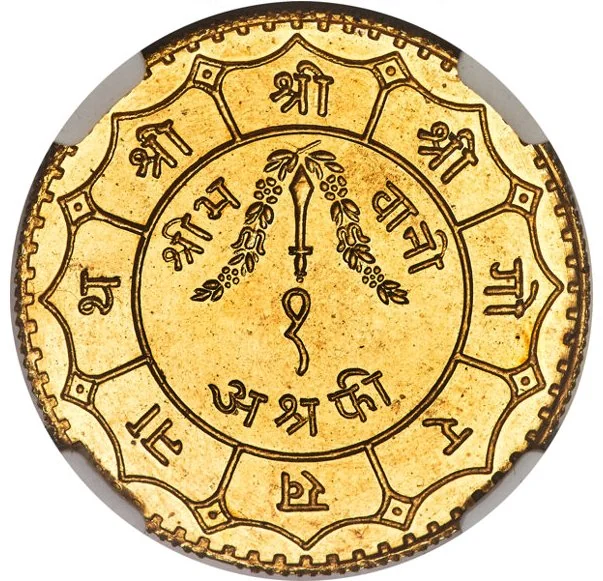
Reverse
Description:
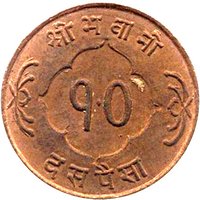
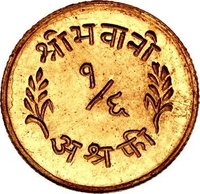
Denomination centered, encircled by lettering and branch wreath.
Script: Devanagari
Edge
Mintings
| Year | Mint Mark | Mintage | Quality | Collection |
|---|---|---|---|---|
| 1956 | — | — |
Historical background
In 1956, Nepal's currency situation was characterized by a pivotal transition from a dual-currency system to a unified national monetary authority. Historically, the Nepalese rupee circulated alongside the Indian rupee, with the latter being dominant for larger transactions and external trade due to the open border and fixed 1:1 parity established by the 1924 Nepal-India treaty. This reliance on Indian currency limited Nepal's independent monetary policy and created practical complexities in domestic finance. Furthermore, the issuance of Nepalese notes was managed by two separate entities—the government's Sadar Muluki Khana (Treasury) and the private Nepal Bank Limited—leading to a lack of centralized control.
The year 1956 marked a critical juncture as it was the year the Nepal Rastra Bank Act was passed, laying the legal foundation for the country's first central bank. This legislative move was a direct response to the inefficiencies of the existing system and was part of a broader wave of modernization under King Mahendra and the newly formed democratic government. The Act aimed to establish a sole institution with the authority to issue currency, regulate banks, and manage foreign exchange reserves, thereby asserting national sovereignty over monetary affairs.
However, the Nepal Rastra Bank would not officially commence operations until April 1957. Therefore, in 1956 itself, the old hybrid system remained functionally in place, but under the shadow of imminent and profound change. The groundwork was being actively laid to dismantle the dual-issuance regime and move toward a managed currency, setting the stage for Nepal to pursue an independent economic path in the latter half of the 20th century.
The year 1956 marked a critical juncture as it was the year the Nepal Rastra Bank Act was passed, laying the legal foundation for the country's first central bank. This legislative move was a direct response to the inefficiencies of the existing system and was part of a broader wave of modernization under King Mahendra and the newly formed democratic government. The Act aimed to establish a sole institution with the authority to issue currency, regulate banks, and manage foreign exchange reserves, thereby asserting national sovereignty over monetary affairs.
However, the Nepal Rastra Bank would not officially commence operations until April 1957. Therefore, in 1956 itself, the old hybrid system remained functionally in place, but under the shadow of imminent and profound change. The groundwork was being actively laid to dismantle the dual-issuance regime and move toward a managed currency, setting the stage for Nepal to pursue an independent economic path in the latter half of the 20th century.
✨ Legendary