

10 cash – Sinkiang Province
Add to wishlist
China
Context
Year: 1914
Islamic (Hijri) Year:: 1332
Country: China
Issuer: Sinkiang Province
Period:
(1912—1949)
Currency:
(1939—1949)
Demonetized: Yes
Material
References
Y: #
Numista: #296550
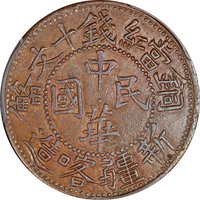
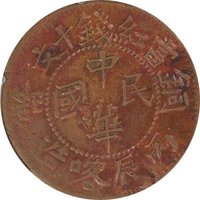
Obverse
Description:
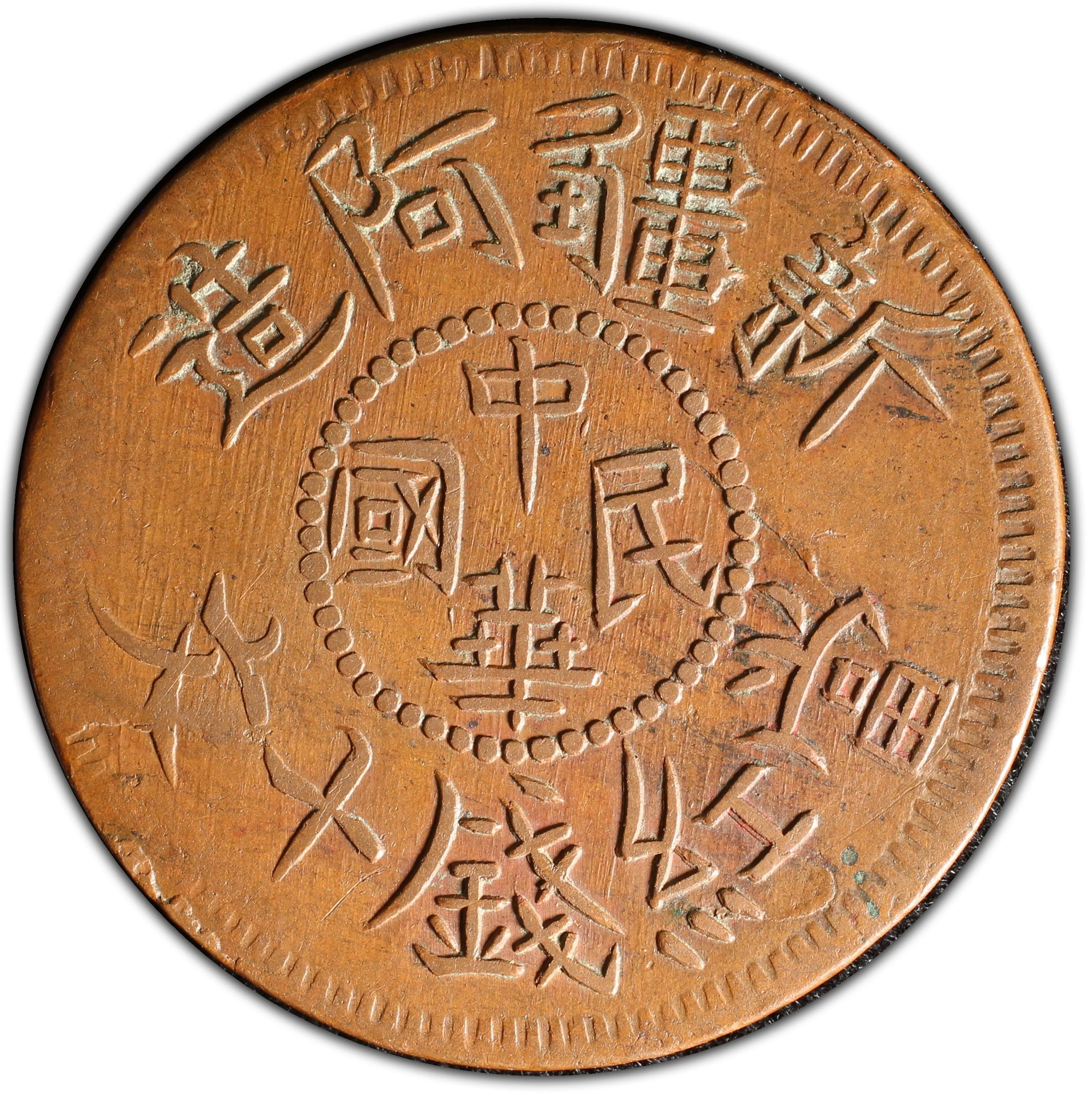
Four ideograms read vertically, right to left, encircled by more characters.
Inscription:
造喀疆新
中
國民
華
文十錢紅當
中
國民
華
文十錢紅當
Translation:
Made in Xinjiang
Republic of China
10 Wén Red Cash Coin
Republic of China
10 Wén Red Cash Coin
Language: Chinese
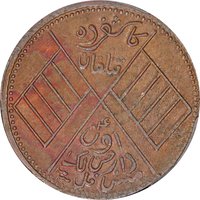
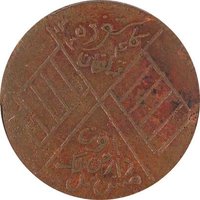
Reverse
Description:
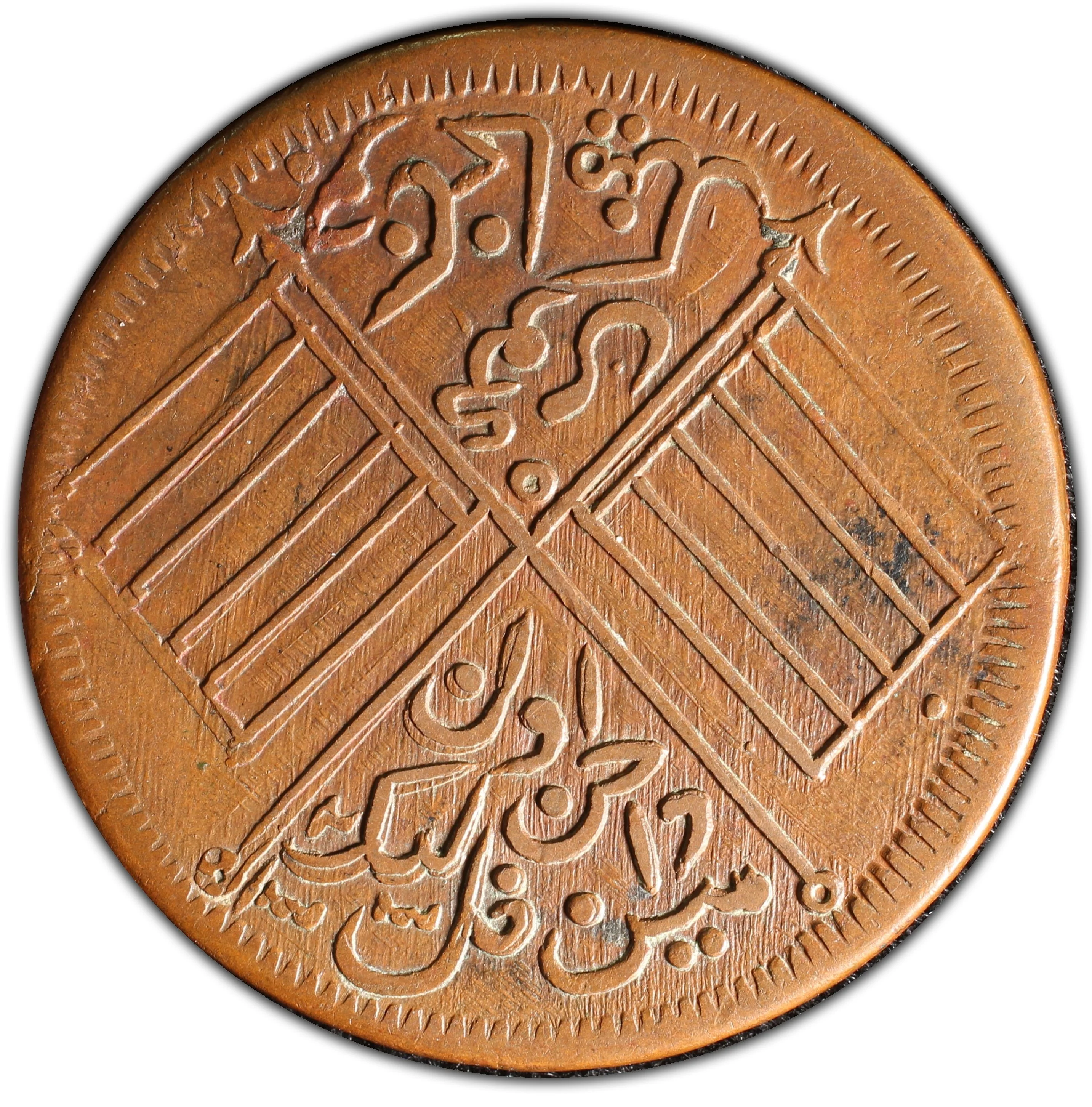
Crossed flags with inverted Arabic text above and below.
Inscription:
ضو ب
كاشنو
۱۳۳٢
مس جل
اون داچن ليک
كاشنو
۱۳۳٢
مس جل
اون داچن ليک
Translation:
Struck
Kashan
1332
Brass Coin
One Dachen
Kashan
1332
Brass Coin
One Dachen
Language: Persian
Edge
Mintings
| Year | Mint Mark | Mintage | Quality | Collection |
|---|---|---|---|---|
| 1914 | — | — |
Historical background
In 1914, the currency situation in Sinkiang (Xinjiang) Province was a complex and fragmented reflection of its geopolitical position. The region was under the nominal control of the Republic of China, but in practice, Governor Yang Zengxin ruled with a high degree of autonomy from the weak central government. The monetary system was not unified, operating with a multi-currency circulation where Chinese silver yuan and tael notes issued by provincial authorities coexisted with older Qing dynasty coins. More significantly, a substantial amount of Russian Tsarist rubles, both paper and silver, circulated widely, especially in the north and along trade routes, due to extensive cross-border commerce with Russian Turkestan.
This monetary plurality created chronic instability. The value of the locally issued paper notes, known as Xinjiang piao, was unstable and often depreciated, particularly as Yang’s government frequently resorted to printing money to cover fiscal shortfalls. Meanwhile, the silver-based Russian ruble and physical silver coins were hoarded as a more reliable store of value, leading to a persistent shortage of hard currency. The system was further complicated by the varying acceptance of different currencies in different locales, with Russian money dominant in Ili and Tarbagatai, while Chinese notes circulated more freely in the south and east.
Consequently, trade and daily transactions were cumbersome, requiring constant exchange and negotiation. This chaotic currency environment underscored Sinkiang’s economic dependency on Russia and its tenuous links to China proper. It served as a tangible indicator of Yang Zengxin’s delicate balancing act: maintaining a facade of Chinese sovereignty while managing a de facto independent economy increasingly pulled into the Russian sphere of influence, a situation that would persist and evolve through the early 20th century.
This monetary plurality created chronic instability. The value of the locally issued paper notes, known as Xinjiang piao, was unstable and often depreciated, particularly as Yang’s government frequently resorted to printing money to cover fiscal shortfalls. Meanwhile, the silver-based Russian ruble and physical silver coins were hoarded as a more reliable store of value, leading to a persistent shortage of hard currency. The system was further complicated by the varying acceptance of different currencies in different locales, with Russian money dominant in Ili and Tarbagatai, while Chinese notes circulated more freely in the south and east.
Consequently, trade and daily transactions were cumbersome, requiring constant exchange and negotiation. This chaotic currency environment underscored Sinkiang’s economic dependency on Russia and its tenuous links to China proper. It served as a tangible indicator of Yang Zengxin’s delicate balancing act: maintaining a facade of Chinese sovereignty while managing a de facto independent economy increasingly pulled into the Russian sphere of influence, a situation that would persist and evolve through the early 20th century.
✨ Legendary