

10 dalere – Danish West Indies
Add to wishlist
United States
Context
Year: 1904
Country: United States
Issuer: Danish West Indies
Ruler: Christian IX
Currency:
(1849—1905)
Demonetization: 15 July 1935
Total mintage: 2,005
Material
References
KM: #
Numista: #29636
Value
Bullion value: $2228.69
Obverse
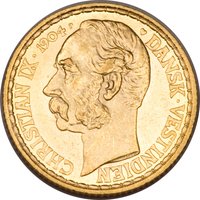
Description:
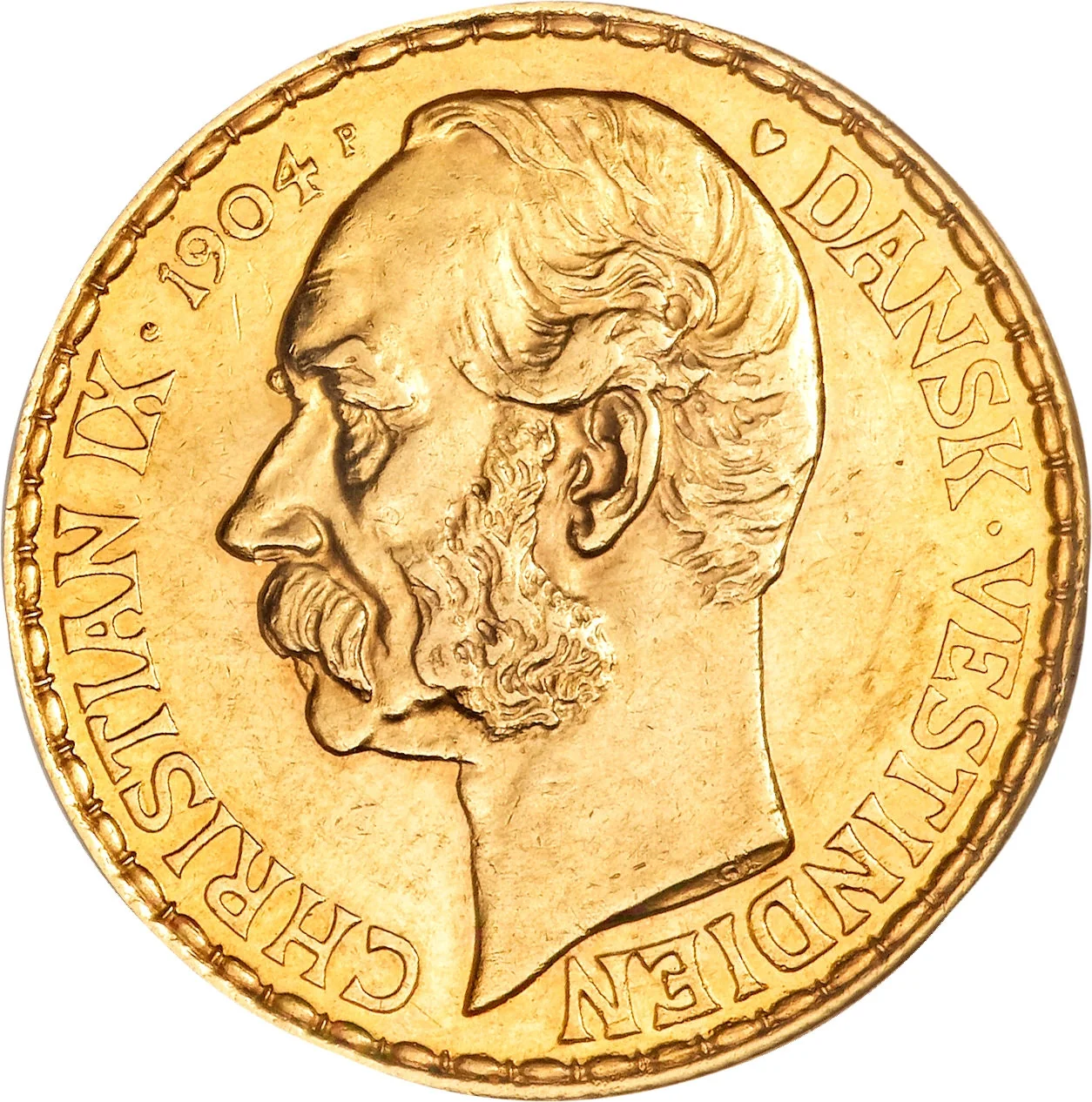
Left-facing bust
Inscription:
CHRISTIAN IX · 1904 P
♥ DANSK · VESTINDIEN
♥ DANSK · VESTINDIEN
Translation:
CHRISTIAN IX · 1904 P
♥ DANISH · WEST INDIES
♥ DANISH · WEST INDIES
Script: Latin
Language: Danish
Engraver: Vilhelm Buchard Poulsen
Reverse
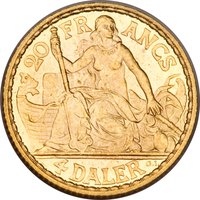
Description:
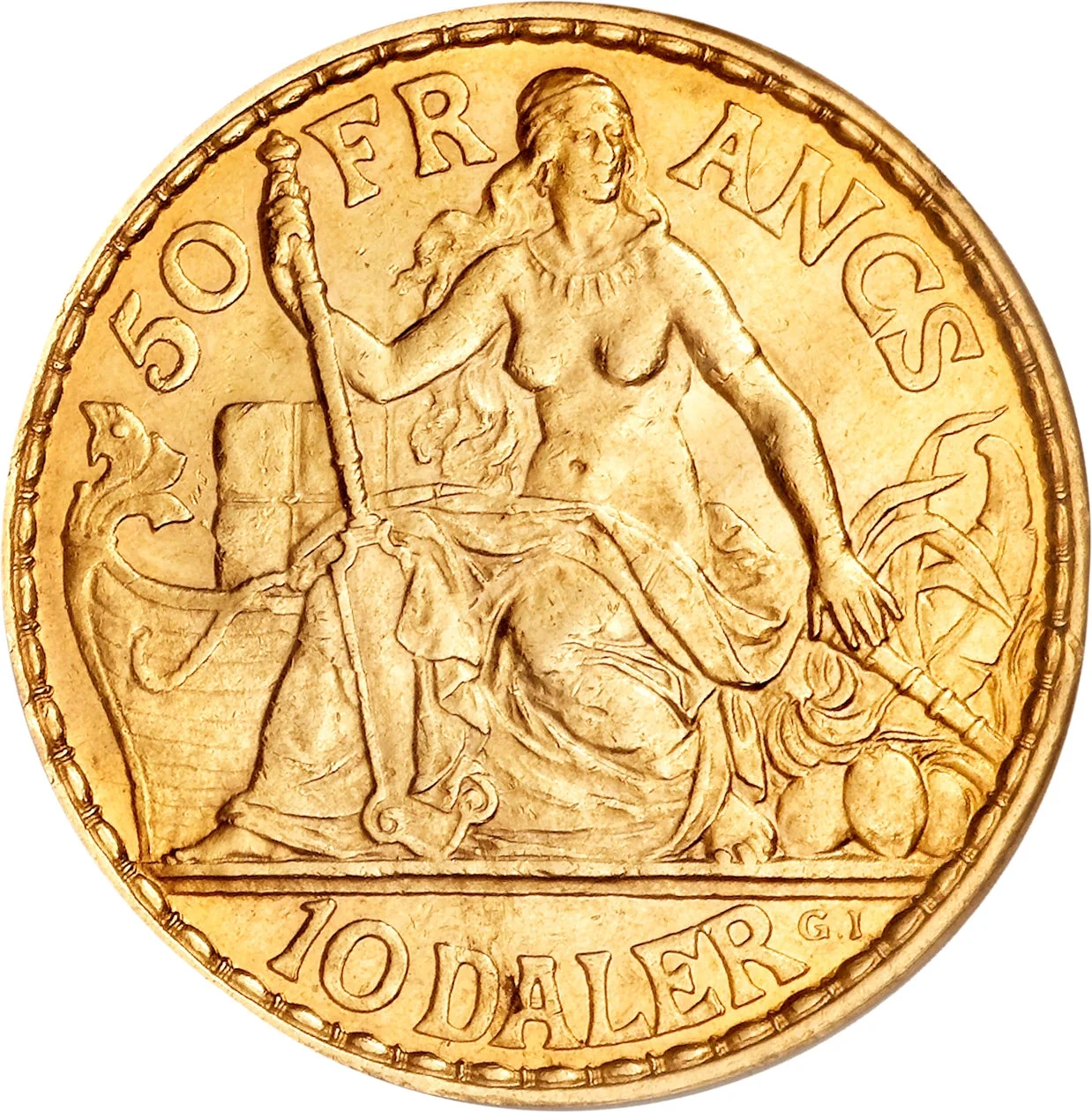
Woman seated with currency.
Inscription:
50 FRANCS
10 DALER
G.I
10 DALER
G.I
Translation:
Fifty Francs
Ten Dalers
G.I
Ten Dalers
G.I
Script: Latin
Engraver: Gunnar Jensen
Edge
Reeded
Categories
| Person> Monarch |
| Mustache/Beard |
| Symbol> Allegory |
Mints
| Name | Mark |
|---|---|
| Royal Danish Mint | ❤ |
Mintings
| Year | Mint Mark | Mintage | Quality | Collection |
|---|---|---|---|---|
| 1904 | P♥GI | 2,005 |
Historical background
In 1904, the Danish West Indies (present-day U.S. Virgin Islands) operated under a complex and often problematic monetary system, a legacy of its role as a bustling Caribbean trade hub. The official currency was the Danish rigsdaler, divided into 100 bits. However, due to extensive commerce with neighboring islands and nations, a multitude of foreign coins circulated freely and were legally recognized. British sovereigns, US gold dollars, French francs, and various Spanish and Latin American silver coins all passed through hands daily, with their values fixed by proclamation relative to the rigsdaler. This created a de facto multi-currency environment where merchants and the public had to constantly navigate exchange rates.
The system was fraught with inefficiency and instability. The fixed exchange rates often failed to reflect the true market value of the foreign coins, particularly their fluctuating silver content, leading to arbitrage and the export of undervalued coins for meltdown. This resulted in frequent shortages of small change, hampering everyday transactions and causing public discontent. Furthermore, the Danish rigsdaler itself was not physically predominant; the British gold sovereign was the preferred currency for large transactions and government reserves, underscoring the colony's economic integration with the British monetary sphere rather than with distant Denmark.
By 1904, this chaotic situation had prompted serious discussions about reform. Danish authorities and local business leaders agreed that the status quo was untenable for a modernizing economy. The clear solution, driven by the islands' overwhelming trade volume with the United States, was to adopt the US dollar as the sole official currency. This transition was formally enacted by the Currency Act of 1904, which took effect in 1905, replacing the rigsdaler at a rate of 4 kroner (the new Danish currency from 1875) to 1 US dollar. This move decisively aligned the colony's monetary system with its primary trading partner and paved the way for its eventual sale to the United States in 1917.
The system was fraught with inefficiency and instability. The fixed exchange rates often failed to reflect the true market value of the foreign coins, particularly their fluctuating silver content, leading to arbitrage and the export of undervalued coins for meltdown. This resulted in frequent shortages of small change, hampering everyday transactions and causing public discontent. Furthermore, the Danish rigsdaler itself was not physically predominant; the British gold sovereign was the preferred currency for large transactions and government reserves, underscoring the colony's economic integration with the British monetary sphere rather than with distant Denmark.
By 1904, this chaotic situation had prompted serious discussions about reform. Danish authorities and local business leaders agreed that the status quo was untenable for a modernizing economy. The clear solution, driven by the islands' overwhelming trade volume with the United States, was to adopt the US dollar as the sole official currency. This transition was formally enacted by the Currency Act of 1904, which took effect in 1905, replacing the rigsdaler at a rate of 4 kroner (the new Danish currency from 1875) to 1 US dollar. This move decisively aligned the colony's monetary system with its primary trading partner and paved the way for its eventual sale to the United States in 1917.
💎 Extremely Rare