

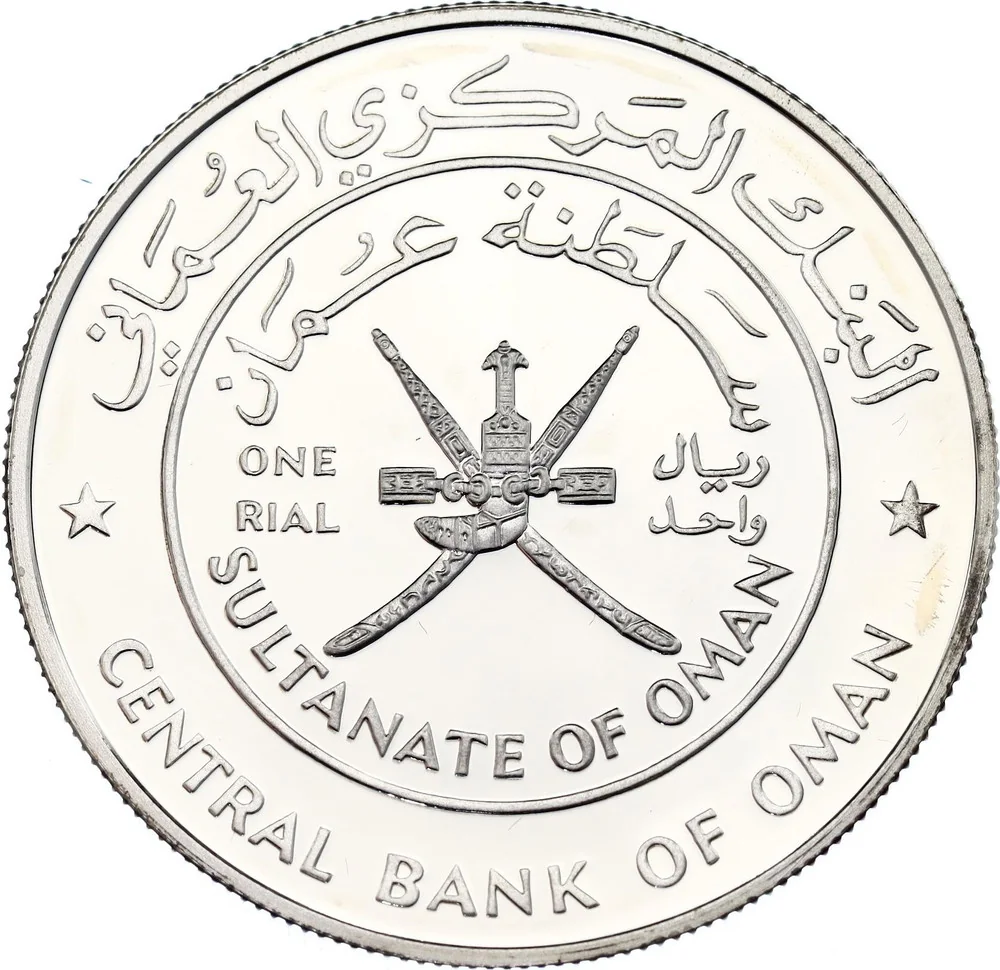
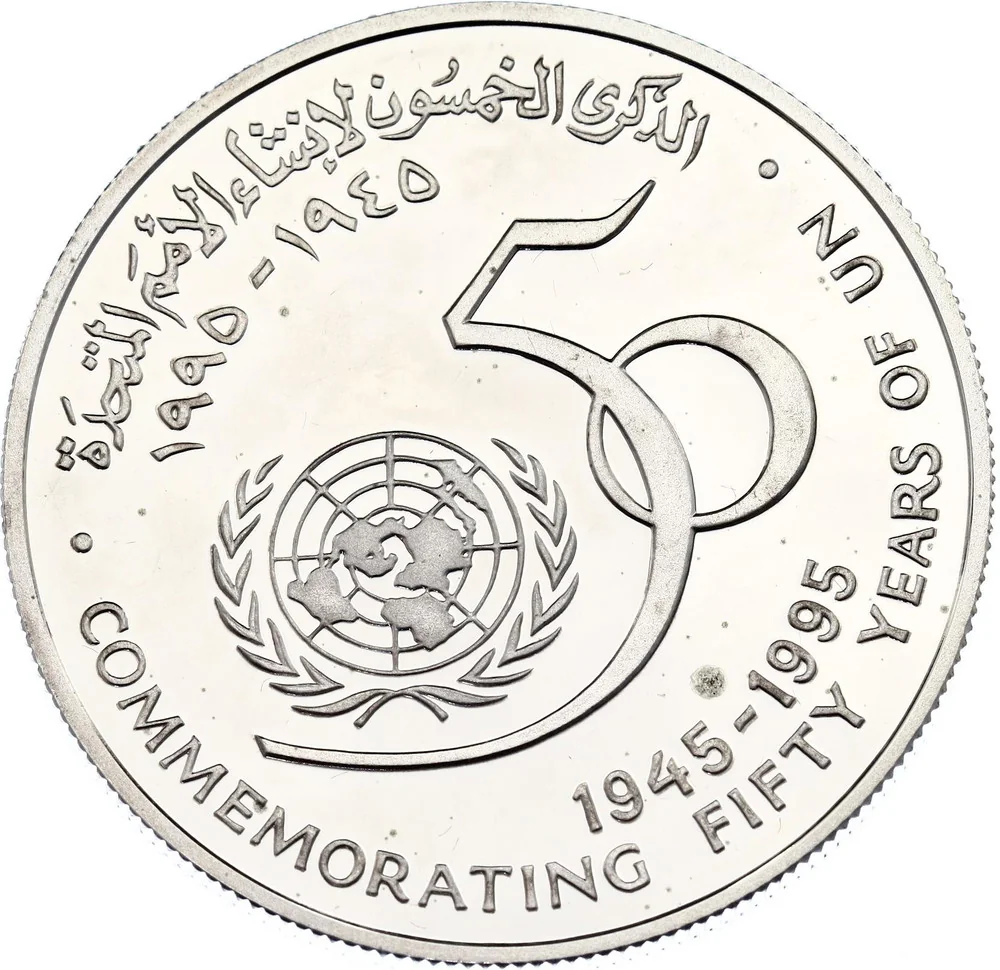
1 Rial (United Nations) – Oman
Non-circulating coins
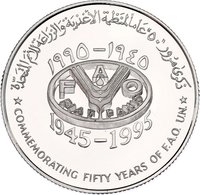
Commemoration: 50th Anniversary of the United Nations
Oman
Context
Year: 1995
Issuer: Oman 
Issuing organization: Central Bank of Oman
Ruler: Qaboos bin Said
Currency:
(since 1972)
Total mintage: 25,000
Material
References
KM: #Click to copy to clipboard145
Numista: #29551
Value
Exchange value: 1 OMR
Bullion value: $75.60
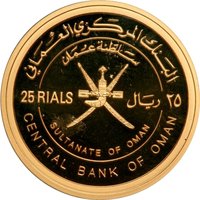
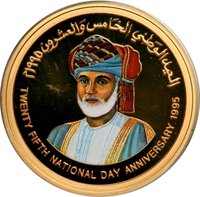
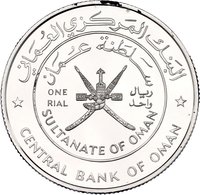
Obverse
Edge
Reeded
Categories
| Organization> United Nations |
| Symbols> Coat of Arms |
Mints
| Name | Mark |
|---|---|
| Royal Mint | — |
Mintings
| Year | Mint Mark | Mintage | Quality | Collection |
|---|---|---|---|---|
| 1995 | — | 25,000 | Proof |
Historical background
In 1995, Oman's currency situation was characterized by stability and prudent fiscal management under the long-standing leadership of Sultan Qaboos bin Said. The nation's official currency, the Omani Rial (OMR), was and remains one of the world's highest-valued units, pegged at a fixed rate of 1 OMR = 2.6008 USD. This peg, established in 1973, provided a crucial anchor for the economy, fostering confidence in trade, investment, and price stability, particularly important for an oil-dependent nation integrated into the global market.
The broader economic backdrop in the mid-1990s was one of cautious optimism following the financial strain of the 1980s oil price collapse. Oman was actively pursuing its early diversification efforts under the 1990-1995 development plan, investing oil revenues into infrastructure, gas-based industries, and tourism. While government spending drove growth, it also created fiscal pressures. The currency's fixed peg, managed by the Central Bank of Oman (established in 1974), was a cornerstone policy that helped mitigate inflationary risks and external volatility, ensuring that the cost of imports for development projects remained predictable.
However, this stability was underpinned by the health of the hydrocarbon sector, which dominated export earnings. Any significant fluctuation in global oil prices directly impacted the Sultanate's fiscal and current account balances, posing a latent challenge to the fixed exchange rate regime. Therefore, while the currency situation in 1995 itself was outwardly stable and robust, it was inherently linked to the success of Oman's economic diversification and the continued stewardship of its finite oil resources to defend the peg over the long term.
The broader economic backdrop in the mid-1990s was one of cautious optimism following the financial strain of the 1980s oil price collapse. Oman was actively pursuing its early diversification efforts under the 1990-1995 development plan, investing oil revenues into infrastructure, gas-based industries, and tourism. While government spending drove growth, it also created fiscal pressures. The currency's fixed peg, managed by the Central Bank of Oman (established in 1974), was a cornerstone policy that helped mitigate inflationary risks and external volatility, ensuring that the cost of imports for development projects remained predictable.
However, this stability was underpinned by the health of the hydrocarbon sector, which dominated export earnings. Any significant fluctuation in global oil prices directly impacted the Sultanate's fiscal and current account balances, posing a latent challenge to the fixed exchange rate regime. Therefore, while the currency situation in 1995 itself was outwardly stable and robust, it was inherently linked to the success of Oman's economic diversification and the continued stewardship of its finite oil resources to defend the peg over the long term.
💎 Very Rare