

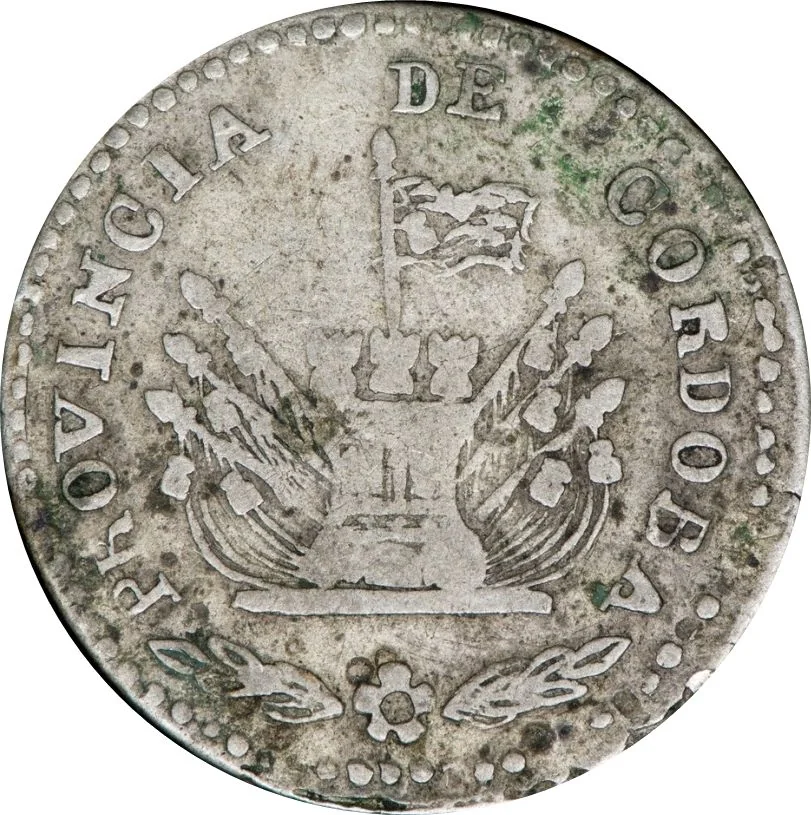
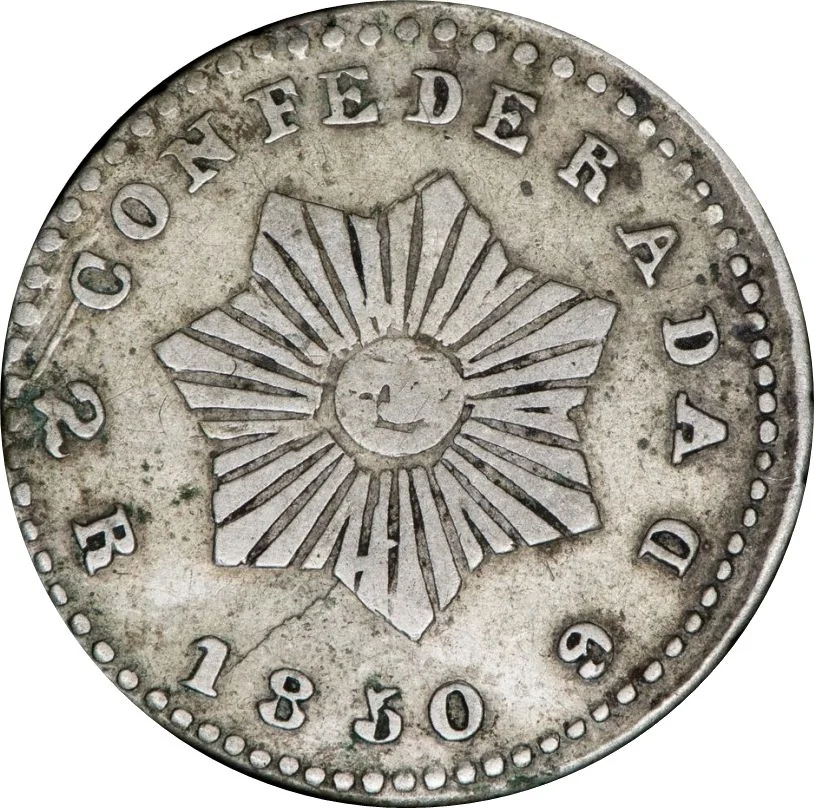
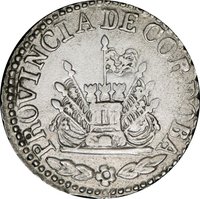
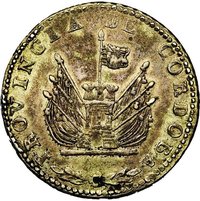
Obverse
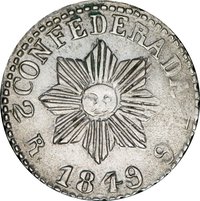
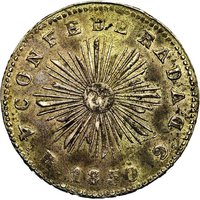
Reverse
Description:
A seven-pointed star, each point a beam of three to five rays.
Inscription:
CONFEDERADA
2 R 1850 9 D
2 R 1850 9 D
Script: Latin
Edge
Laureate
Mintings
| Year | Mint Mark | Mintage | Quality | Collection |
|---|---|---|---|---|
| 1849 | — | — | ||
| 1850 | — | — |
Historical background
In 1849, the province of Córdoba, Argentina, was enmeshed in a profound monetary crisis characteristic of the post-independence era. Following the collapse of Spanish colonial authority, there was no unified national currency, leading individual provinces to issue their own paper money to finance debts and public works. Córdoba, under the rule of Governor Manuel López (el "Quebracho"), aggressively printed its own paper currency, known as billetes de Córdoba, to cover budgetary shortfalls, particularly for ambitious projects like the construction of the San Roque dam. This unfettered issuance rapidly eroded public trust and the currency's value.
The situation was exacerbated by the sheer proliferation of different currencies in circulation. Alongside Córdoba's own devalued notes, there were currencies from other provinces (like Buenos Aires), foreign coins (especially silver Bolivian "pesos fuertes" and Chilean coins), and even counterfeit bills. This created a chaotic and inefficient monetary environment where exchange rates fluctuated wildly, and merchants often refused provincial paper or accepted it at a steep discount, sometimes as low as 10% of its face value. The economy began to regress towards barter for everyday transactions, severely hampering trade and economic stability.
Ultimately, the currency chaos of 1849 was a direct reflection of the broader political fragmentation of the Argentine Confederation. The lack of a strong central authority to guarantee a uniform and trustworthy monetary system allowed provincial fiscal pressures to dictate monetary policy, leading to inflationary spirals. This instability in Córdoba and elsewhere would become a powerful argument for national unification and the eventual creation of a single, federally controlled currency under the 1853 Constitution, which sought to resolve the monetary anarchy that had crippled interprovincial commerce for decades.
The situation was exacerbated by the sheer proliferation of different currencies in circulation. Alongside Córdoba's own devalued notes, there were currencies from other provinces (like Buenos Aires), foreign coins (especially silver Bolivian "pesos fuertes" and Chilean coins), and even counterfeit bills. This created a chaotic and inefficient monetary environment where exchange rates fluctuated wildly, and merchants often refused provincial paper or accepted it at a steep discount, sometimes as low as 10% of its face value. The economy began to regress towards barter for everyday transactions, severely hampering trade and economic stability.
Ultimately, the currency chaos of 1849 was a direct reflection of the broader political fragmentation of the Argentine Confederation. The lack of a strong central authority to guarantee a uniform and trustworthy monetary system allowed provincial fiscal pressures to dictate monetary policy, leading to inflationary spirals. This instability in Córdoba and elsewhere would become a powerful argument for national unification and the eventual creation of a single, federally controlled currency under the 1853 Constitution, which sought to resolve the monetary anarchy that had crippled interprovincial commerce for decades.
💎 Extremely Rare