

5 lira – Italian Somaliland
Add to wishlist
Somalia
Context
Year: 1925
Country: Somalia
Issuer: Italian Somaliland
Ruler: Victor Emmanuel III
Currency:
(1925—1938)
Demonetized: Yes
Total mintage: 400,000
Material
References
KM: #
Numista: #29420
Value
Bullion value: $12.19
Obverse
Description:
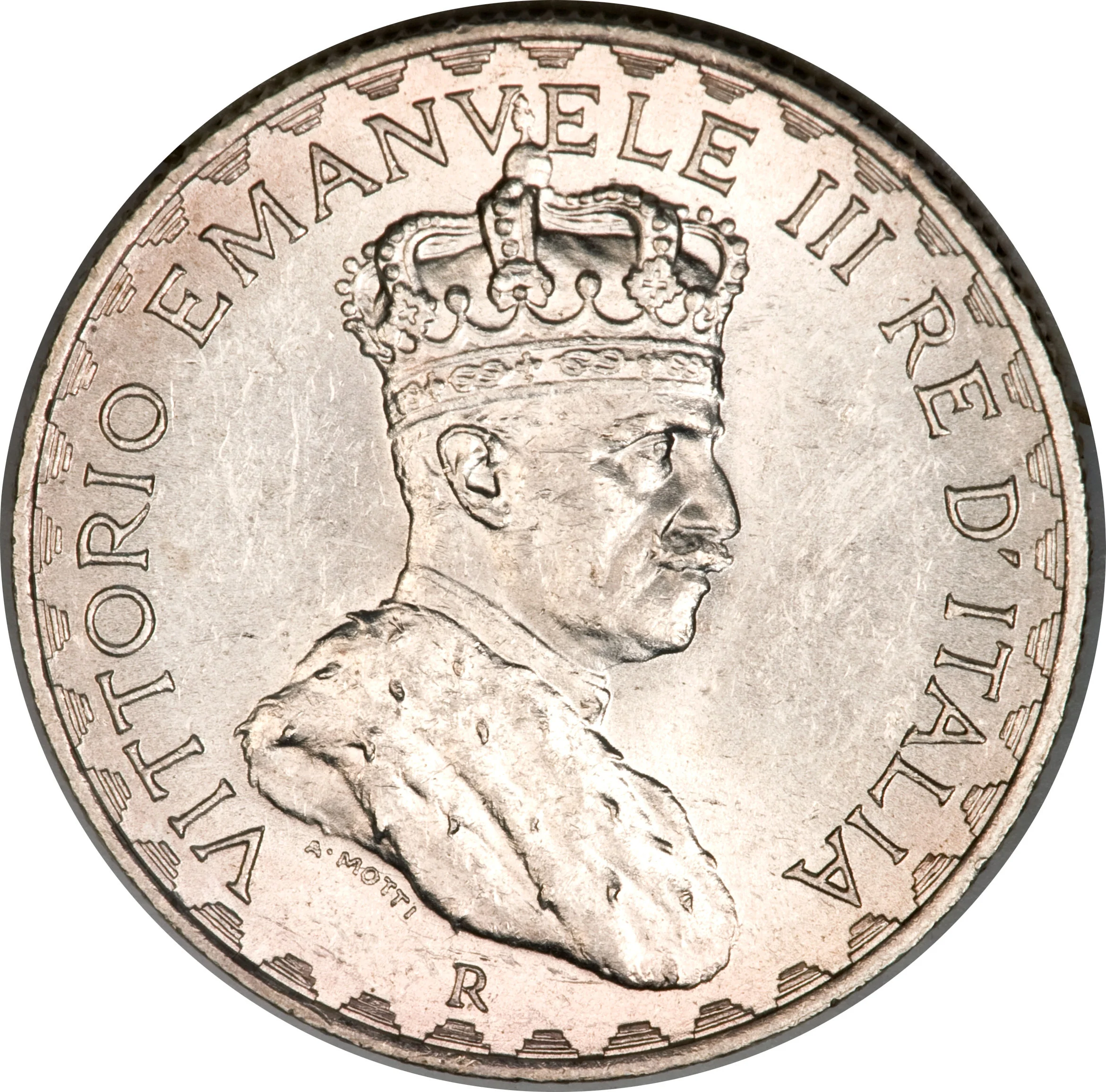
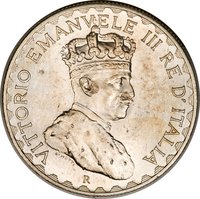
Right-facing bust of the crowned king in royal robe. Engraver's signature below bust, mintmark beneath.
Inscription:
VITTORIO EMANVELE III RE D'ITALIA
A·MOTTI
R
A·MOTTI
R
Translation:
Victor Emmanuel III King of Italy
A. Motti
R
A. Motti
R
Script: Latin
Language: Italian
Engraver: Attilio Silvio Motti
Reverse
Description:
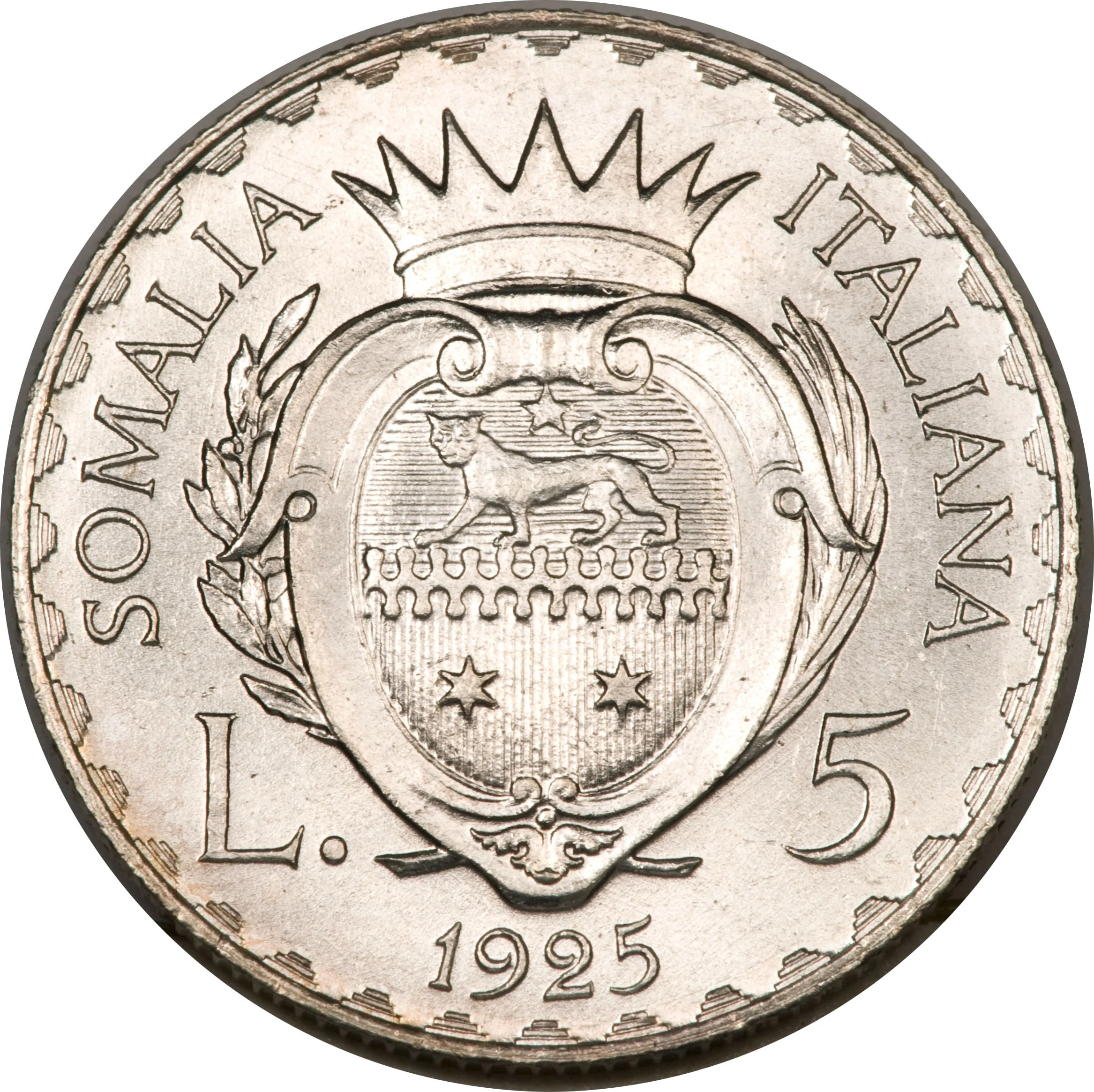
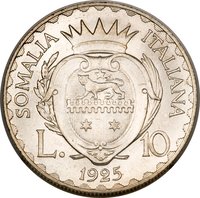
The crowned arms of Italian Somaliland (a leopard above two six-pointed stars) separates the value and legend, with the date below.
Inscription:
SOMALIA ITALIANA
L. 5
1925
L. 5
1925
Translation:
Italian Somalia
5 Lire
1925
5 Lire
1925
Script: Latin
Language: Italian
Engraver: Attilio Silvio Motti
Edge
Reeded
Categories
| Animal> Feline |
| Person> Monarch |
| Mustache/Beard |
| Symbol> Crown |
| Symbols> Coat of Arms |
Mints
| Name | Mark |
|---|---|
| Rome | R |
Mintings
| Year | Mint Mark | Mintage | Quality | Collection |
|---|---|---|---|---|
| 1925 | R | 400,000 |
Historical background
In 1925, Italian Somaliland operated under a complex and transitional currency system, a direct legacy of its colonial administration. The official currency was the Italian lira, introduced to integrate the territory into Italy's economic sphere. However, the lira's circulation was largely confined to administrative centers, major ports like Mogadishu, and transactions involving the colonial government and Italian businesses. For the vast majority of the local population, the lira held little practical use in daily trade.
The real day-to-day monetary landscape was dominated by the Maria Theresa thaler (MTT), a silver coin minted in Austria but ubiquitous throughout the Horn of Africa for over a century. Its consistent silver content and wide acceptance made it the preferred store of value and medium of exchange for the Somali pastoral economy and caravan trade. Alongside the thaler, the Indian rupee and the British East African shilling also circulated, particularly in coastal areas and regions bordering British Somaliland and Kenya, reflecting the territory's deep connections to Indian Ocean trade networks.
This multi-currency environment presented significant challenges for the Italian authorities, who sought greater monetary control and economic extraction. The colonial administration fixed exchange rates between the lira and the thaler, but these were often arbitrary and failed to reflect market values, leading to distortions and informal trading. Thus, 1925 represents a period of contested monetary sovereignty, where the official Italian currency coexisted uneasily with stronger, regionally entrenched currencies, highlighting the limited penetration of colonial economic structures within the traditional Somali economy.
The real day-to-day monetary landscape was dominated by the Maria Theresa thaler (MTT), a silver coin minted in Austria but ubiquitous throughout the Horn of Africa for over a century. Its consistent silver content and wide acceptance made it the preferred store of value and medium of exchange for the Somali pastoral economy and caravan trade. Alongside the thaler, the Indian rupee and the British East African shilling also circulated, particularly in coastal areas and regions bordering British Somaliland and Kenya, reflecting the territory's deep connections to Indian Ocean trade networks.
This multi-currency environment presented significant challenges for the Italian authorities, who sought greater monetary control and economic extraction. The colonial administration fixed exchange rates between the lira and the thaler, but these were often arbitrary and failed to reflect market values, leading to distortions and informal trading. Thus, 1925 represents a period of contested monetary sovereignty, where the official Italian currency coexisted uneasily with stronger, regionally entrenched currencies, highlighting the limited penetration of colonial economic structures within the traditional Somali economy.
💎 Extremely Rare