

Obverse
Description:
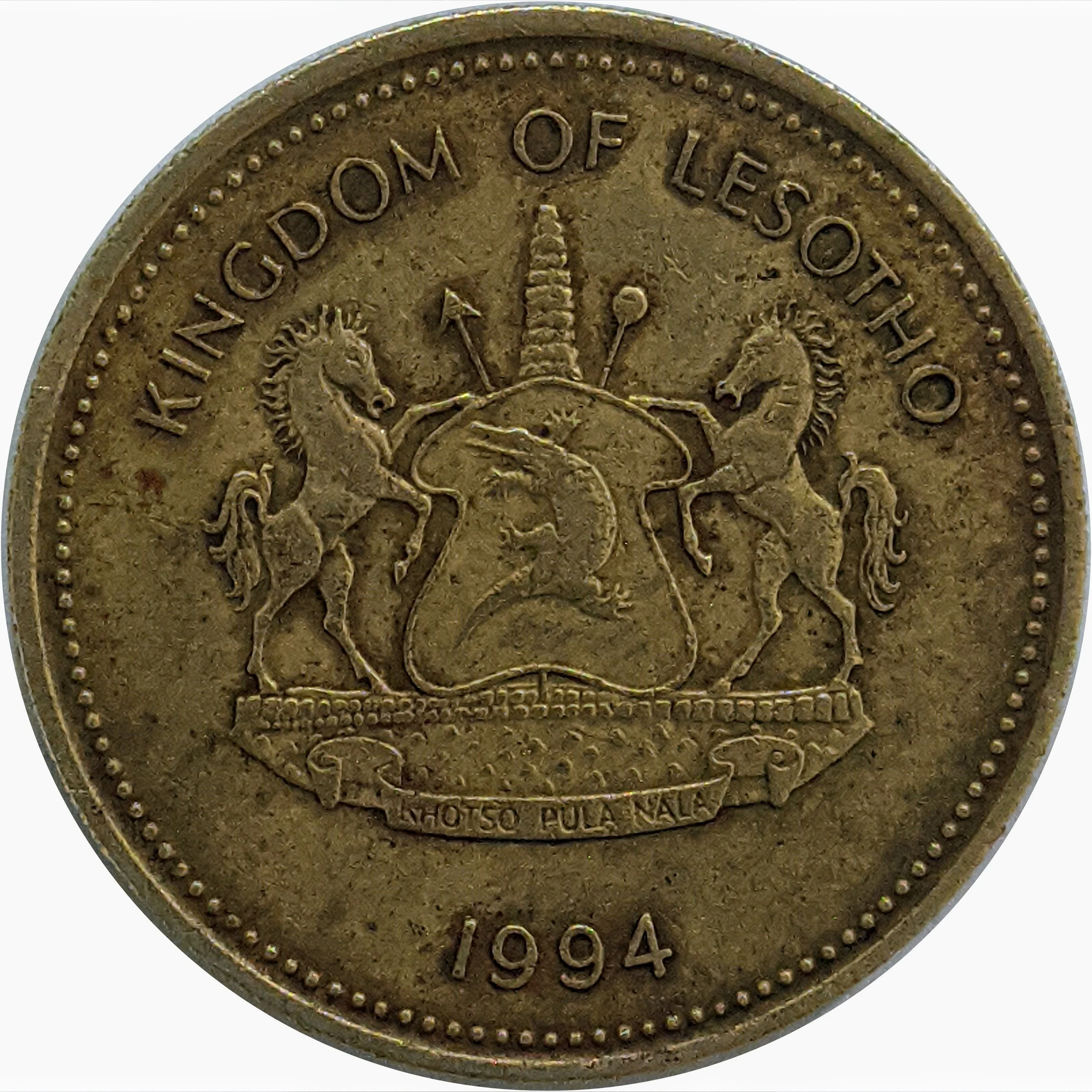
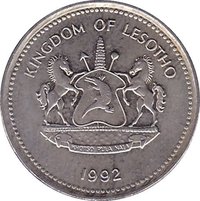
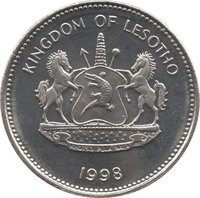
Lesotho's coat of arms features two horses framing a crocodile (symbol of the Seeiso dynasty), below a mountain representing the terrain. The motto reads "Khotso, Pula, Nala" (Peace, Rain, Prosperity).
Inscription:
KINGDOM OF LESOTHO
KHOTSO PULA NALA
1994
KHOTSO PULA NALA
1994
Translation:
KINGDOM OF LESOTHO
PEACE RAIN PROSPERITY
1994
PEACE RAIN PROSPERITY
1994
Script: Latin
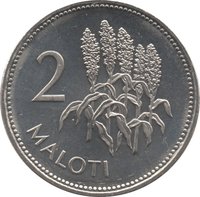
Reverse
Edge
Reeded
Categories
| Symbols> Coat of Arms |
Mintings
| Year | Mint Mark | Mintage | Quality | Collection |
|---|---|---|---|---|
| 1994 | — | — |
Historical background
In 1994, Lesotho's currency situation was fundamentally defined by its membership in the Common Monetary Area (CMA), an arrangement that pegged the Lesotho loti (LSL) at par to the South African rand (ZAR). The rand itself served as legal tender within the kingdom alongside the loti, creating a de facto currency union. This linkage meant Lesotho’s monetary policy was largely determined by the South African Reserve Bank, ceding significant control over interest rates and money supply in exchange for monetary stability and facilitated trade with its dominant economic neighbor.
The year 1994 was one of significant political transition following the restoration of democracy, but the currency regime remained a stable constant. The government of Prime Minister Ntsu Mokhehle, facing the challenges of post-election economic reconstruction, relied on the CMA framework to provide low inflation and currency predictability. This stability was crucial for attracting foreign investment and managing the economy, which was heavily dependent on migrant worker remittances from South Africa and revenues from the Lesotho Highlands Water Project.
However, this arrangement also highlighted Lesotho's constrained economic sovereignty. The loti's fate was directly tied to the rand's performance on international markets and South Africa's domestic economic policies. While this provided a buffer against isolated shocks, it also meant Lesotho imported both the benefits and vulnerabilities of the South African economy. Consequently, discussions in 1994, while affirming the CMA's importance, also centered on how to maximize the benefits of this monetary integration while developing domestic fiscal and structural policies to foster greater internal economic resilience.
The year 1994 was one of significant political transition following the restoration of democracy, but the currency regime remained a stable constant. The government of Prime Minister Ntsu Mokhehle, facing the challenges of post-election economic reconstruction, relied on the CMA framework to provide low inflation and currency predictability. This stability was crucial for attracting foreign investment and managing the economy, which was heavily dependent on migrant worker remittances from South Africa and revenues from the Lesotho Highlands Water Project.
However, this arrangement also highlighted Lesotho's constrained economic sovereignty. The loti's fate was directly tied to the rand's performance on international markets and South Africa's domestic economic policies. While this provided a buffer against isolated shocks, it also meant Lesotho imported both the benefits and vulnerabilities of the South African economy. Consequently, discussions in 1994, while affirming the CMA's importance, also centered on how to maximize the benefits of this monetary integration while developing domestic fiscal and structural policies to foster greater internal economic resilience.
🌟 Uncommon