

200 kroner (Queen's Birthday) – Denmark
Add to wishlist
Non-circulating coins
Commemoration: Queen's 50th Birthday
Denmark
Context
Material
References
KM: #
Numista: #29372
Value
Exchange value: 200 DKK
Bullion value: $62.03
Inflation-adjusted value: 396.26 DKK
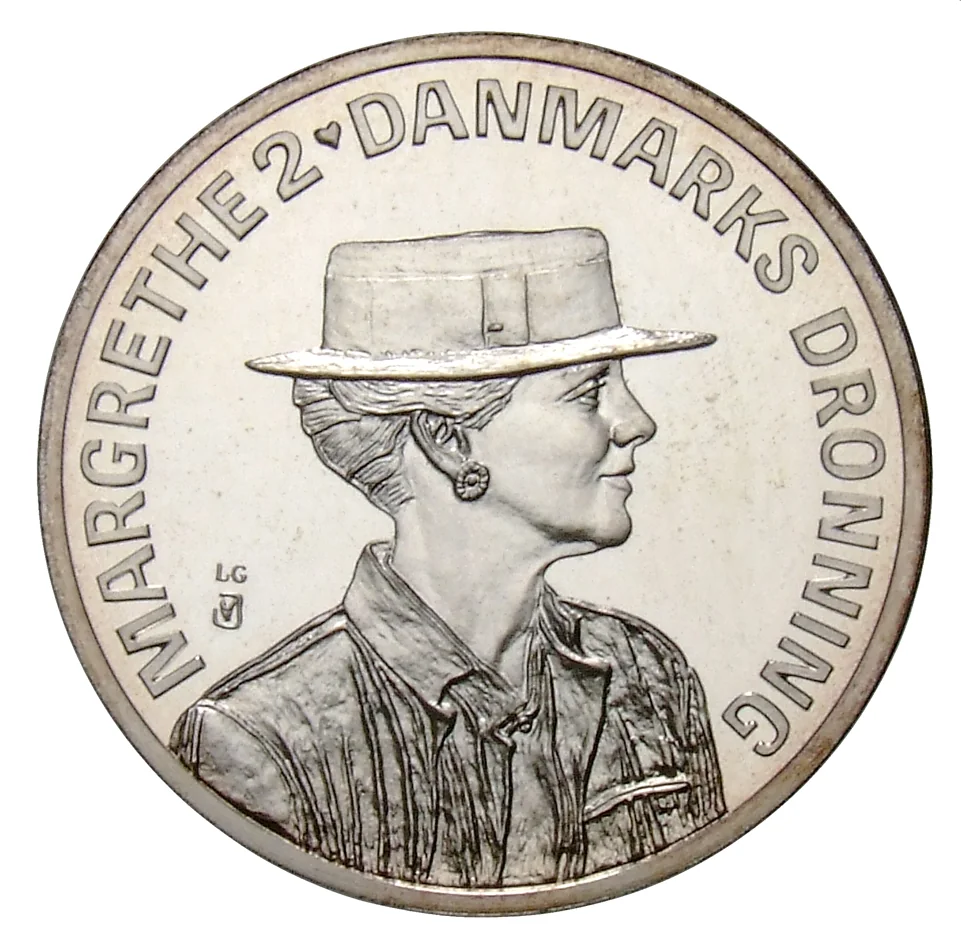
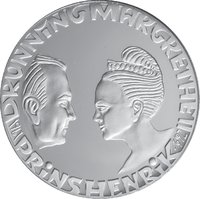
Obverse
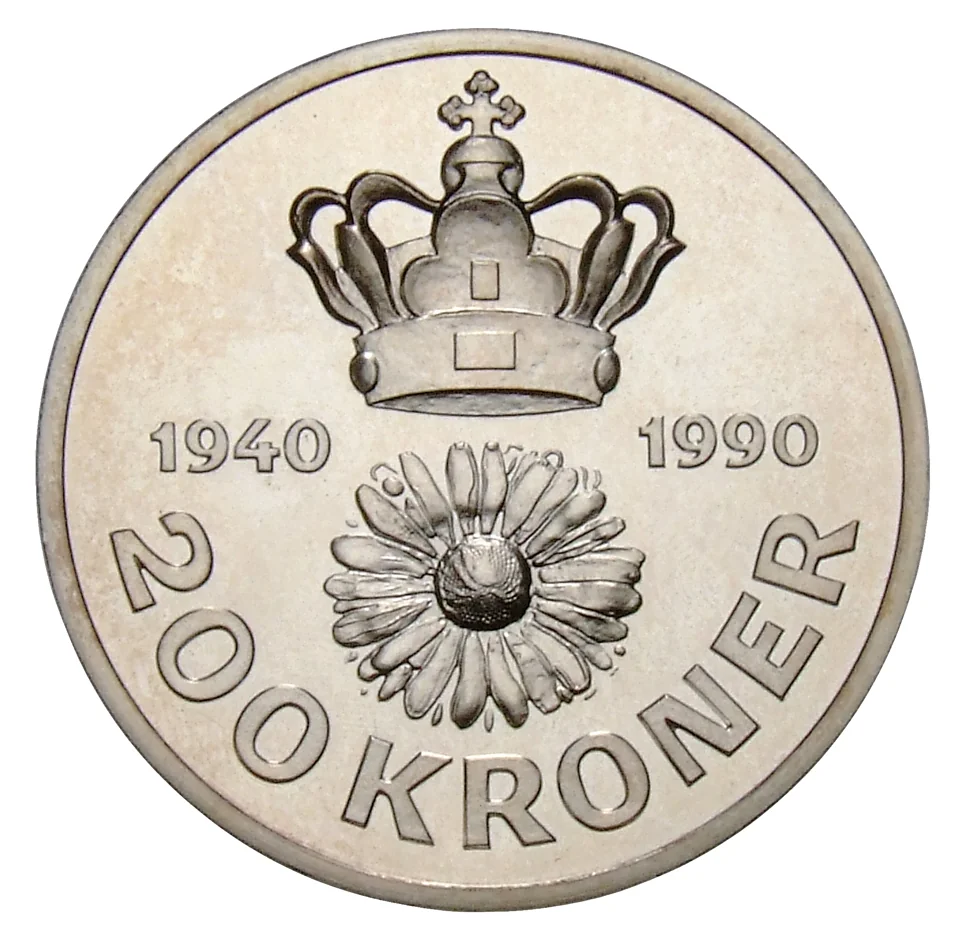
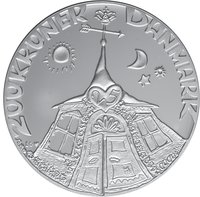
Reverse
Description:
Crown Flower: A fragrant, star-shaped blossom with a distinctive crown-like center.
Inscription:
1940 1990
200 KRONER
200 KRONER
Script: Latin
Edge
Plain
Categories
| Event> Birth anniversary |
| Object> Hat |
Mints
| Name | Mark |
|---|---|
| Royal Danish Mint | — |
Mintings
| Year | Mint Mark | Mintage | Quality | Collection |
|---|---|---|---|---|
| 1990 | LG | 132,655 |
Historical background
In 1990, Denmark's currency situation was defined by its pivotal role within the European Monetary System (EMS) and its ongoing political debate regarding deeper European integration. The Danish krone (DKK) was a central and stable member of the EMS Exchange Rate Mechanism (ERM), pegged to the European Currency Unit (ECU) within narrow fluctuation bands. This arrangement, in place since 1979, had successfully provided low inflation and exchange rate stability, anchoring Denmark's small, open economy to its major trading partners, particularly Germany. The Bundesbank's monetary policy effectively became the benchmark for Denmark, requiring the Danmarks Nationalbank to closely shadow German interest rates to maintain the krone's peg.
This period was one of quiet stability for the krone itself, but it occurred against a tense political backdrop. Across Europe, the Maastricht Treaty negotiations were advancing, proposing a path to Economic and Monetary Union (EMU) and a single currency. Domestically, this sparked a profound debate about national sovereignty and economic policy. Many Danes, including key political and economic actors, were skeptical of ceding monetary control to a European central bank. The memory of the 1982 devaluation and the subsequent austerity that restored stability made authorities wary of any system that might compromise their hard-won credibility.
Thus, while the technical currency regime in 1990 was functioning smoothly within the ERM, the fundamental question was Denmark's future within it. The stage was being set for the pivotal 1992 referendum on the Maastricht Treaty, which would initially result in a Danish 'no' vote, triggering the EMS crises of 1992-93. Consequently, 1990 represents a calm before the storm—a year of operational stability for the krone, but one of growing political uncertainty about Denmark's commitment to the next, more binding stage of European monetary integration.
This period was one of quiet stability for the krone itself, but it occurred against a tense political backdrop. Across Europe, the Maastricht Treaty negotiations were advancing, proposing a path to Economic and Monetary Union (EMU) and a single currency. Domestically, this sparked a profound debate about national sovereignty and economic policy. Many Danes, including key political and economic actors, were skeptical of ceding monetary control to a European central bank. The memory of the 1982 devaluation and the subsequent austerity that restored stability made authorities wary of any system that might compromise their hard-won credibility.
Thus, while the technical currency regime in 1990 was functioning smoothly within the ERM, the fundamental question was Denmark's future within it. The stage was being set for the pivotal 1992 referendum on the Maastricht Treaty, which would initially result in a Danish 'no' vote, triggering the EMS crises of 1992-93. Consequently, 1990 represents a calm before the storm—a year of operational stability for the krone, but one of growing political uncertainty about Denmark's commitment to the next, more binding stage of European monetary integration.
🌟 Limited