

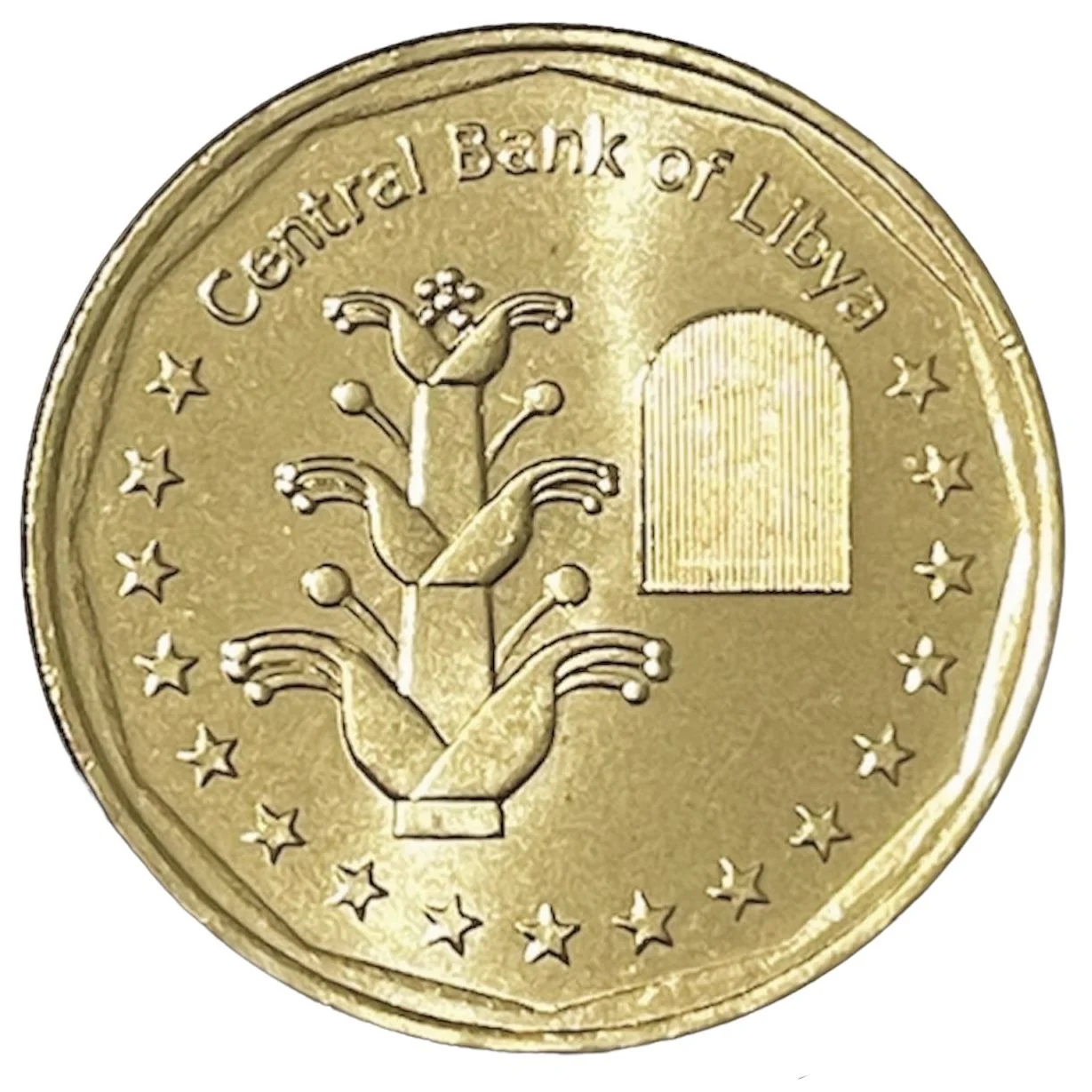
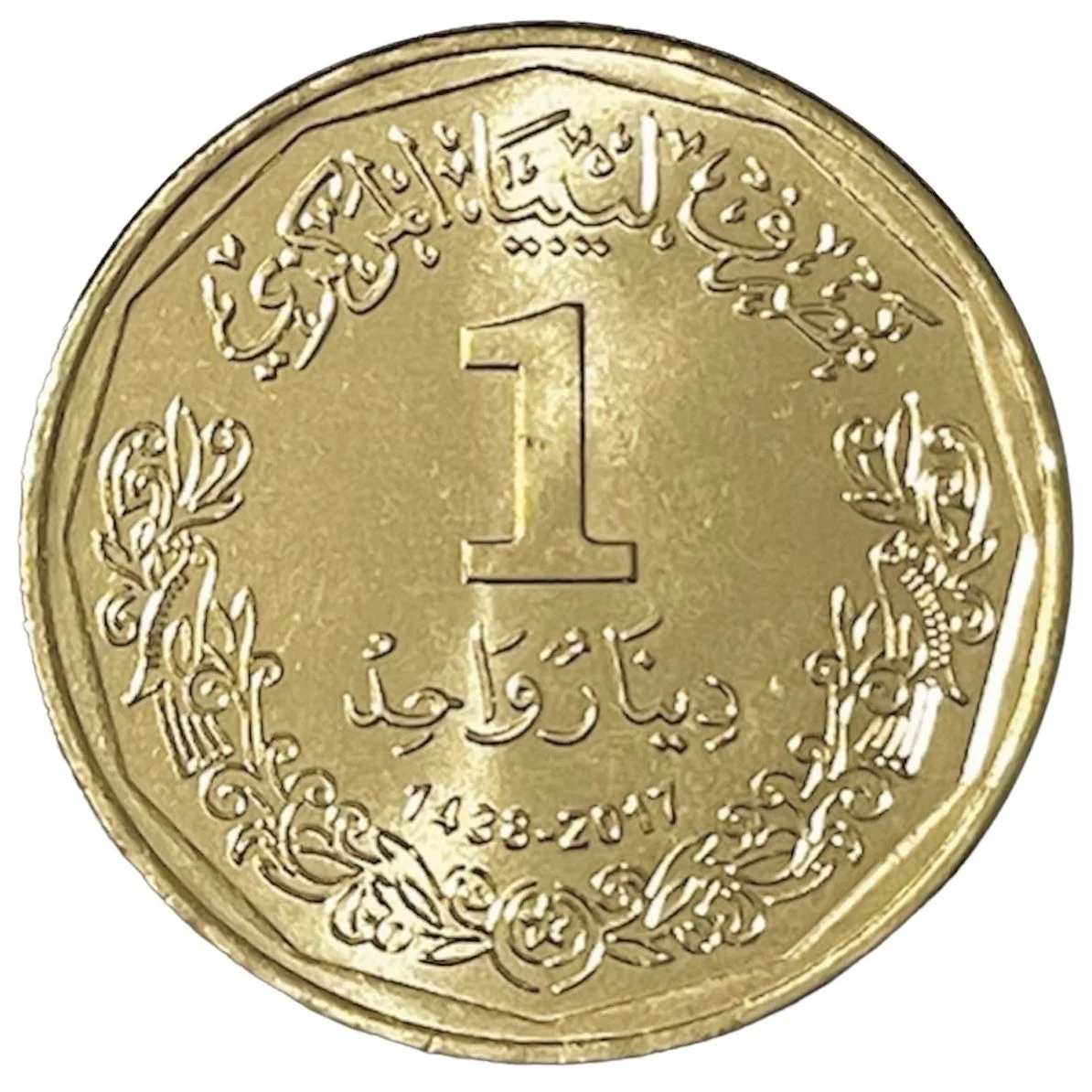
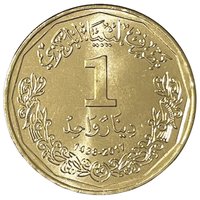
1 Dinar – Libya
Libya
Context
Year: 2017
Islamic (Hijri) Year: 1438
Issuer: Libya 
Issuing organization: Central Bank of Libya
Period:
(since 2016)
Currency:
(since 1971)
Material
References
KM: #Click to copy to clipboard36
Numista: #134935
Value
Exchange value: 1 LYD
Obverse
Reverse
Edge
Reeded with the repeated inscription ★⥛★
Legend:
★⥛★ ★⥛★ ★⥛★ ★⥛★ ★⥛★ ★⥛★ ★⥛★
Translation:
STAR STAR STAR STAR STAR STAR STAR
Language: Greek
Mints
| Name | Mark |
|---|---|
| Moscow Mint | — |
Mintings
| Year | Mint Mark | Mintage | Quality | Collection |
|---|---|---|---|---|
| 2017 | — | — |
Historical background
In 2017, Libya remained trapped in a severe monetary crisis, a direct consequence of the political and institutional fragmentation that followed the 2011 revolution. The country was divided between two rival administrations: the UN-backed Government of National Accord (GNA) in Tripoli and the eastern-based Libyan National Army (LNA) led by Khalifa Haftar, which aligned with a parallel government. This division extended to the Central Bank of Libya (CBL), which, while technically still unified in Tripoli, faced immense pressure from both sides, leading to competing monetary policies and a crippling liquidity crisis. The fundamental problem was a massive disparity between the official exchange rate (1.4 Libyan dinars to the US dollar) and a flourishing black market rate, which had soared to nearly 10 LYD to the dollar by year's end.
This exchange rate chaos fueled a vicious cycle of inflation, shortages, and capital flight. Importers needed hard currency at the official rate, but access was restricted and often granted based on patronage, leading to widespread corruption. The scarcity of banknotes, exacerbated by the CBL's inability to import new dinars due to international sanctions and internal disputes, meant citizens faced long queues at banks to withdraw limited cash allowances. Meanwhile, those with connections profited immensely by obtaining dollars at the official rate and selling them on the black market, draining state reserves which were primarily funded by oil revenues that were themselves frequently interrupted by blockades.
Consequently, the currency situation severely exacerbated the humanitarian crisis for ordinary Libyans. The plummeting purchasing power of the dinar caused the cost of basic goods and medicines to skyrocket, pushing more people into poverty. The economic stalemate also became a key tool in the political conflict, with each side attempting to leverage control over financial institutions and oil revenues to undermine the other. By the end of 2017, the monetary system was both a symptom and a cause of the state's collapse, with no unified authority capable of implementing the necessary reforms to devalue the currency and restore stability.
This exchange rate chaos fueled a vicious cycle of inflation, shortages, and capital flight. Importers needed hard currency at the official rate, but access was restricted and often granted based on patronage, leading to widespread corruption. The scarcity of banknotes, exacerbated by the CBL's inability to import new dinars due to international sanctions and internal disputes, meant citizens faced long queues at banks to withdraw limited cash allowances. Meanwhile, those with connections profited immensely by obtaining dollars at the official rate and selling them on the black market, draining state reserves which were primarily funded by oil revenues that were themselves frequently interrupted by blockades.
Consequently, the currency situation severely exacerbated the humanitarian crisis for ordinary Libyans. The plummeting purchasing power of the dinar caused the cost of basic goods and medicines to skyrocket, pushing more people into poverty. The economic stalemate also became a key tool in the political conflict, with each side attempting to leverage control over financial institutions and oil revenues to undermine the other. By the end of 2017, the monetary system was both a symptom and a cause of the state's collapse, with no unified authority capable of implementing the necessary reforms to devalue the currency and restore stability.
🌱 Fairly Common