

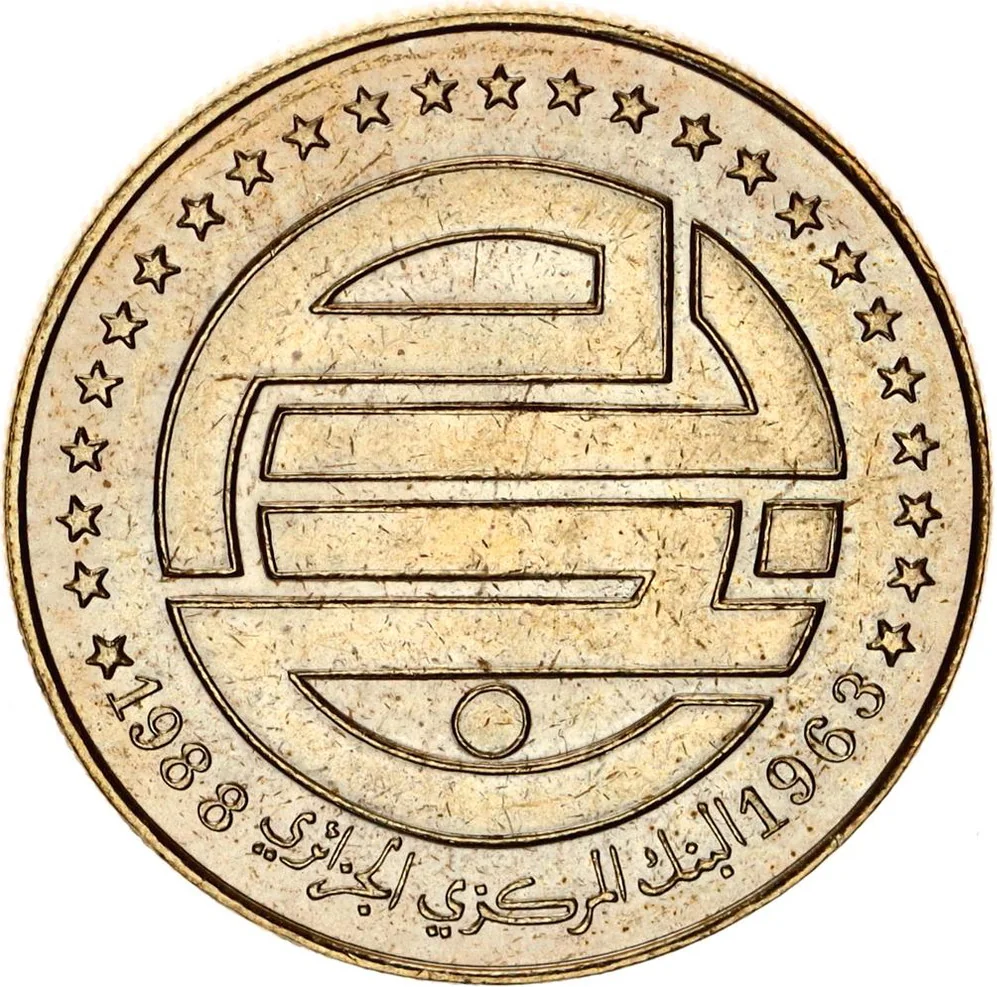
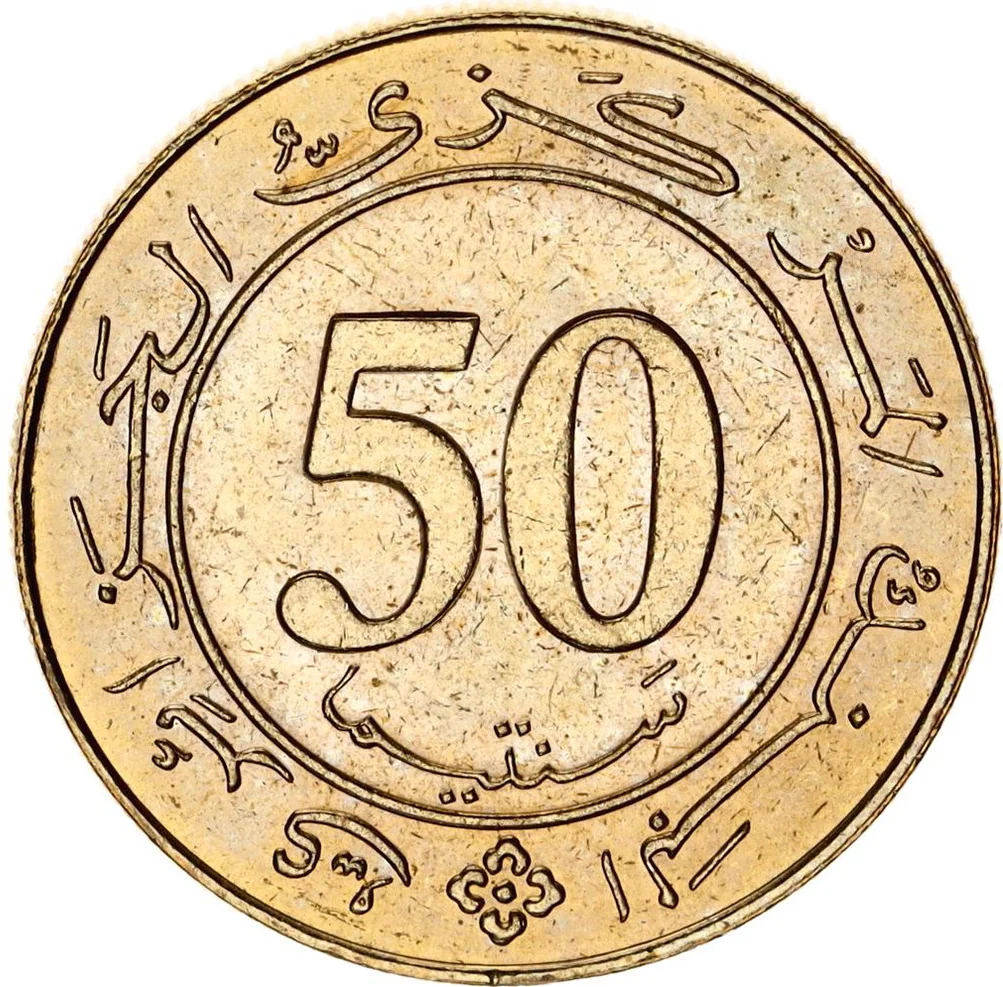
50 centimes (Constitution) – Algeria
Add to wishlist
Circulating commemorative coins
Commemoration: 25th Anniversary of Constitution
Algeria
Context
Year: 1988
Issuer: Algeria
Period:
(since 1962)
Currency:
(since 1964)
Demonetized: Yes
Total mintage: 64,442,303
Material
Diameter: 24 mm
Weight: 5 g
Thickness: 1.4 mm
Shape: Round
Composition: Aluminium bronze
Magnetic: No
Technique: Milled
Alignment: Coin alignment
flip
References
KM: #
Numista: #2927
Value
Exchange value: 0.50 DZD
Obverse
Reverse
Edge
Reeded
Mints
| Name | Mark |
|---|---|
| Algiers | — |
| Monnaie de Paris | — |
Mintings
| Year | Mint Mark | Mintage | Quality | Collection |
|---|---|---|---|---|
| 1988 | — | 64,442,303 |
Historical background
In 1988, Algeria's currency situation was intrinsically linked to a severe economic crisis precipitated by the collapse of global oil prices in the mid-1980s. As a state heavily dependent on hydrocarbon exports (which accounted for over 95% of foreign earnings), the sharp decline in revenue created a massive balance of payments deficit and drained foreign exchange reserves. The government was forced to implement harsh austerity measures, slash imports, and accumulate significant external debt to maintain basic operations, severely constraining the availability of essential goods and putting immense pressure on the Algerian dinar.
This economic distress manifested in a critical currency duality: an overvalued official exchange rate for the dinar set by the state, and a vastly depreciated black-market rate. The wide gap between these rates reflected the scarcity of hard currency and the inefficiencies of the state-controlled economy. For ordinary Algerians and businesses, access to foreign currency through official channels was extremely limited, forcing reliance on the marché noir where the dinar's value was a fraction of its official worth. This eroded purchasing power, fueled inflation for imported goods, and created a pervasive system of rent-seeking and corruption.
The currency instability was a core component of the broader social and political explosion in October 1988. Widespread shortages, unemployment, and the visible inequalities fostered by the dual-rate system contributed to deep public anger against the single-party FLN state. The violent riots and subsequent political reforms that year were, in part, a direct consequence of this economic breakdown, where the failing currency regime symbolized the state's inability to provide for its citizens and manage the national economy effectively.
This economic distress manifested in a critical currency duality: an overvalued official exchange rate for the dinar set by the state, and a vastly depreciated black-market rate. The wide gap between these rates reflected the scarcity of hard currency and the inefficiencies of the state-controlled economy. For ordinary Algerians and businesses, access to foreign currency through official channels was extremely limited, forcing reliance on the marché noir where the dinar's value was a fraction of its official worth. This eroded purchasing power, fueled inflation for imported goods, and created a pervasive system of rent-seeking and corruption.
The currency instability was a core component of the broader social and political explosion in October 1988. Widespread shortages, unemployment, and the visible inequalities fostered by the dual-rate system contributed to deep public anger against the single-party FLN state. The violent riots and subsequent political reforms that year were, in part, a direct consequence of this economic breakdown, where the failing currency regime symbolized the state's inability to provide for its citizens and manage the national economy effectively.
🌱 Very Common