

1 livre – Lebanon
Add to wishlist
Non-circulating coins
Commemoration: Amin Maalouf Joining the French Academy
Lebanon
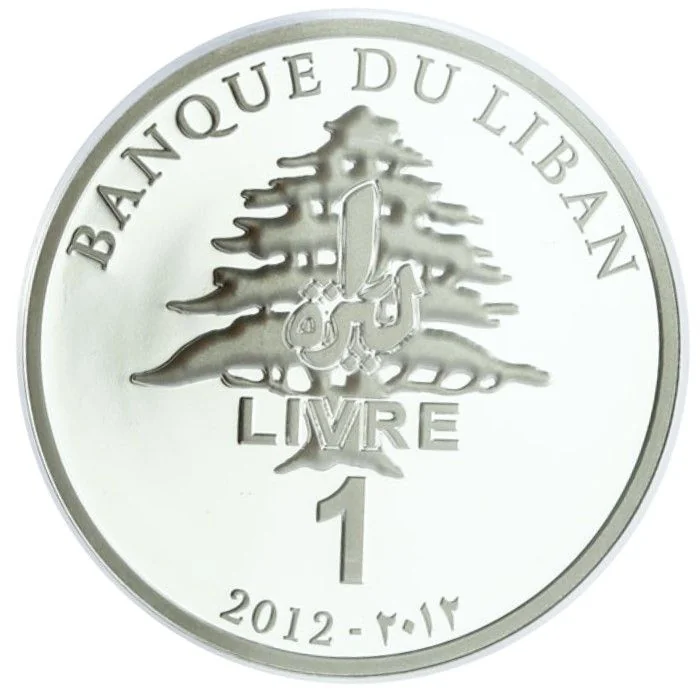
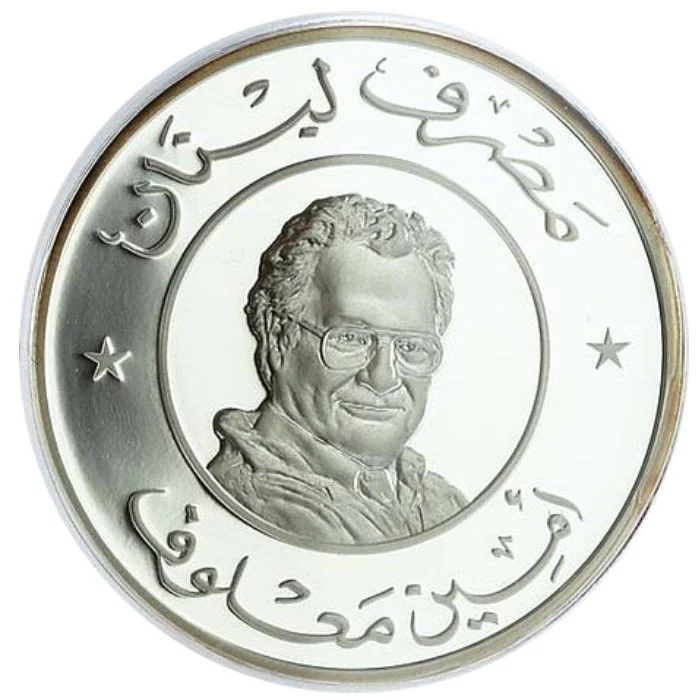
Obverse
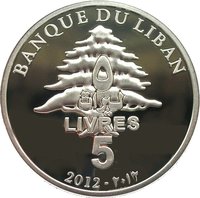
Reverse
Description:
Amin Maalouf's bust in profile.
Inscription:
★ مَصرف لبنَان ★
أمِين مَعلوف
أمِين مَعلوف
Translation:
★ Bank of Lebanon ★
Amin Maalouf
Amin Maalouf
Language: Arabic
Edge
Inscribed
Legend:
28,28g / Ag 999
Categories
| Art> Literature |
Mintings
| Year | Mint Mark | Mintage | Quality | Collection |
|---|---|---|---|---|
| 2012 | — | 1,000 | Proof |
Historical background
By 2012, Lebanon's currency situation was characterized by a fragile but tenacious stability of the Lebanese pound (LBP), officially pegged at 1,507.5 pounds to the US dollar since 1997. This stability was maintained not by robust foreign reserves or a strong economy, but primarily through the confidence-driven financial engineering of the Banque du Liban (BdL), the central bank. Governor Riad Salameh's policies, including offering high interest rates on dollar deposits to commercial banks and engaging in complex swap operations, successfully attracted the necessary capital inflows from the vast Lebanese diaspora. This created a circular system where fresh dollars funded the subsidy of the peg, allowing the official exchange rate to hold firm in the face of underlying economic weaknesses.
However, this stability masked profound and growing vulnerabilities. The national debt-to-GDP ratio remained one of the highest in the world, exceeding 130%, fueled by chronic government deficits and a stagnant, unproductive economic model. Political paralysis, exacerbated by the spillover effects of the Syrian Civil War which began in 2011, hindered crucial fiscal reforms and infrastructure investment. The economy became increasingly dollarized, with many large transactions and savings held in US dollars, highlighting a deep-seated lack of confidence in the national currency despite its fixed rate. The BdL's policies were effectively buying time at a high cost, building up contingent liabilities and creating a substantial financial imbalance.
In summary, the currency situation in 2012 was a calm before the storm. The peg held firm on the surface, a point of national pride and perceived stability. Yet, it was fundamentally underpinned by unsustainable financial maneuvers that depended on continuous inflows of foreign capital. The underlying economic stagnation, political dysfunction, and soaring public debt were creating the conditions for a severe future crisis, which would erupt years later when the inflows eventually slowed and the pyramid of confidence collapsed.
However, this stability masked profound and growing vulnerabilities. The national debt-to-GDP ratio remained one of the highest in the world, exceeding 130%, fueled by chronic government deficits and a stagnant, unproductive economic model. Political paralysis, exacerbated by the spillover effects of the Syrian Civil War which began in 2011, hindered crucial fiscal reforms and infrastructure investment. The economy became increasingly dollarized, with many large transactions and savings held in US dollars, highlighting a deep-seated lack of confidence in the national currency despite its fixed rate. The BdL's policies were effectively buying time at a high cost, building up contingent liabilities and creating a substantial financial imbalance.
In summary, the currency situation in 2012 was a calm before the storm. The peg held firm on the surface, a point of national pride and perceived stability. Yet, it was fundamentally underpinned by unsustainable financial maneuvers that depended on continuous inflows of foreign capital. The underlying economic stagnation, political dysfunction, and soaring public debt were creating the conditions for a severe future crisis, which would erupt years later when the inflows eventually slowed and the pyramid of confidence collapsed.

✨ Legendary