

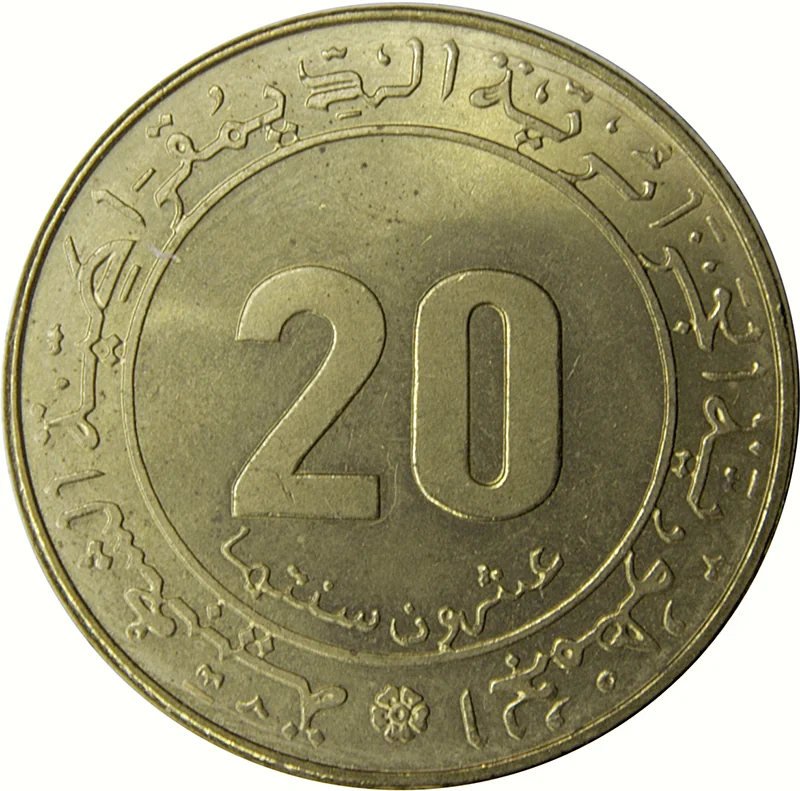
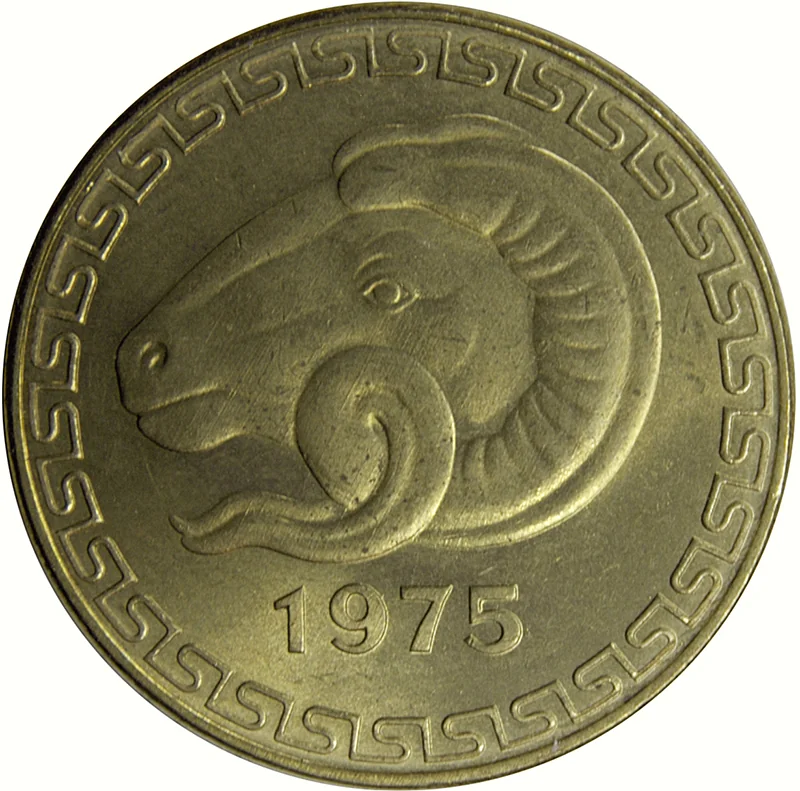
20 centimes – Algeria
Add to wishlist
Circulating commemorative coins
Commemoration: FAO - Increase of Animal Resources
Algeria
Obverse
Reverse
Edge
Plain
Categories
| Animal> Sheep |
| Organization> FAO |
Mints
| Name | Mark |
|---|---|
| Algiers | — |
| Kremnica | — |
| Staatliche Münze Baden-Württemberg | — |
Mintings
| Year | Mint Mark | Mintage | Quality | Collection |
|---|---|---|---|---|
| 1975 | — | 40,000,000 |
Historical background
In 1975, Algeria's currency situation was fundamentally shaped by its state-led socialist economic model and its status as a major hydrocarbon exporter. The Algerian dinar (DZD), established after independence in 1964, was a non-convertible currency managed by the Banque Centrale d'Algérie under a fixed exchange rate regime. Its value was pegged to a basket of currencies, heavily weighted toward the French franc, reflecting enduring economic ties with the former colonial power. This system provided stability but came with strict exchange controls, limiting convertibility for citizens and businesses to prevent capital flight and maintain centralized control over foreign reserves.
The country's fiscal and monetary health was overwhelmingly dependent on oil and gas revenues, which surged following the 1973 oil crisis. This influx of petrodollars financed massive state-led industrialization projects and a broad social welfare system, shielding the dinar from immediate balance-of-payments pressures. However, this also created a structural vulnerability, tying the currency's stability to volatile global oil prices. Internally, a large public sector and extensive subsidies for basic goods, made possible by energy revenues, suppressed inflationary pressures in the short term but masked underlying inefficiencies.
Consequently, the currency situation in 1975 appeared robust on the surface, with ample foreign reserves supporting the fixed peg. Yet, it was characterized by a growing duality: a stable official exchange rate for government and priority imports, contrasted with a restrictive financial system that stifled private sector development and foreign investment. This period represented the height of Algeria's "industrializing industries" policy, funded by oil wealth, which postponed but would eventually exacerbate the challenges of a overvalued and inflexible currency when global energy markets shifted in the following decade.
The country's fiscal and monetary health was overwhelmingly dependent on oil and gas revenues, which surged following the 1973 oil crisis. This influx of petrodollars financed massive state-led industrialization projects and a broad social welfare system, shielding the dinar from immediate balance-of-payments pressures. However, this also created a structural vulnerability, tying the currency's stability to volatile global oil prices. Internally, a large public sector and extensive subsidies for basic goods, made possible by energy revenues, suppressed inflationary pressures in the short term but masked underlying inefficiencies.
Consequently, the currency situation in 1975 appeared robust on the surface, with ample foreign reserves supporting the fixed peg. Yet, it was characterized by a growing duality: a stable official exchange rate for government and priority imports, contrasted with a restrictive financial system that stifled private sector development and foreign investment. This period represented the height of Algeria's "industrializing industries" policy, funded by oil wealth, which postponed but would eventually exacerbate the challenges of a overvalued and inflexible currency when global energy markets shifted in the following decade.
🌱 Very Common