

20 rupees (Central Bank of Sri Lanka) – Sri Lanka
Add to wishlist
Non-circulating coins
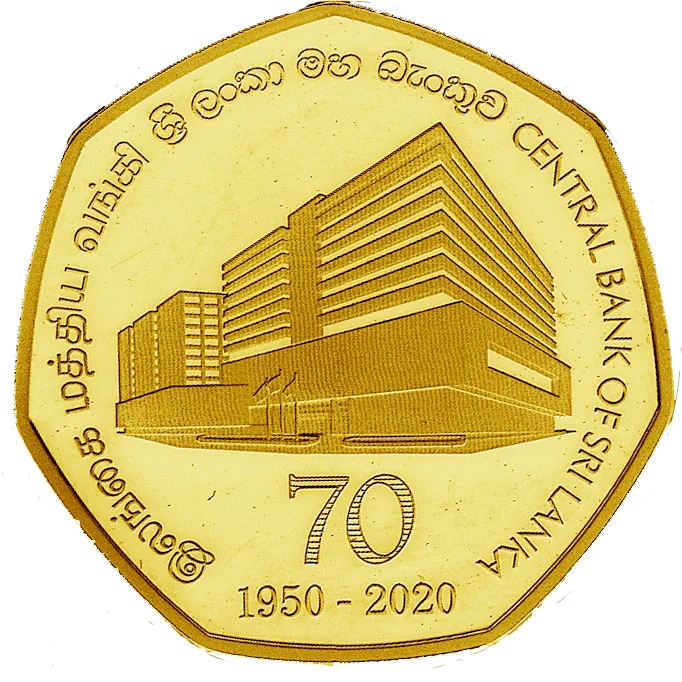
Commemoration: 70th Anniversary of the Central Bank of Sri Lanka.
Sri Lanka
Context
Material
Diameter: 28 mm
Weight: 8.7 g
Thickness: 2 mm
Shape: Equilateral curve heptagon
Composition: Aluminium bronze
Magnetic: No
Technique: Milled
Alignment: Medal alignment
flip
References
KM: #
Numista: #292279
Value
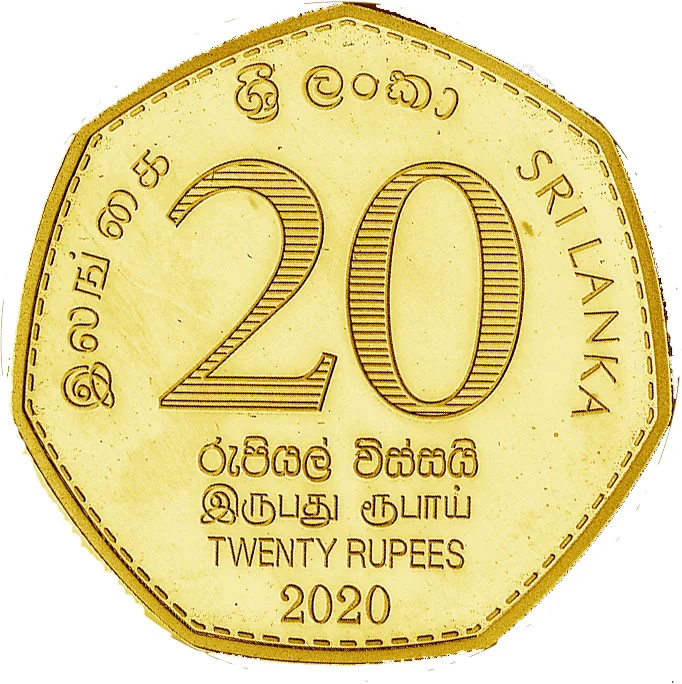
Exchange value: 20 LKR
Obverse
Reverse
Edge
Plain
Categories
| Building |
Mintings
| Year | Mint Mark | Mintage | Quality | Collection |
|---|---|---|---|---|
| 2020 | — | 3,000 |
Historical background
In 2020, Sri Lanka's currency situation was characterized by severe external pressures and a deepening economic crisis, exacerbated by the COVID-19 pandemic. The year began with the country already facing significant foreign debt obligations and a persistent trade deficit. The pandemic delivered a devastating blow to key foreign exchange-earning sectors—tourism collapsed, remittances from overseas workers faltered, and export revenues declined. This created a critical shortage of US dollars, putting immense downward pressure on the Sri Lankan Rupee (LKR).
In response, the Central Bank of Sri Lanka (CBSL) attempted to manage the currency through a "soft-peg" system, actively intervening in the forex market to maintain an official rate around LKR 182-185 per US dollar. However, this policy was unsustainable as reserves dwindled. A wide parallel black market for dollars emerged, where the rupee traded at a significant premium, sometimes exceeding LKR 200, highlighting the growing disparity between the official rate and market reality. To conserve scarce reserves, the government also imposed strict import restrictions on hundreds of non-essential items, from vehicles to certain food products.
The currency mismanagement of 2020 set the stage for the far more severe crisis to come. By defending an overvalued rupee, the CBSL burned through precious foreign reserves, which fell from a relatively comfortable $7.5 billion at the end of 2019 to under $6 billion by year-end 2020. This depletion left the country dangerously exposed to its upcoming debt repayments. The choices made in 2020—prioritizing currency stability over a market-driven adjustment—ultimately deferred but intensified the economic pain, leading to a full-blown balance of payments crisis and a forced float and sharp devaluation of the rupee in 2022.
In response, the Central Bank of Sri Lanka (CBSL) attempted to manage the currency through a "soft-peg" system, actively intervening in the forex market to maintain an official rate around LKR 182-185 per US dollar. However, this policy was unsustainable as reserves dwindled. A wide parallel black market for dollars emerged, where the rupee traded at a significant premium, sometimes exceeding LKR 200, highlighting the growing disparity between the official rate and market reality. To conserve scarce reserves, the government also imposed strict import restrictions on hundreds of non-essential items, from vehicles to certain food products.
The currency mismanagement of 2020 set the stage for the far more severe crisis to come. By defending an overvalued rupee, the CBSL burned through precious foreign reserves, which fell from a relatively comfortable $7.5 billion at the end of 2019 to under $6 billion by year-end 2020. This depletion left the country dangerously exposed to its upcoming debt repayments. The choices made in 2020—prioritizing currency stability over a market-driven adjustment—ultimately deferred but intensified the economic pain, leading to a full-blown balance of payments crisis and a forced float and sharp devaluation of the rupee in 2022.
✨ Legendary