

100 mon – Fukuoka Domain
Add to wishlist
Japan
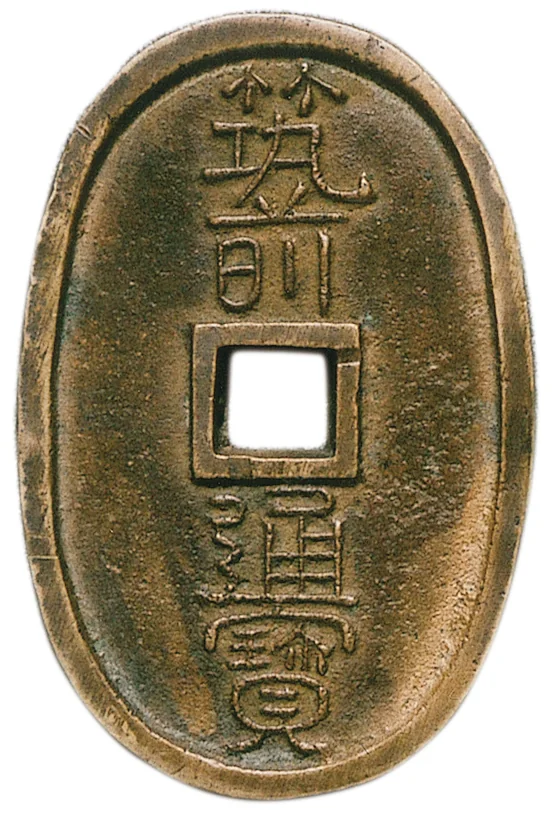
Obverse
Description:
Vertical text split by center hole.
Inscription:
筑
前
通
寳
前
通
寳
Translation:
Zhu Qian Tong Bao
Language: Classical Chinese
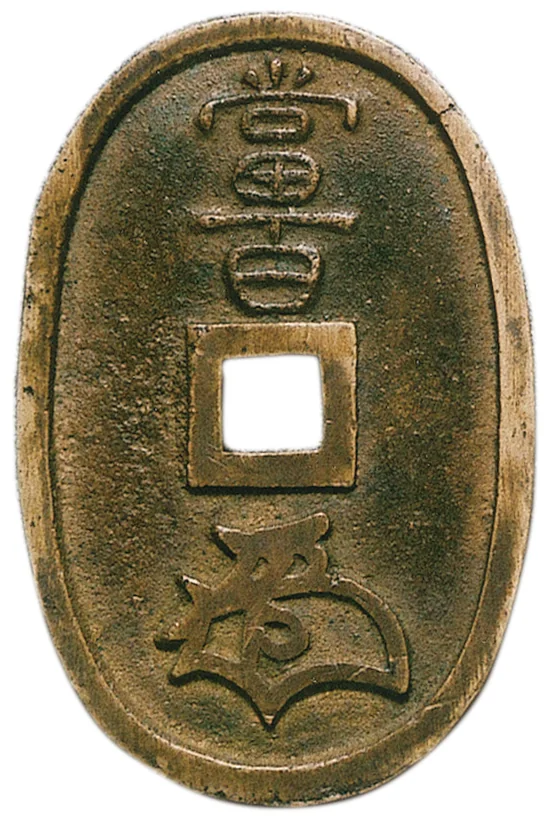
Reverse
Description:
Denomination above hole, Kaō below.
Inscription:
當
百
百
Translation:
Value One Hundred.
Language: Classical Chinese
Edge
Mintings
| Year | Mint Mark | Mintage | Quality | Collection |
|---|---|---|---|---|
| 1863 | — | — |
Historical background
In 1863, the currency situation in Fukuoka Domain (also known as Kuroda Domain) was a microcosm of the severe financial and monetary crisis engulfing the Tokugawa shogunate in its final years. Like all domains, Fukuoka operated within the shogunate's multi-metallic system, but it also issued its own paper scrip, known as hansatsu (domain notes). By the 1860s, rampant over-issuance of both shogunate coinage and these local notes to cover massive domain debts—incurred from sankin-kōtai obligations, military preparedness, and general inflation—led to a severe devaluation of currency. The value of Fukuoka's hansatsu against standard gold and silver coinage fluctuated wildly and generally fell, causing price instability and hardship for commoners.
This monetary instability was acutely tied to the domain's political position. As a tozama domain charged with guarding the Kyushu coast against foreign incursions following the 1853 Perry Expedition, Fukuoka faced extraordinary and un-budgeted expenses for coastal defense and modernizing its military. With insufficient income from its agrarian base, the domainal government resorted to debasing its currency and issuing more hansatsu, effectively imposing a hidden tax on the economy. This practice eroded public trust, and merchants often demanded payment in harder, shogunate-issued coin, creating a dual-tier economy.
Furthermore, the crisis in Fukuoka was exacerbated by the broader national chaos. The shogunate's own currency was collapsing, and the influx of foreign silver after the forced opening of ports disrupted Japan's bullion balance. For Fukuoka's authorities in 1863, managing currency was a daily struggle to maintain solvency and social order. The inflationary spiral fueled samurai impoverishment and merchant discontent, weakening the domain's social fabric at a critical historical juncture just before the Boshin War, highlighting how monetary policy was inextricably linked to the domain's survival amidst the fall of the Tokugawa order.
This monetary instability was acutely tied to the domain's political position. As a tozama domain charged with guarding the Kyushu coast against foreign incursions following the 1853 Perry Expedition, Fukuoka faced extraordinary and un-budgeted expenses for coastal defense and modernizing its military. With insufficient income from its agrarian base, the domainal government resorted to debasing its currency and issuing more hansatsu, effectively imposing a hidden tax on the economy. This practice eroded public trust, and merchants often demanded payment in harder, shogunate-issued coin, creating a dual-tier economy.
Furthermore, the crisis in Fukuoka was exacerbated by the broader national chaos. The shogunate's own currency was collapsing, and the influx of foreign silver after the forced opening of ports disrupted Japan's bullion balance. For Fukuoka's authorities in 1863, managing currency was a daily struggle to maintain solvency and social order. The inflationary spiral fueled samurai impoverishment and merchant discontent, weakening the domain's social fabric at a critical historical juncture just before the Boshin War, highlighting how monetary policy was inextricably linked to the domain's survival amidst the fall of the Tokugawa order.
✨ Legendary