

2½ pahlavī – Iran
Add to wishlist
Iran
Context
Years: 1975–1979
Issuer: Iran
Ruler: Mohammad Reza
Currency:
Demonetization: 2 November 1979
Total mintage: 34,000
Material
References
KM: #
Numista: #29170
Value
Bullion value: $2804.92
Obverse
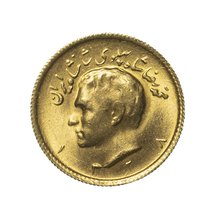
Description:
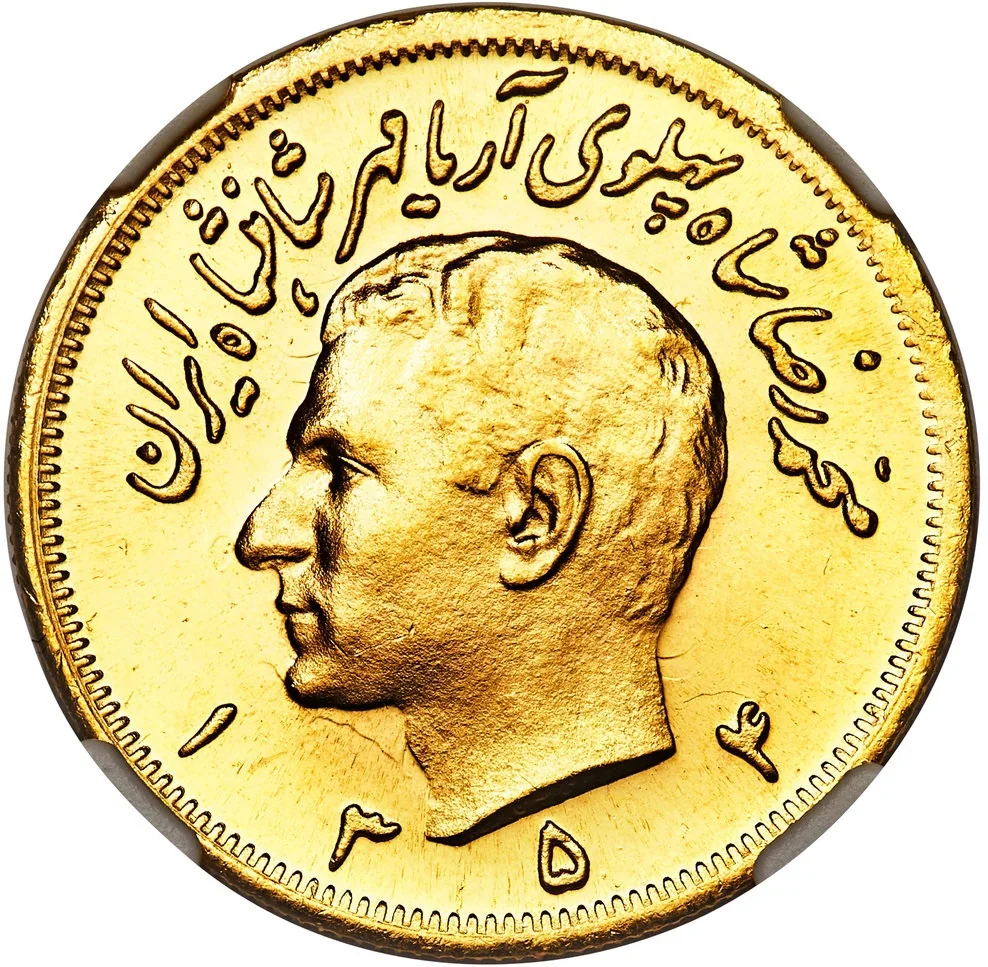
Mohammad Reza Shah Pahlavi profile on coin.
Inscription:
محمّدرضا شاه پهلوی آریامهر شاهنشاه ایران
۱۳۵۴
۱۳۵۴
Translation:
Mohammad Reza Shah Pahlavi Aryamehr, Shahanshah of Iran
1354
1354
Language: Persian
Reverse
Description:
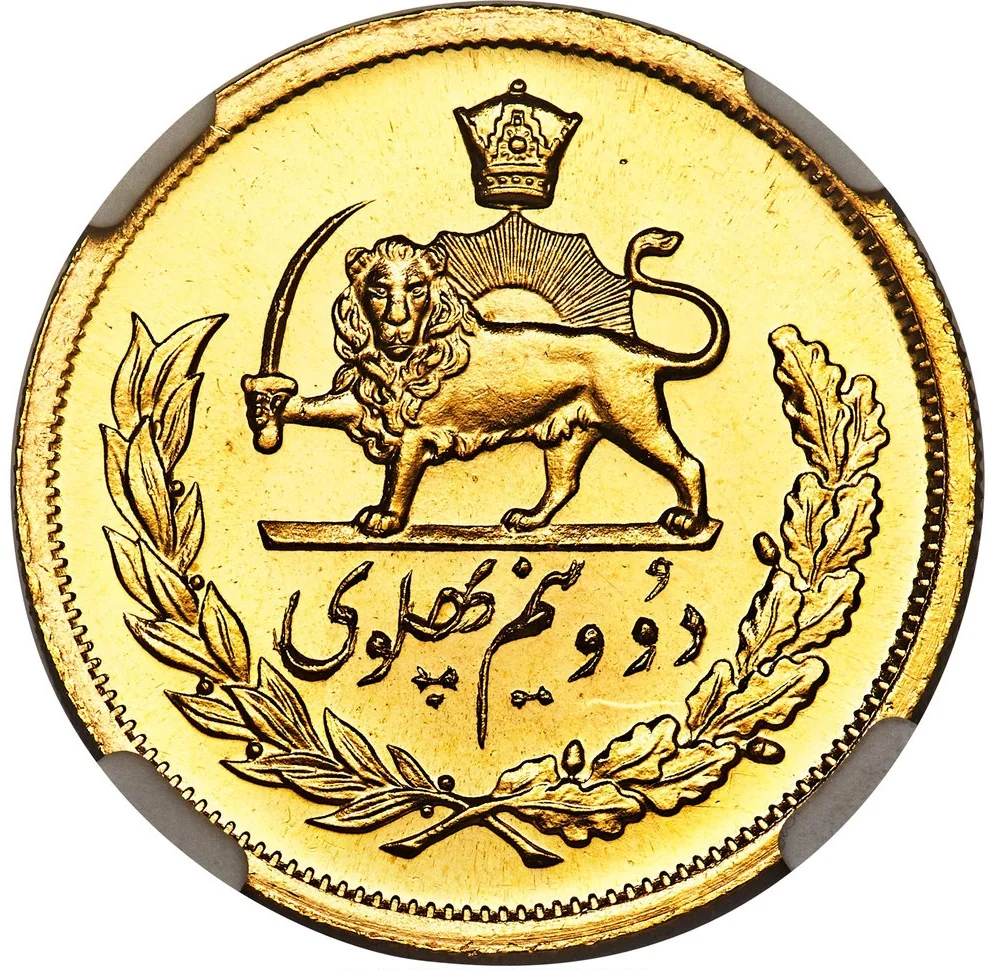
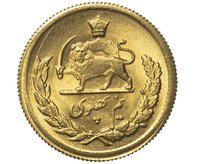
Pahlavi Crown Lion and Sun emblem. "Two and a Half Pahlavi" legend. Oak and olive leaves.
Inscription:
دوُ و نیم پهلوی
Translation:
Two and a Half Pahlavi
Language: Persian
Edge
Reeded
Mints
| Name | Mark |
|---|---|
| Tehran | — |
Mintings
| Year | Mint Mark | Mintage | Quality | Collection |
|---|---|---|---|---|
| 1975 | — | 18,000 | ||
| 1976 | — | 16,000 | ||
| 1977 | — | — | ||
| 1978 | — | — | ||
| 1979 | — | — |
Historical background
In 1975, Iran's currency situation was characterized by robust stability and purchasing power, underpinned by the nation's soaring oil revenues. The Iranian Rial was a strong, internationally recognized currency, pegged to the U.S. dollar at a fixed rate of approximately 70.5 Rials per dollar. This peg, managed by the Central Bank of Iran, provided predictability for trade and investment, reflecting the economic confidence of the Pahlavi monarchy during the height of the country's oil boom. The substantial influx of petrodollars financed massive industrialization and infrastructure projects, leading to rapid GDP growth and low inflation, which further solidified the Rial's domestic strength.
However, this apparent stability masked underlying economic vulnerabilities and growing social strains. The Shah's ambitious development strategy, while modernizing the economy, also fueled rampant inflation in key sectors like housing and consumer goods, a problem the government attempted to control through price ceilings and subsidies. Furthermore, the economy's overwhelming dependence on oil—which financed over 80% of the state budget—made it acutely sensitive to global price fluctuations. The fixed exchange rate, while a symbol of strength, began to create distortions, as the booming economy and rising imports increased demand for foreign currency, putting pressure on the peg.
The situation would prove to be a calm before the storm. Within just a few years, the economic imbalances, coupled with political unrest, would unravel this stability entirely. The fixed exchange rate was abandoned in the late 1970s amidst the Islamic Revolution, leading to a sharp devaluation of the Rial. The currency strength of 1975 thus represents the peak of Pahlavi-era economic policy, a period of artificial but formidable financial confidence built on a single, volatile commodity.
However, this apparent stability masked underlying economic vulnerabilities and growing social strains. The Shah's ambitious development strategy, while modernizing the economy, also fueled rampant inflation in key sectors like housing and consumer goods, a problem the government attempted to control through price ceilings and subsidies. Furthermore, the economy's overwhelming dependence on oil—which financed over 80% of the state budget—made it acutely sensitive to global price fluctuations. The fixed exchange rate, while a symbol of strength, began to create distortions, as the booming economy and rising imports increased demand for foreign currency, putting pressure on the peg.
The situation would prove to be a calm before the storm. Within just a few years, the economic imbalances, coupled with political unrest, would unravel this stability entirely. The fixed exchange rate was abandoned in the late 1970s amidst the Islamic Revolution, leading to a sharp devaluation of the Rial. The currency strength of 1975 thus represents the peak of Pahlavi-era economic policy, a period of artificial but formidable financial confidence built on a single, volatile commodity.
💎 Extremely Rare