

4 Mon – Japan
Japan
Context
Material
Shape: Round with a square hole
Composition: Iron
Technique: Cast
Alignment: Medal alignment
flip
References
Numista: #291357
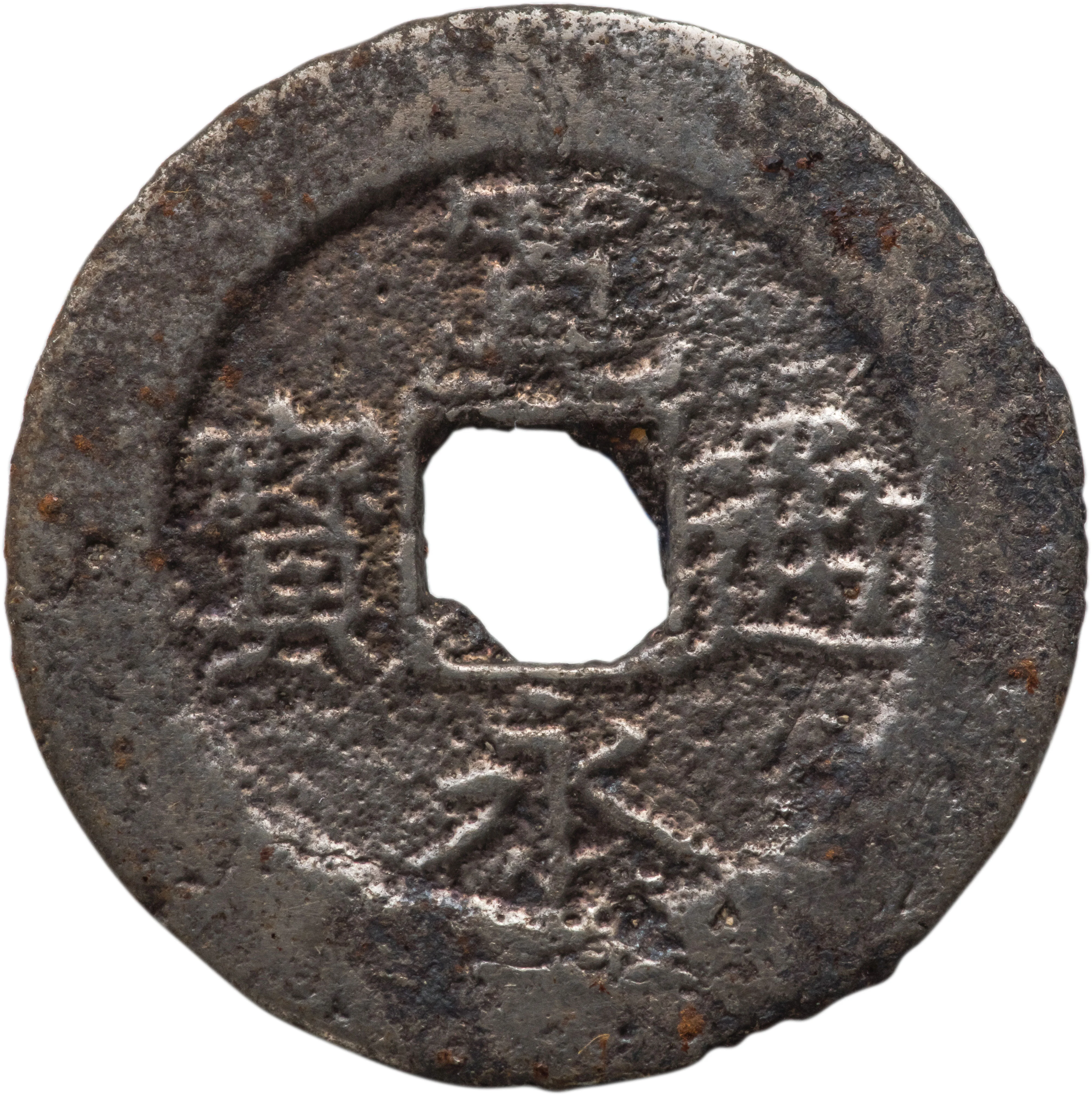
Obverse
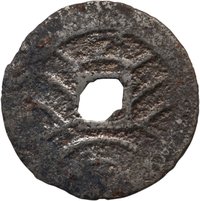
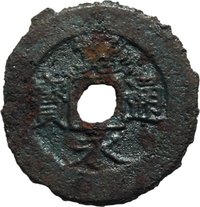
Description:
Four around a center hole.
Inscription:
寛
寶 通
永
寶 通
永
Translation:
Eternal Coins
Circulate Treasure
Kuan
Circulate Treasure
Kuan
Language: Chinese
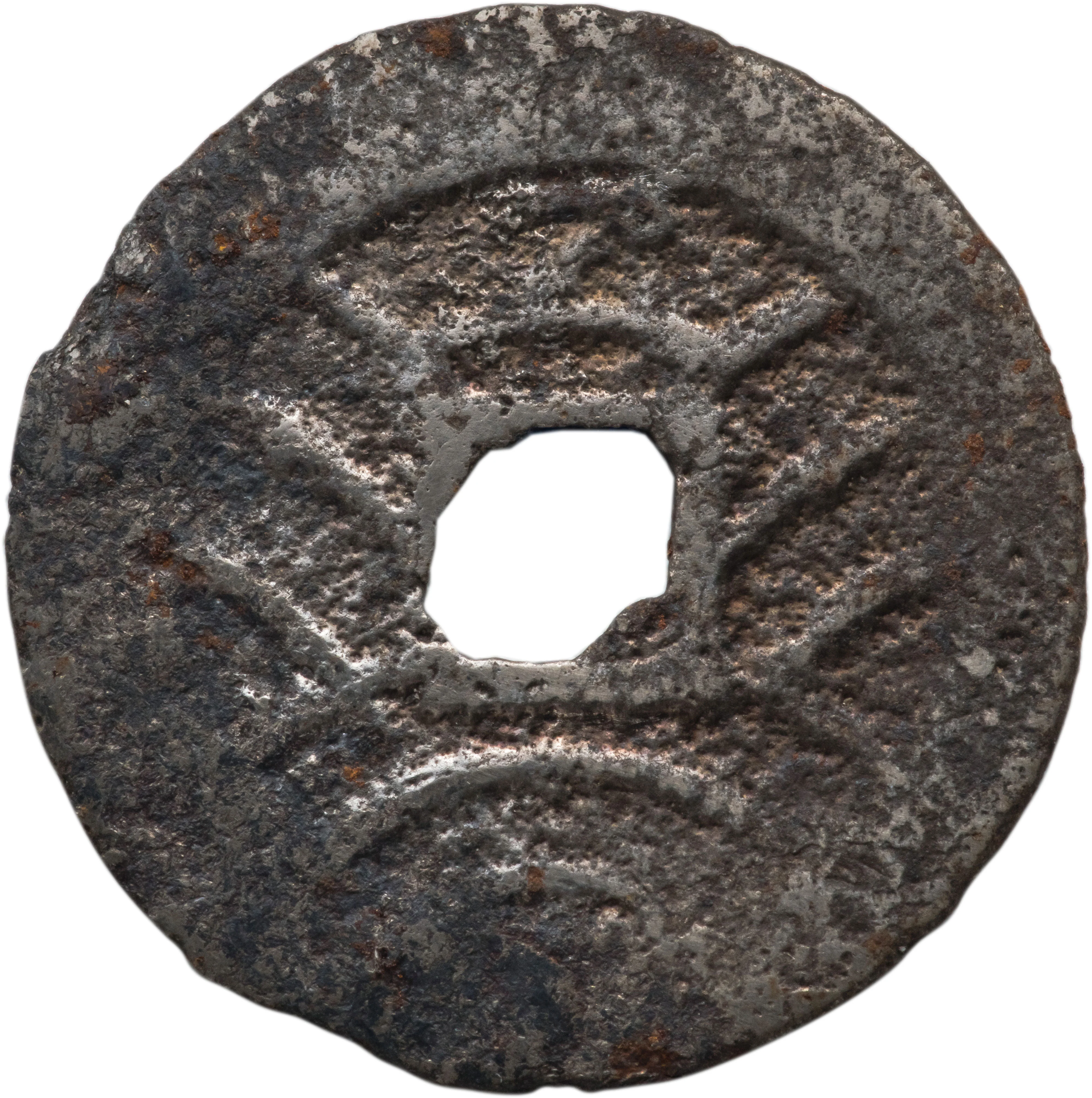
Reverse
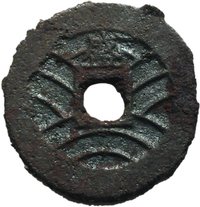
Description:
Aki Province, Hiroshima: 11 waves with a character above a hole.
Inscription:
ア
Translation:
A
Language: Japanese
Edge
Mintings
| Year | Mint Mark | Mintage | Quality | Collection |
|---|---|---|---|---|
| 1867 | ア | — |
Historical background
In 1867, Japan stood on the precipice of the Meiji Restoration, and its monetary system was a chaotic reflection of the fractured political order. The Tokugawa shogunate, while nominally in control, issued a confusing array of gold, silver, and copper coins, the values of which were officially set but fluctuated wildly in practice. Compounding this complexity, over 250 semi-autonomous feudal domains (han) issued their own paper scrip, known as hansatsu, which was only valid within their own borders. This created a labyrinthine and inefficient system that severely hampered nationwide trade and economic development, as merchants faced constant uncertainty and exchange difficulties when moving between regions.
The situation was exacerbated by severe fiscal crisis. Years of declining revenue, costly modernization efforts, and foreign indemnities from the Unequal Treaties had drained the shogunate's coffers. In response, the Bakufu repeatedly debased its coinage, reducing the gold and silver content to mint more money, which led to rampant inflation, loss of public confidence, and a thriving black market for currency exchange. Furthermore, the forced opening of ports following Commodore Perry's arrival in 1853 had integrated Japan into the global silver standard, causing a massive outflow of gold (which was undervalued in Japan relative to the world market) and further destabilizing the domestic economy.
This monetary disarray was not just an economic issue but a profound political weakness for the shogunate. The incoming Meiji government, which would formally take power in 1868, recognized that unifying and controlling the currency was essential to consolidating its rule, modernizing the state, and resisting foreign encroachment. Thus, the chaotic currency of 1867 set the immediate stage for one of the new government's first and most critical reforms: the creation of a centralized, uniform, and modern monetary system, the Yen, which was introduced in 1871 as a cornerstone of a new Japan.
The situation was exacerbated by severe fiscal crisis. Years of declining revenue, costly modernization efforts, and foreign indemnities from the Unequal Treaties had drained the shogunate's coffers. In response, the Bakufu repeatedly debased its coinage, reducing the gold and silver content to mint more money, which led to rampant inflation, loss of public confidence, and a thriving black market for currency exchange. Furthermore, the forced opening of ports following Commodore Perry's arrival in 1853 had integrated Japan into the global silver standard, causing a massive outflow of gold (which was undervalued in Japan relative to the world market) and further destabilizing the domestic economy.
This monetary disarray was not just an economic issue but a profound political weakness for the shogunate. The incoming Meiji government, which would formally take power in 1868, recognized that unifying and controlling the currency was essential to consolidating its rule, modernizing the state, and resisting foreign encroachment. Thus, the chaotic currency of 1867 set the immediate stage for one of the new government's first and most critical reforms: the creation of a centralized, uniform, and modern monetary system, the Yen, which was introduced in 1871 as a cornerstone of a new Japan.
✨ Legendary