

2000 dinars (Reign of Nasir al-Din Shah) – Iran
Add to wishlist
Circulating commemorative coins
Commemoration: 50th Anniversary of the Reign of Nasir al-Din Shah
Iran
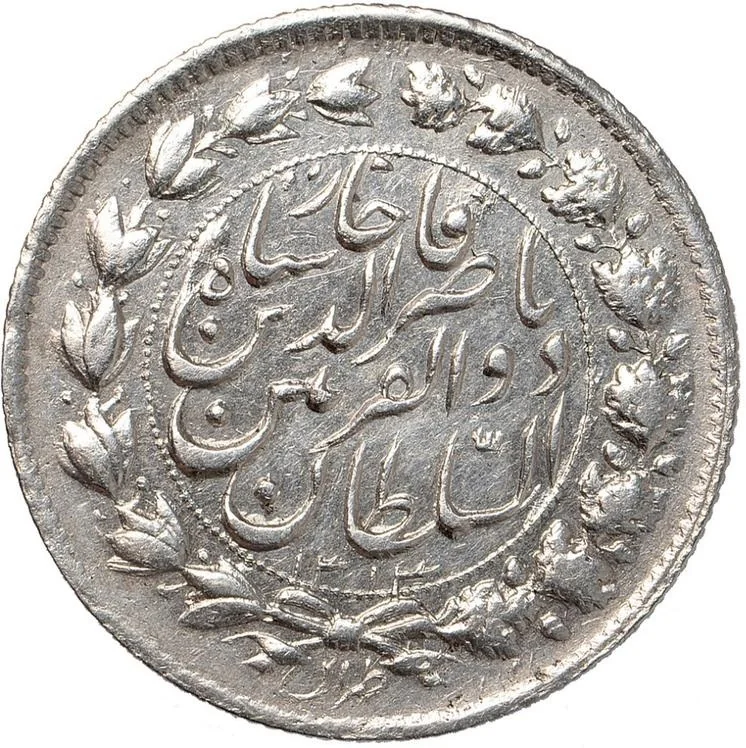
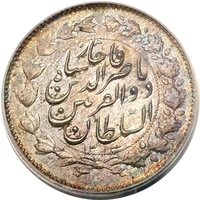
Obverse
Inscription:
السّلطان ذوالقرنین ناصرالدین شاه قاجار
۱۳۱۳
طهران
۱۳۱۳
طهران
Translation:
The Sultan, Possessor of the Two Horns, Nasir al-Din Shah Qajar
1313
Tehran
1313
Tehran
Languages: Arabic, Ottoman Turkish
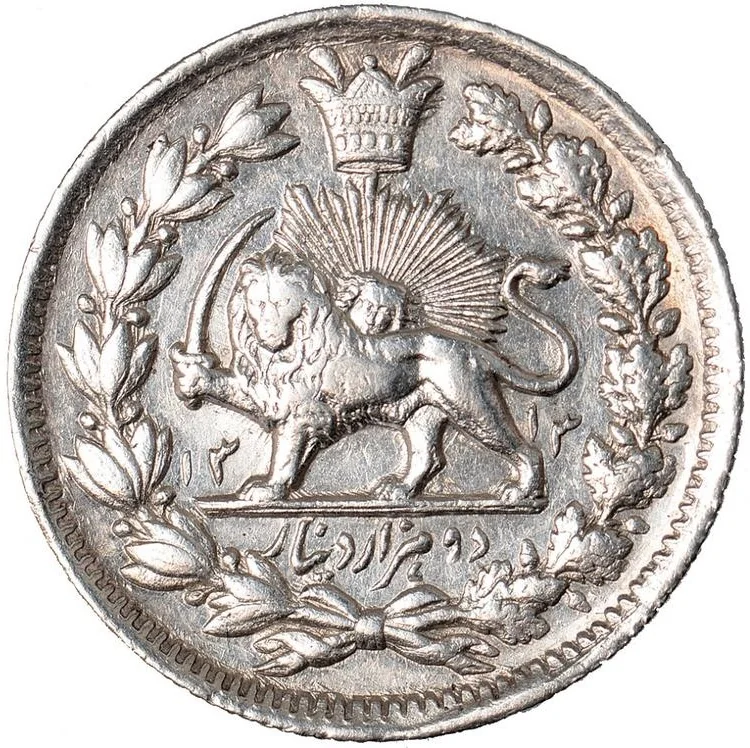
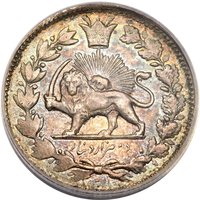
Reverse
Inscription:
۱۳۱۳
دوهزار دینار
دوهزار دینار
Translation:
One Thousand Three Hundred Thirteen
Two Thousand Dinar
Two Thousand Dinar
Language: Persian
Edge
Mintings
| Year | Mint Mark | Mintage | Quality | Collection |
|---|---|---|---|---|
| 1895 | — | — | ||
| 1896 | — | — |
Historical background
By 1895, Iran’s monetary system was in a state of profound disarray, a legacy of the Qajar dynasty’s weak central authority and chronic fiscal mismanagement. The currency was based on the silver qiran (also kran), but the state treasury, perpetually depleted by royal extravagance, military costs, and concessions to foreign interests, could not maintain its integrity. The government frequently resorted to debasing the coinage—reducing its silver content—to finance its deficits, leading to a severe loss of public confidence. Furthermore, a bewildering variety of domestic and foreign coins circulated, including Ottoman, Russian, and British currencies, creating a chaotic and inefficient marketplace where exchange rates fluctuated wildly.
This instability was exacerbated by intense foreign economic pressure, particularly from the Russian Empire and Great Britain, whose spheres of influence dominated Iran’s economy. Both powers made substantial loans to the Qajar court, securing control over key revenue streams like customs duties as collateral. The influx of foreign capital was not for development but for political leverage, deepening state debt and further undermining fiscal sovereignty. Crucially, the international shift to the gold standard in the late 19th century caused the global price of silver—the basis of Iran’s currency—to plummet, leading to a disastrous devaluation of the qiran against the British gold-backed pound sterling and Russian gold ruble, which were essential for foreign trade.
Consequently, internal trade was hampered by the unreliable currency, while external trade became increasingly expensive, fueling inflation and economic hardship. The government’s attempt to introduce a new silver coin, the pahlavi, in 1895 was a failed effort to restore order, as it lacked the necessary silver reserves to support it. Thus, the monetary chaos of 1895 was a critical symptom of Iran’s broader political and economic decline, reflecting a state unable to control its own finances, vulnerable to global market shifts, and increasingly subordinate to European imperial powers. This precarious situation would set the stage for the financial reforms and foreign loans of the subsequent decade, which came with even greater political strings attached.
This instability was exacerbated by intense foreign economic pressure, particularly from the Russian Empire and Great Britain, whose spheres of influence dominated Iran’s economy. Both powers made substantial loans to the Qajar court, securing control over key revenue streams like customs duties as collateral. The influx of foreign capital was not for development but for political leverage, deepening state debt and further undermining fiscal sovereignty. Crucially, the international shift to the gold standard in the late 19th century caused the global price of silver—the basis of Iran’s currency—to plummet, leading to a disastrous devaluation of the qiran against the British gold-backed pound sterling and Russian gold ruble, which were essential for foreign trade.
Consequently, internal trade was hampered by the unreliable currency, while external trade became increasingly expensive, fueling inflation and economic hardship. The government’s attempt to introduce a new silver coin, the pahlavi, in 1895 was a failed effort to restore order, as it lacked the necessary silver reserves to support it. Thus, the monetary chaos of 1895 was a critical symptom of Iran’s broader political and economic decline, reflecting a state unable to control its own finances, vulnerable to global market shifts, and increasingly subordinate to European imperial powers. This precarious situation would set the stage for the financial reforms and foreign loans of the subsequent decade, which came with even greater political strings attached.
✨ Legendary