

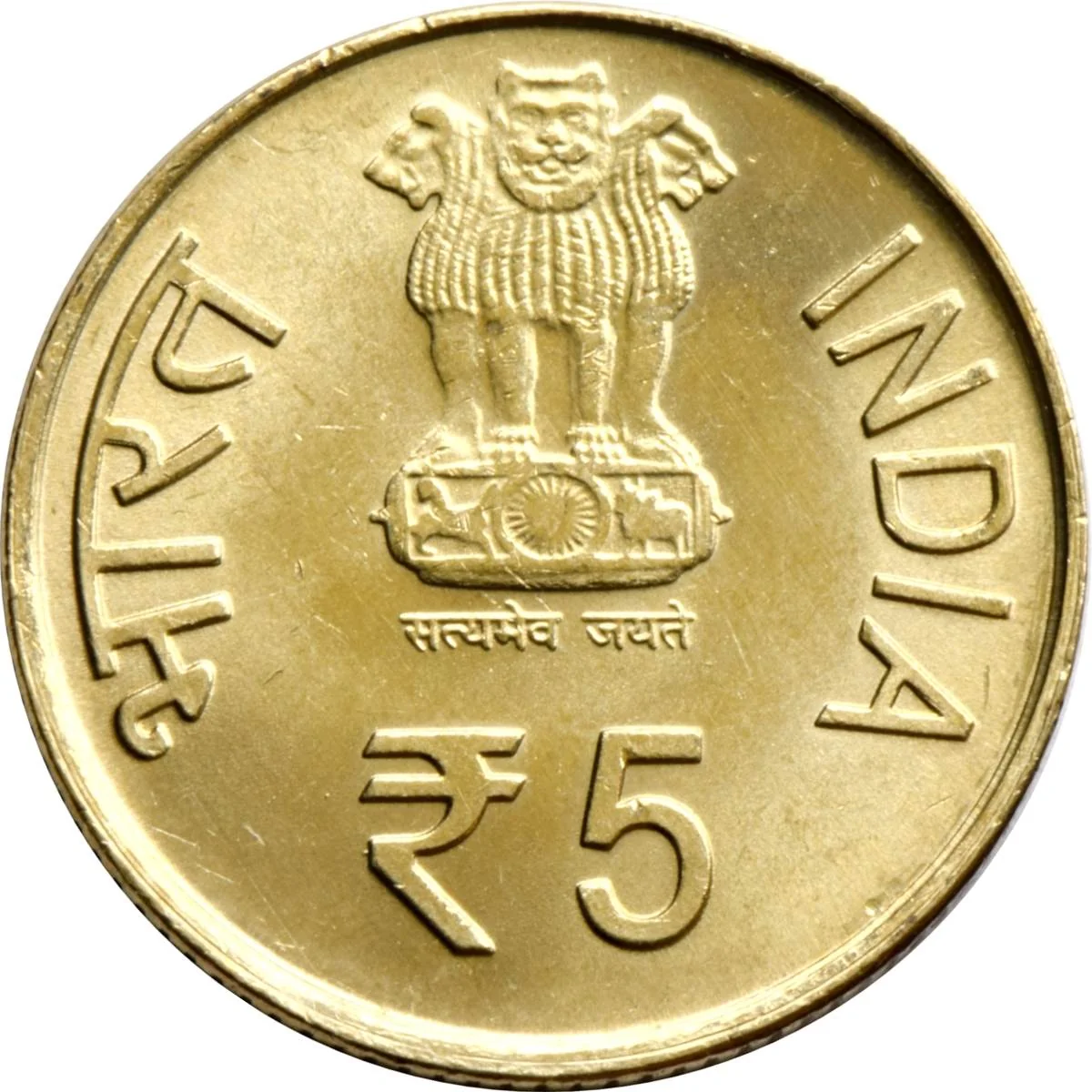

5 rupees (Civil Aviation) – India
Add to wishlist
Circulating commemorative coins
Commemoration: 100 Years of Civil Aviation
India
Material
Diameter: 23 mm
Weight: 6 g
Thickness: 2 mm
Shape: Round
Composition: Nickel brass
Magnetic: No
Technique: Milled
Alignment: Medal alignment
flip

References
KM: #
Numista: #29033
Value
Exchange value: 5 INR
Inflation-adjusted value: 11.90 INR
Obverse
Reverse
Description:
Centered "100" with "YEARS" inside, flanked by "भारतीय नागर विमानन शताब्दी वर्ष" above and "CIVIL AVIATION INDIA" below. "1911-2011" at the bottom.
Inscription:
भारतीय नागर विमानन शताब्दी वर्ष
100 YEARS
CIVIL AVIATION
INDIA
1911-2011
100 YEARS
CIVIL AVIATION
INDIA
1911-2011
Translation:
Indian Civil Aviation Centenary Year
100 Years
Civil Aviation
India
1911-2011
100 Years
Civil Aviation
India
1911-2011
Edge
Reeded
Categories
| Transportation> Aircraft |
Mints
| Name | Mark |
|---|---|
| Kolkata / Calcutta / Murshidabad | — |
| Hyderabad | * |
| Noida | ° |
| Mumbai / Bombay | ♦ |
| Mumbai / Bombay | M |
Historical background
In 2011, India's currency situation was dominated by a sharp and concerning depreciation of the Indian Rupee (INR) against the US Dollar. The rupee fell nearly 16% over the course of the year, hitting a series of historic lows and breaching the psychologically significant ₹50-to-the-dollar mark in December. This decline was driven by a combination of global and domestic factors. Internationally, the Eurozone debt crisis spurred a "flight to safety," with global investors pulling capital from emerging markets like India and seeking refuge in the US dollar. Domestically, India was grappling with high inflation, persistent current account and fiscal deficits, and a slowdown in economic growth, which eroded investor confidence.
The Reserve Bank of India (RBI) faced a complex policy dilemma, often described as a "impossible trinity" challenge. To curb inflation, which remained stubbornly high, the RBI had been raising interest rates. However, these tighter monetary policies also risked further slowing economic growth. Simultaneously, the central bank intervened directly in the foreign exchange market, selling dollars to prop up the rupee, which led to a significant depletion of India's foreign exchange reserves. These measures provided only temporary relief, as the underlying structural issues—particularly the high current account deficit fueled by high oil and gold imports—continued to exert downward pressure on the currency.
The weakening rupee had severe repercussions for the Indian economy. It dramatically increased the cost of imports, notably crude oil and fertilizers, exacerbating inflation and widening the trade deficit. For Indian corporations, especially those with foreign currency-denominated debt, repayment costs soared, putting stress on corporate balance sheets. The situation underscored the vulnerabilities in India's economic framework and set the stage for a period of intense policy focus on macroeconomic stability, eventually leading to significant reforms and a renewed push to attract foreign investment in the subsequent years.
The Reserve Bank of India (RBI) faced a complex policy dilemma, often described as a "impossible trinity" challenge. To curb inflation, which remained stubbornly high, the RBI had been raising interest rates. However, these tighter monetary policies also risked further slowing economic growth. Simultaneously, the central bank intervened directly in the foreign exchange market, selling dollars to prop up the rupee, which led to a significant depletion of India's foreign exchange reserves. These measures provided only temporary relief, as the underlying structural issues—particularly the high current account deficit fueled by high oil and gold imports—continued to exert downward pressure on the currency.
The weakening rupee had severe repercussions for the Indian economy. It dramatically increased the cost of imports, notably crude oil and fertilizers, exacerbating inflation and widening the trade deficit. For Indian corporations, especially those with foreign currency-denominated debt, repayment costs soared, putting stress on corporate balance sheets. The situation underscored the vulnerabilities in India's economic framework and set the stage for a period of intense policy focus on macroeconomic stability, eventually leading to significant reforms and a renewed push to attract foreign investment in the subsequent years.


🌱 Very Common