

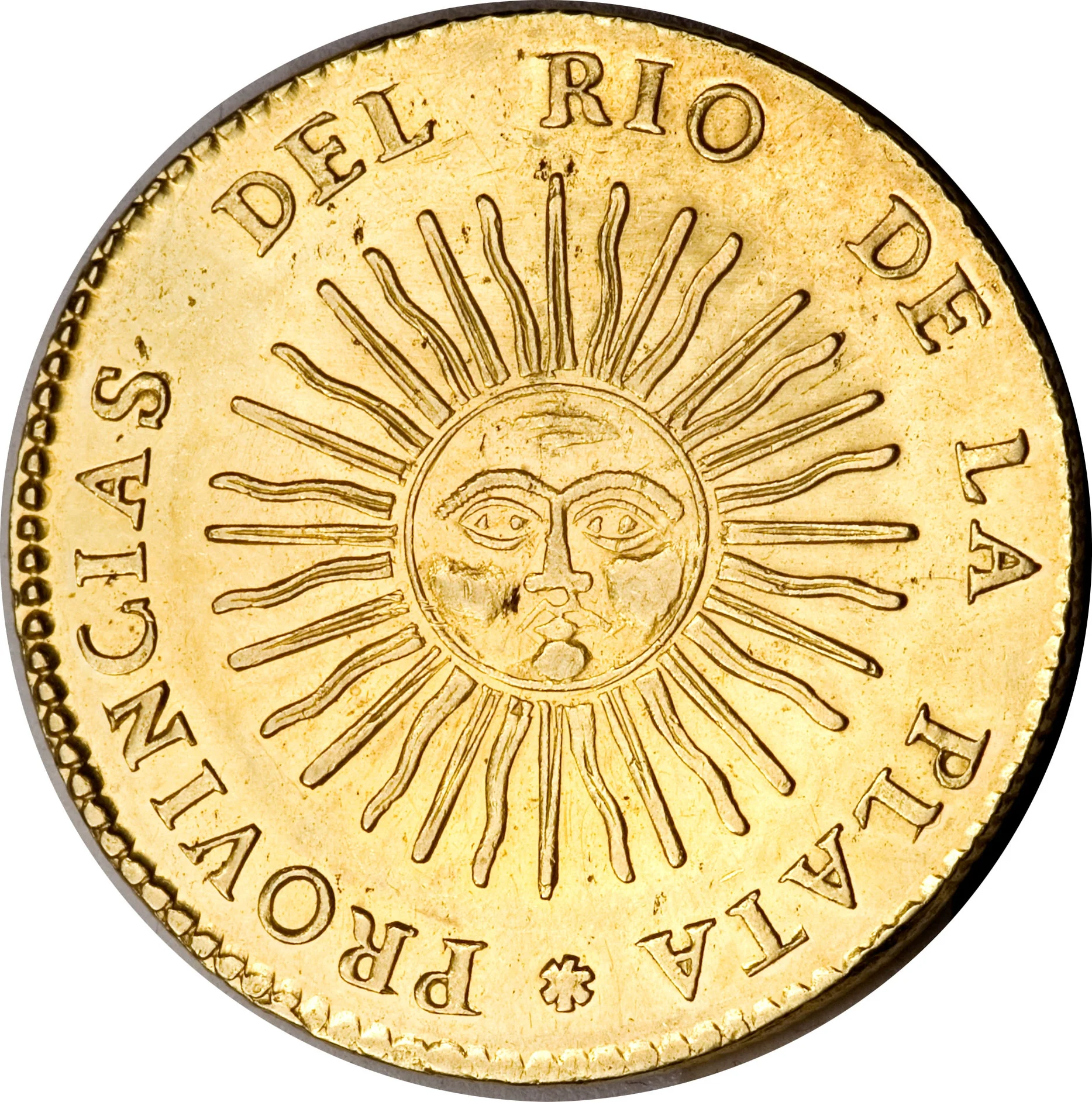
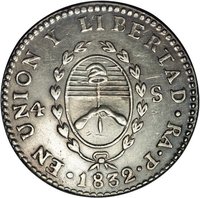
Obverse
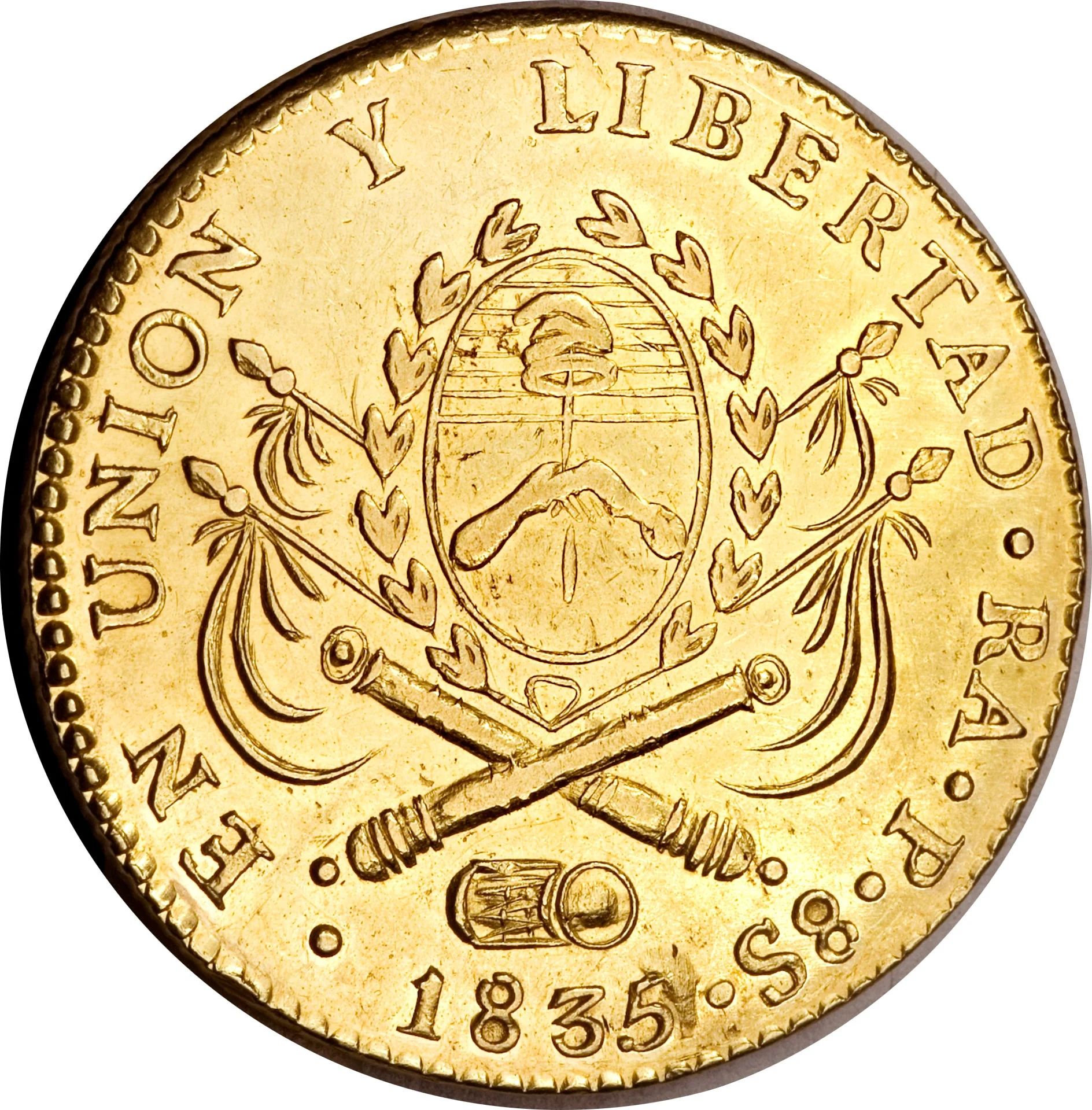
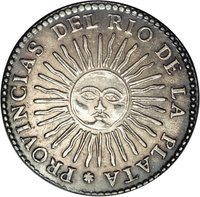
Reverse
Description:
Coat of arms over date.
Inscription:
EN UNION Y LIBERTAD · RA·P·8S
· 1835 ·
· 1835 ·
Script: Latin
Edge
Categories
| Symbol> Hand |
| Symbols> Coat of Arms |
| Symbol> Phrygian cap |
| Symbol> Sun |
| Symbol> Wreath |
| Object> Firearms |
Mints
| Name | Mark |
|---|---|
| La Rioja | — |
Mintings
| Year | Mint Mark | Mintage | Quality | Collection |
|---|---|---|---|---|
| 1826 | RA | — | ||
| 1828 | RA | — | ||
| 1829 | RA | — | ||
| 1830 | RA | — | ||
| 1831 | RA | — | ||
| 1832 | RA | — | ||
| 1833 | RA | — | ||
| 1834 | RA | — | ||
| 1835 | RA | — |
Historical background
In 1826, the province of La Rioja, Argentina, was embroiled in the profound monetary chaos that characterized the post-independence "anarchy" period. Following the collapse of Spanish colonial authority and the absence of a strong central government, the nation lacked a unified currency. The provincial government, led by the powerful caudillo Facundo Quiroga, faced dire fiscal straits due to the costs of ongoing civil wars and the disruption of traditional trade routes. With depleted coffers and no access to minting precious metals, La Rioja, like many other provinces, resorted to issuing its own paper money to pay public employees and fund military operations.
This currency, known as billetes de ley or simply papel moneda de La Rioja, was essentially a forced fiat currency with no metallic backing or guaranteed convertibility. Its value was decreed by the provincial government but was almost immediately discounted in the market, leading to rapid depreciation and rampant inflation within its limited zone of circulation. The situation was exacerbated by the proliferation of similar—and often counterfeit—paper notes from other provinces, creating a bewildering and untrustworthy monetary landscape where the value of money was based purely on fleeting political authority and public confidence, both of which were in short supply.
The currency crisis of 1826 was a direct manifestation of La Rioja's political and economic isolation. It highlighted the province's struggle to maintain basic administrative functions amidst national fragmentation. While providing a temporary stopgap for provincial finances, the paper money ultimately eroded economic stability, burdened the local populace, and reflected the broader Argentine struggle to achieve monetary and political unity, a conflict in which Quiroga himself would be a central and violent actor.
This currency, known as billetes de ley or simply papel moneda de La Rioja, was essentially a forced fiat currency with no metallic backing or guaranteed convertibility. Its value was decreed by the provincial government but was almost immediately discounted in the market, leading to rapid depreciation and rampant inflation within its limited zone of circulation. The situation was exacerbated by the proliferation of similar—and often counterfeit—paper notes from other provinces, creating a bewildering and untrustworthy monetary landscape where the value of money was based purely on fleeting political authority and public confidence, both of which were in short supply.
The currency crisis of 1826 was a direct manifestation of La Rioja's political and economic isolation. It highlighted the province's struggle to maintain basic administrative functions amidst national fragmentation. While providing a temporary stopgap for provincial finances, the paper money ultimately eroded economic stability, burdened the local populace, and reflected the broader Argentine struggle to achieve monetary and political unity, a conflict in which Quiroga himself would be a central and violent actor.
💎 Extremely Rare