

1 dollar (Peace Dollar) – United States
Add to wishlist
Non-circulating coins
Commemoration: 100th anniversary of first ‘‘Peace Dollar’’
United States
Context
Years: 2021–2025
Issuer: United States
Period:
(since 1776)
Currency:
(since 1785)
Total mintage: 1,600,000
Material
References
KM: #
Numista: #287022
Value
Exchange value: 1 USD = $1.00
Bullion value: $65.29
Inflation-adjusted value: 1.24 USD
Obverse
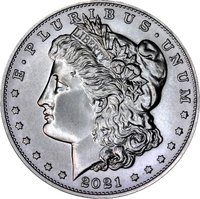
Description:
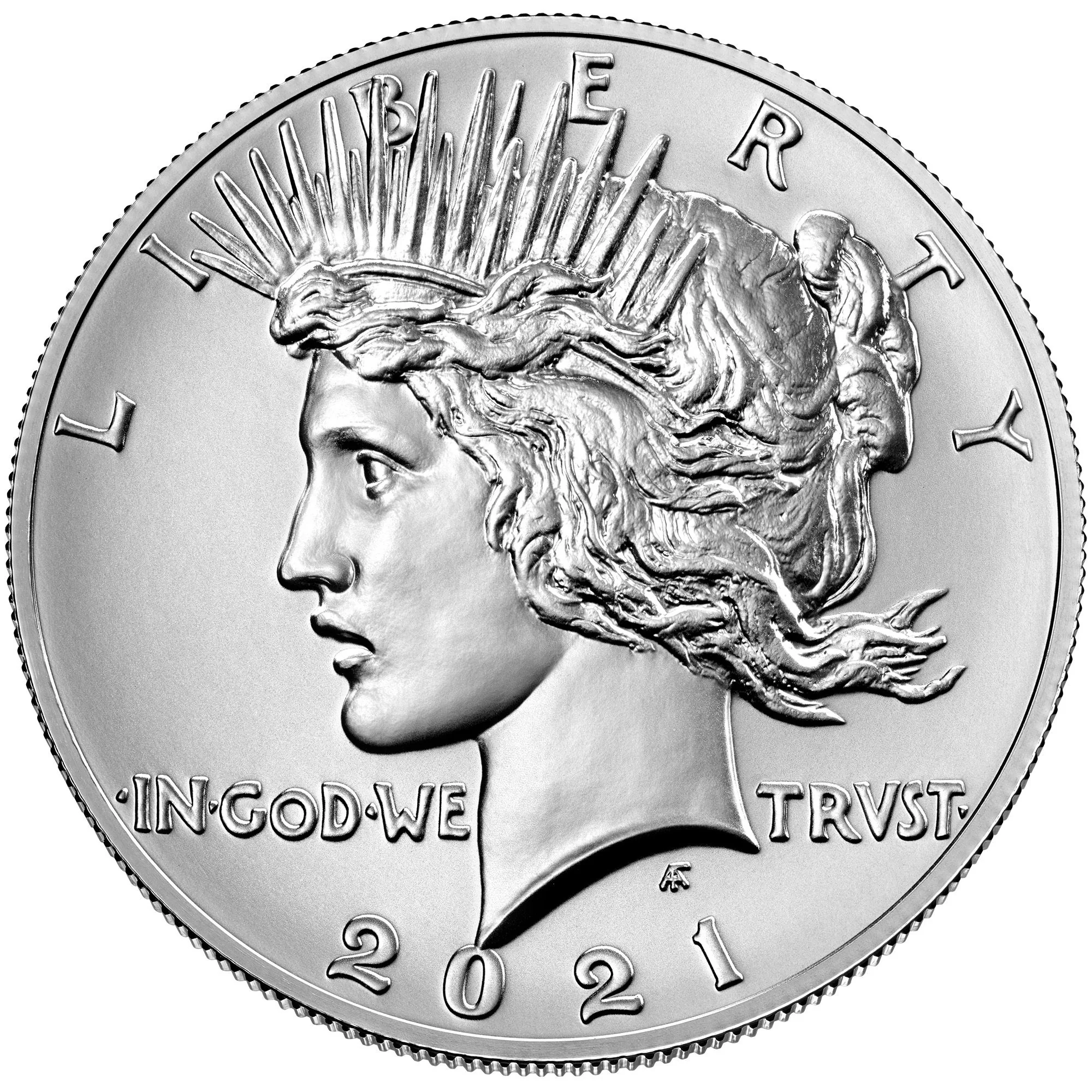
Liberty head left, band with rays.
Inscription:
LIBERTY
•IN•GOD•WE TRVST•
AF
2021
•IN•GOD•WE TRVST•
AF
2021
Script: Latin
Designer and engraver: Anthony de Francisci
Reverse
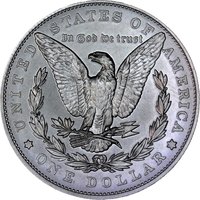
Description:
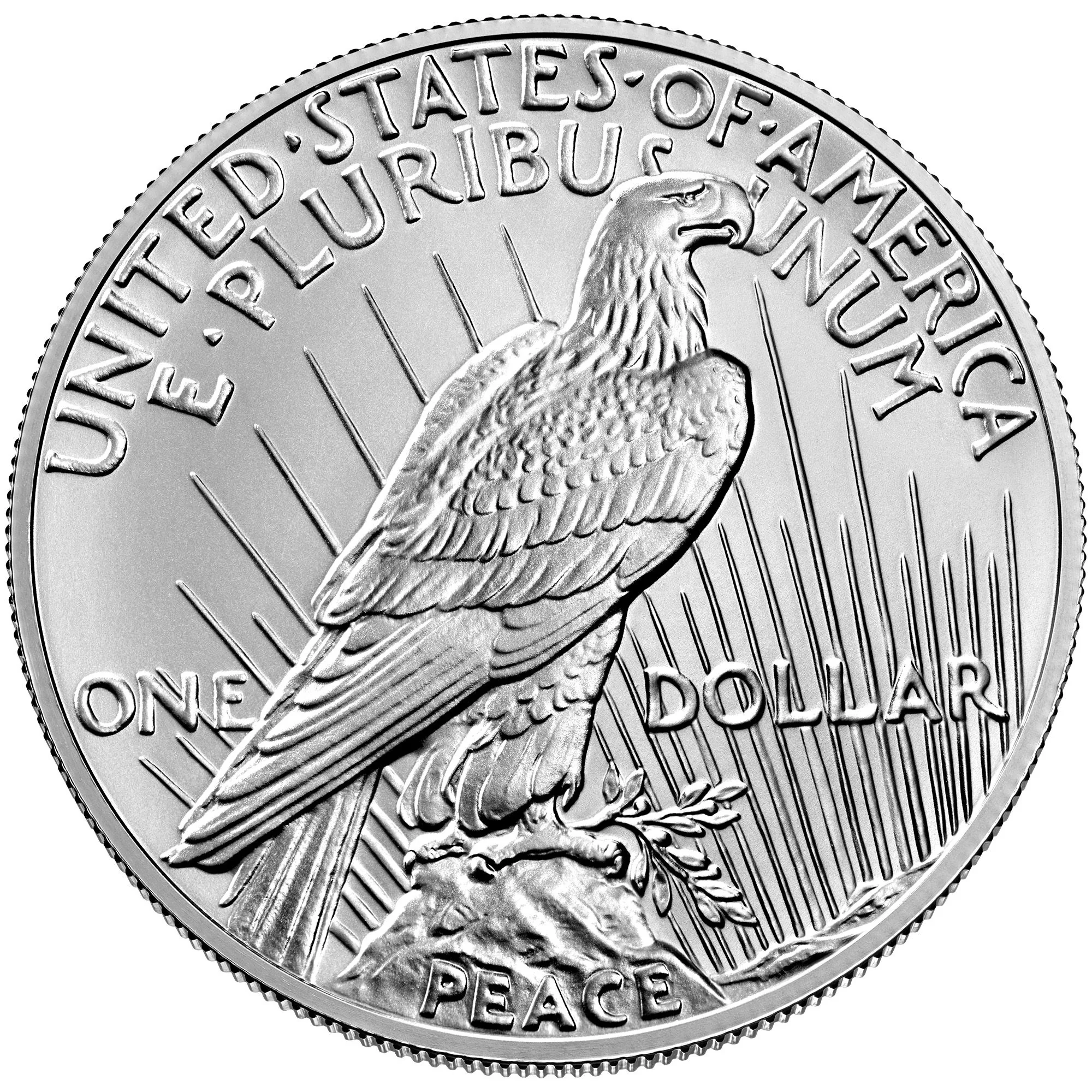
Eagle perched on a rock, seen from behind with folded wings, holding a branch, backlit by sun rays.
Inscription:
UNITED•STATES•OF•AMERICA
E•PLURIBUS UNUM
ONE DOLLAR
PEACE
E•PLURIBUS UNUM
ONE DOLLAR
PEACE
Translation:
Out of Many, One
One Dollar
Peace
One Dollar
Peace
Script: Latin
Designer and engraver: Anthony de Francisci
Edge
Reeded
Mintings
Historical background
In 2021, the United States currency situation was defined by a potent mix of expansive fiscal stimulus, accommodative monetary policy, and rising inflationary pressures. The year began with the distribution of a $900 billion relief package from late 2020, followed swiftly by the landmark $1.9 trillion American Rescue Plan Act in March. This unprecedented federal spending, aimed at mitigating the COVID-19 pandemic's economic damage, flooded the economy with liquidity. Concurrently, the Federal Reserve, led by Chair Jerome Powell, maintained its benchmark interest rate near zero and continued large-scale asset purchases, committing to an "average inflation targeting" framework that allowed prices to run hotter than the traditional 2% target.
These policies fueled a vigorous economic rebound, with GDP growth reaching 5.9% for the year. However, they also collided with severe supply-chain bottlenecks, labor shortages, and surging consumer demand, leading to a sharp and sustained rise in inflation. What the Federal Reserve initially dismissed as "transitory" price pressures gained undeniable momentum throughout 2021, with the Consumer Price Index (CPI) rising from 1.4% year-over-year in January to 7.0% by December—the highest rate in nearly four decades. This erosion of purchasing power became a central economic and political concern, challenging the post-2008 consensus on low-interest rates and testing the Fed's policy stance.
By the final months of 2021, the narrative had decisively shifted from stimulus to inflation containment. In November, the Fed announced it would begin "tapering" its monthly bond purchases, marking the start of a pivot away from its emergency pandemic support. This set the stage for the anticipated interest rate hikes that would dominate monetary policy in 2022. Thus, 2021 served as a pivotal transition year, where the policies designed to ensure a robust recovery ultimately laid the groundwork for a new battle against persistent inflation, reshaping the economic landscape for the years to follow.
These policies fueled a vigorous economic rebound, with GDP growth reaching 5.9% for the year. However, they also collided with severe supply-chain bottlenecks, labor shortages, and surging consumer demand, leading to a sharp and sustained rise in inflation. What the Federal Reserve initially dismissed as "transitory" price pressures gained undeniable momentum throughout 2021, with the Consumer Price Index (CPI) rising from 1.4% year-over-year in January to 7.0% by December—the highest rate in nearly four decades. This erosion of purchasing power became a central economic and political concern, challenging the post-2008 consensus on low-interest rates and testing the Fed's policy stance.
By the final months of 2021, the narrative had decisively shifted from stimulus to inflation containment. In November, the Fed announced it would begin "tapering" its monthly bond purchases, marking the start of a pivot away from its emergency pandemic support. This set the stage for the anticipated interest rate hikes that would dominate monetary policy in 2022. Thus, 2021 served as a pivotal transition year, where the policies designed to ensure a robust recovery ultimately laid the groundwork for a new battle against persistent inflation, reshaping the economic landscape for the years to follow.

🌱 Fairly Common