

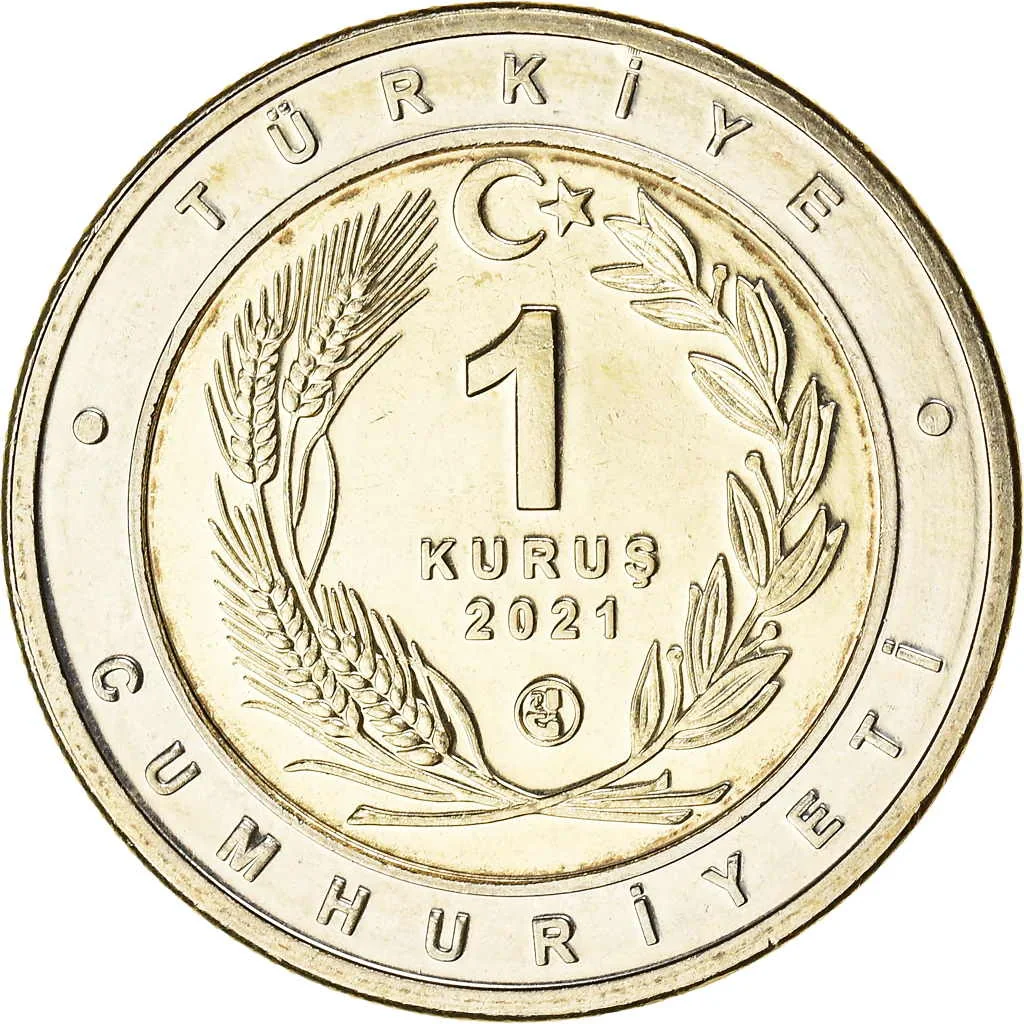
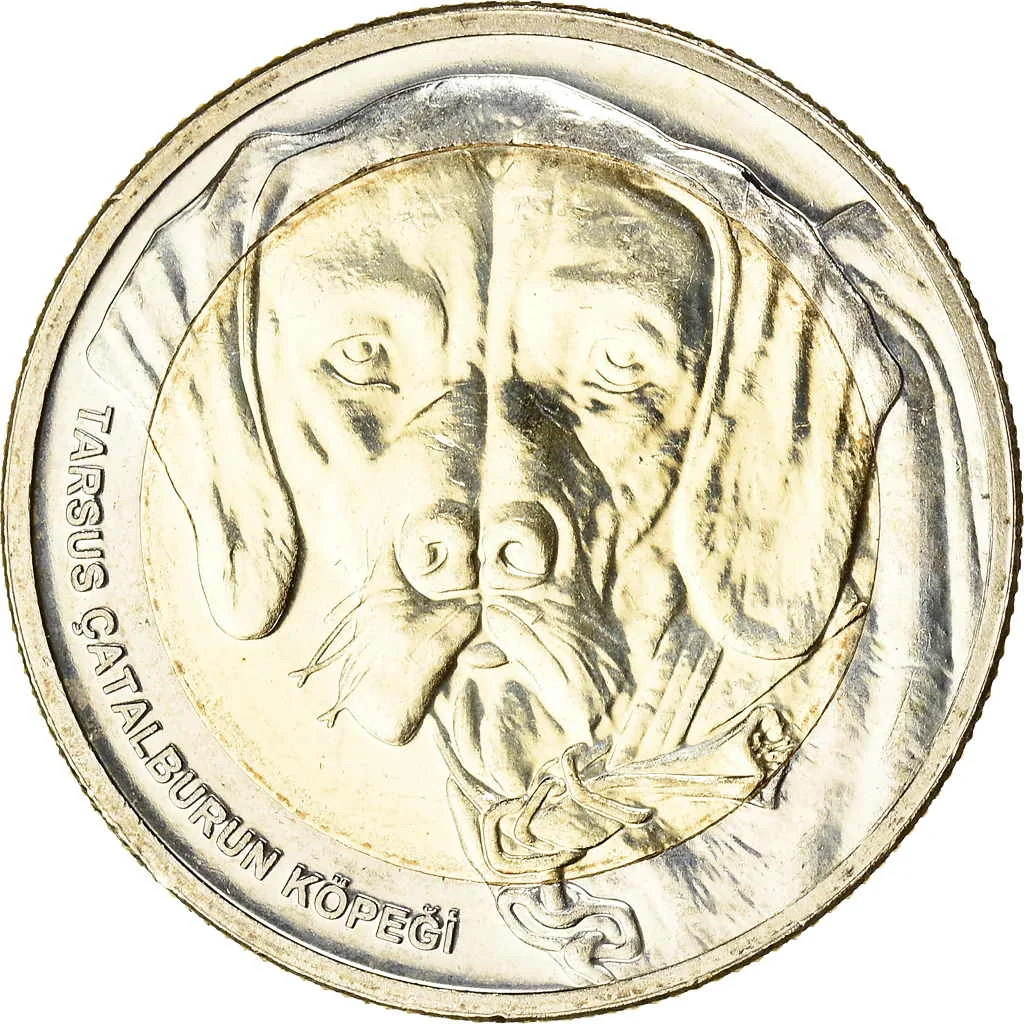
1 kuruş – Turkey
Add to wishlist
Non-circulating coins
Commemoration: Tarsus çatalburun
Turkey
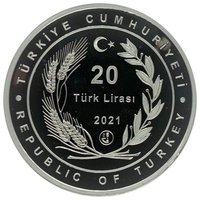
Obverse
Reverse
Edge
Reeded
Mints
| Name | Mark |
|---|---|
| Turkish State Mint | — |
Mintings
| Year | Mint Mark | Mintage | Quality | Collection |
|---|---|---|---|---|
| 2021 | — | 15,000 |
Historical background
In 2021, Turkey's currency crisis deepened dramatically, with the Turkish lira (TRY) losing over 40% of its value against the US dollar. This precipitous decline was the culmination of long-standing economic vulnerabilities, including high inflation, a large current account deficit, and dwindling foreign exchange reserves. The situation was severely exacerbated by President Recep Tayyip Erdoğan's unorthodox economic philosophy, which insisted that high interest rates cause inflation, contrary to conventional economic theory. Under his pressure, the Central Bank of the Republic of Turkey (CBRT) embarked on an aggressive cycle of interest rate cuts beginning in late 2021, precisely as inflation was soaring, eroding investor confidence and triggering a flight from the lira.
The domestic consequences were severe and immediate. Annual consumer price inflation skyrocketed, officially reaching over 36% by year's end, though independent estimates suggested even higher figures. This currency-driven inflation severely eroded the purchasing power of ordinary Turks, with essentials like food, fuel, and housing becoming drastically more expensive. Savings held in lira were decimated, leading to a desperate scramble for foreign currency and gold. The government responded with measures aimed at curbing dollarization, including a controversial "liraization" strategy that promised to compensate lira depositors for losses against foreign currencies, placing a massive potential liability on the state's balance sheet.
Internationally, the crisis isolated Turkey's economic policy and strained its financial system. The lira's freefall and the erosion of central bank independence led to credit rating downgrades and pushed Turkish dollar-denominated bonds into distressed territory. While the government initially resisted a traditional IMF-style stabilization plan, the severe market turmoil forced a late-year policy shift. In December 2021, following the lira's historic plunge, the government announced a series of emergency measures and signaled a return to more orthodox, market-friendly policies, offering a temporary and fragile stabilization for the currency by year's end, but without resolving the fundamental policy contradictions.
The domestic consequences were severe and immediate. Annual consumer price inflation skyrocketed, officially reaching over 36% by year's end, though independent estimates suggested even higher figures. This currency-driven inflation severely eroded the purchasing power of ordinary Turks, with essentials like food, fuel, and housing becoming drastically more expensive. Savings held in lira were decimated, leading to a desperate scramble for foreign currency and gold. The government responded with measures aimed at curbing dollarization, including a controversial "liraization" strategy that promised to compensate lira depositors for losses against foreign currencies, placing a massive potential liability on the state's balance sheet.
Internationally, the crisis isolated Turkey's economic policy and strained its financial system. The lira's freefall and the erosion of central bank independence led to credit rating downgrades and pushed Turkish dollar-denominated bonds into distressed territory. While the government initially resisted a traditional IMF-style stabilization plan, the severe market turmoil forced a late-year policy shift. In December 2021, following the lira's historic plunge, the government announced a series of emergency measures and signaled a return to more orthodox, market-friendly policies, offering a temporary and fragile stabilization for the currency by year's end, but without resolving the fundamental policy contradictions.

🌟 Uncommon