

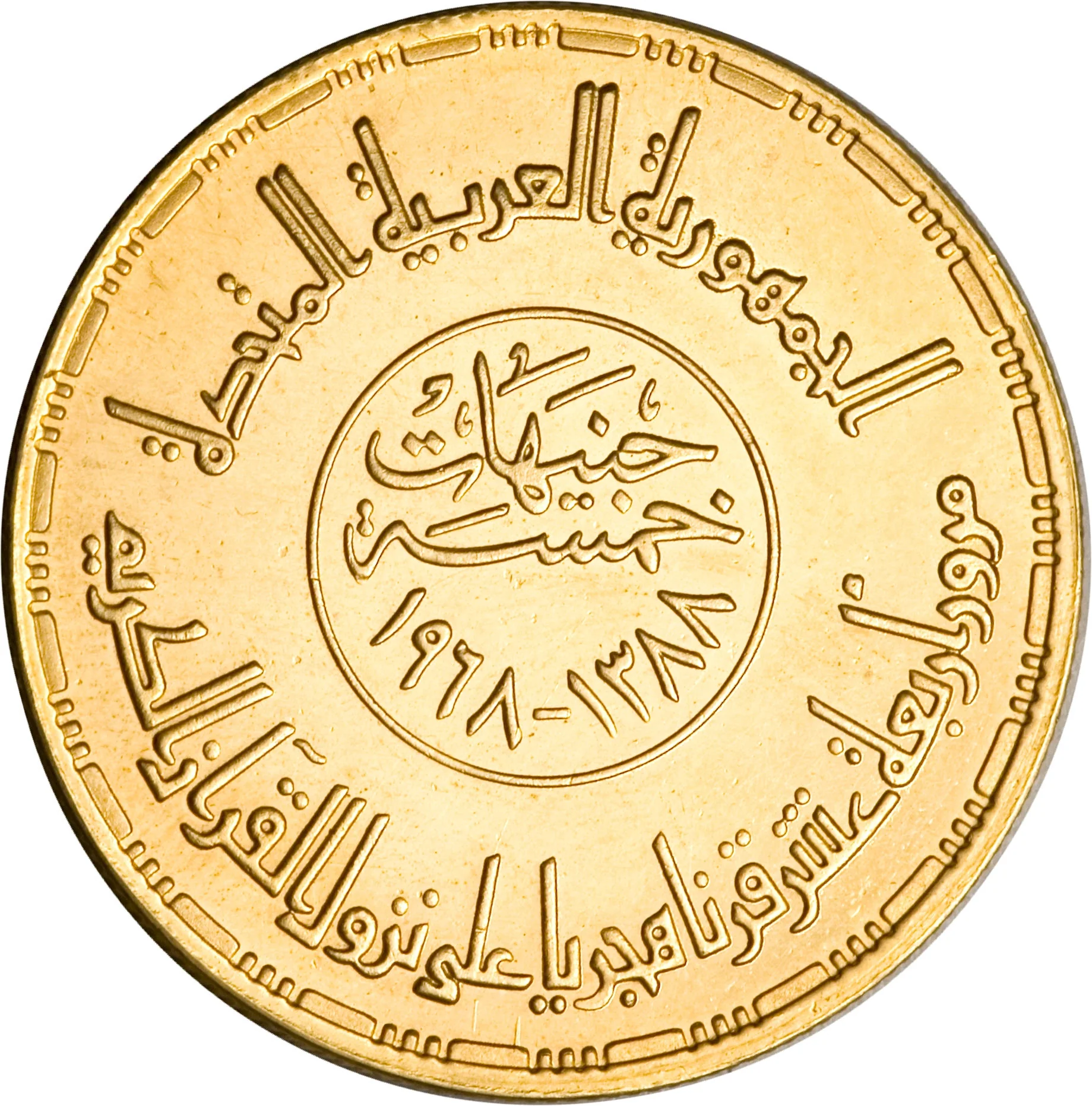
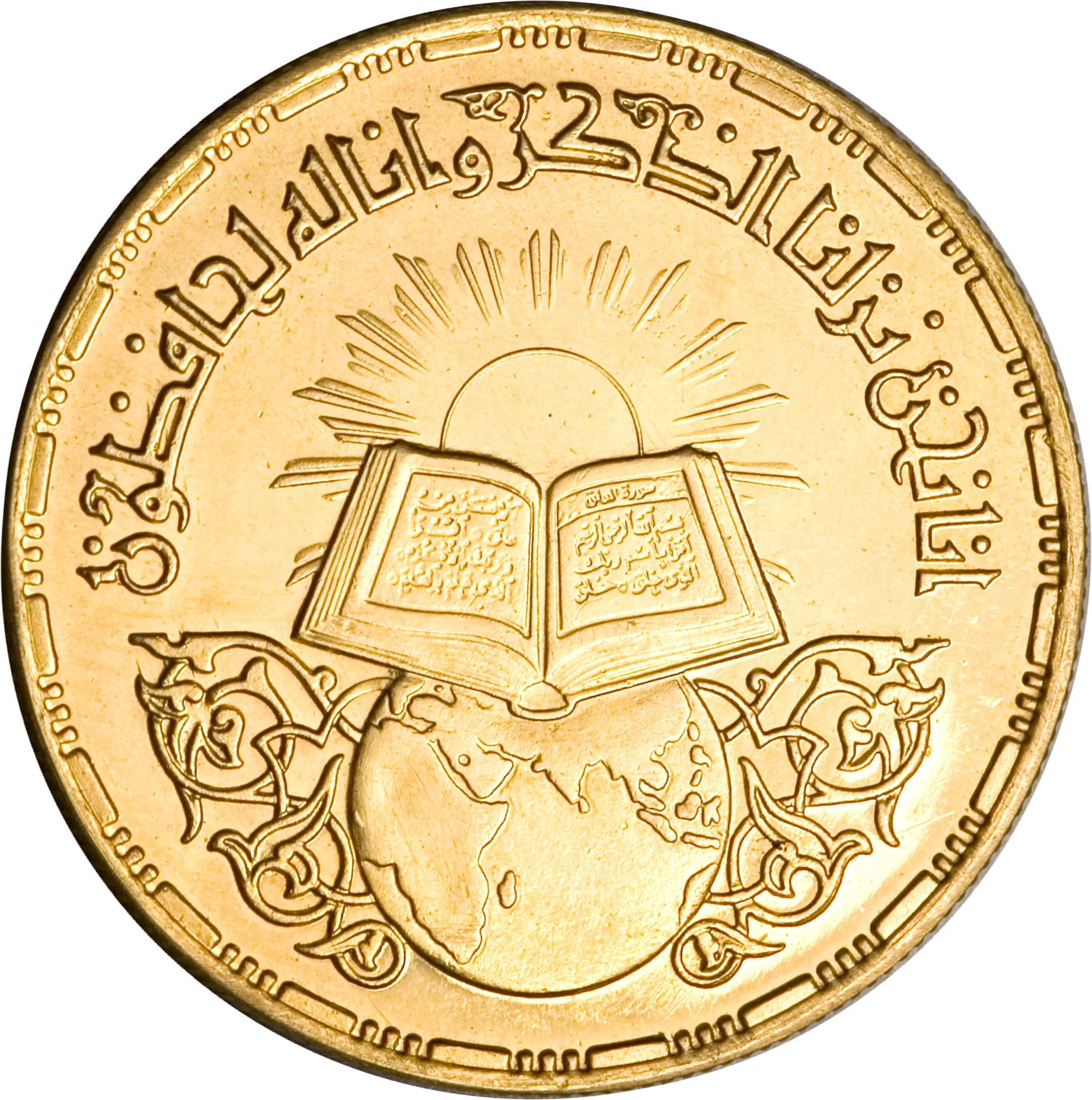
5 pounds (Quran Revelation) – Egypt
Add to wishlist
Non-circulating coins
Commemoration: 1400th Anniversary of Quran Revelation
Egypt
Context
Year: 1968
Islamic (Hijri) Year:: 1388
Issuer: Egypt
Period:
(1958—1971)
Currency:
(since 1916)
Demonetized: Yes
Total mintage: 10,000
Material
References
KM: #
Numista: #28428
Value
Exchange value: 5 EGP
Bullion value: $3542.24
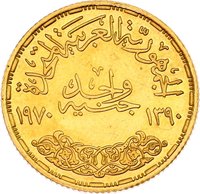
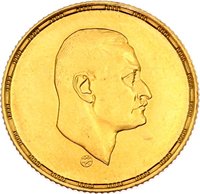
Obverse
Reverse
Edge
Mintings
| Year | Mint Mark | Mintage | Quality | Collection |
|---|---|---|---|---|
| 1968 | — | 10,000 |
Historical background
In 1968, Egypt's currency situation was characterized by the strains of the Arab Socialist economic model and the profound fiscal aftermath of the 1967 Six-Day War. The official currency, the Egyptian pound (EGP), was pegged to the British pound sterling and was theoretically stable at a fixed official rate. However, this facade masked a deteriorating reality. The state-directed economy, with its vast subsidies, large public sector, and ambitious industrialization projects, was chronically inefficient and generated persistent budget deficits. More critically, the devastating war with Israel resulted in the loss of the Sinai Peninsula's oil fields and Suez Canal revenues—two vital sources of hard currency—plunging the nation into a severe balance of payments crisis.
Consequently, a thriving black market for foreign exchange emerged, where the Egyptian pound traded at a significant discount compared to the official rate. This disparity exposed the overvaluation of the currency and the scarcity of convertible foreign reserves. The government, led by President Gamal Abdel Nasser, resorted to stringent exchange controls, import restrictions, and increased borrowing to manage the crisis. Reliance on financial aid from oil-rich Arab allies, particularly Saudi Arabia, Kuwait, and Libya, became essential to prop up the economy and support a massive military rearmament program, further embedding Egypt in a cycle of dependency.
Thus, the currency situation in 1968 was one of controlled fragility. While the official peg was maintained, it was unsustainable without strict capital controls and external subsidies. The economic distortions caused by the parallel market rate and the heavy burden of war expenditures laid bare the structural weaknesses of Egypt's economic system. This period set the stage for the more pronounced economic liberalization and currency devaluations that would begin under Nasser's successor, Anwar Sadat, in the early 1970s.
Consequently, a thriving black market for foreign exchange emerged, where the Egyptian pound traded at a significant discount compared to the official rate. This disparity exposed the overvaluation of the currency and the scarcity of convertible foreign reserves. The government, led by President Gamal Abdel Nasser, resorted to stringent exchange controls, import restrictions, and increased borrowing to manage the crisis. Reliance on financial aid from oil-rich Arab allies, particularly Saudi Arabia, Kuwait, and Libya, became essential to prop up the economy and support a massive military rearmament program, further embedding Egypt in a cycle of dependency.
Thus, the currency situation in 1968 was one of controlled fragility. While the official peg was maintained, it was unsustainable without strict capital controls and external subsidies. The economic distortions caused by the parallel market rate and the heavy burden of war expenditures laid bare the structural weaknesses of Egypt's economic system. This period set the stage for the more pronounced economic liberalization and currency devaluations that would begin under Nasser's successor, Anwar Sadat, in the early 1970s.
💎 Extremely Rare