

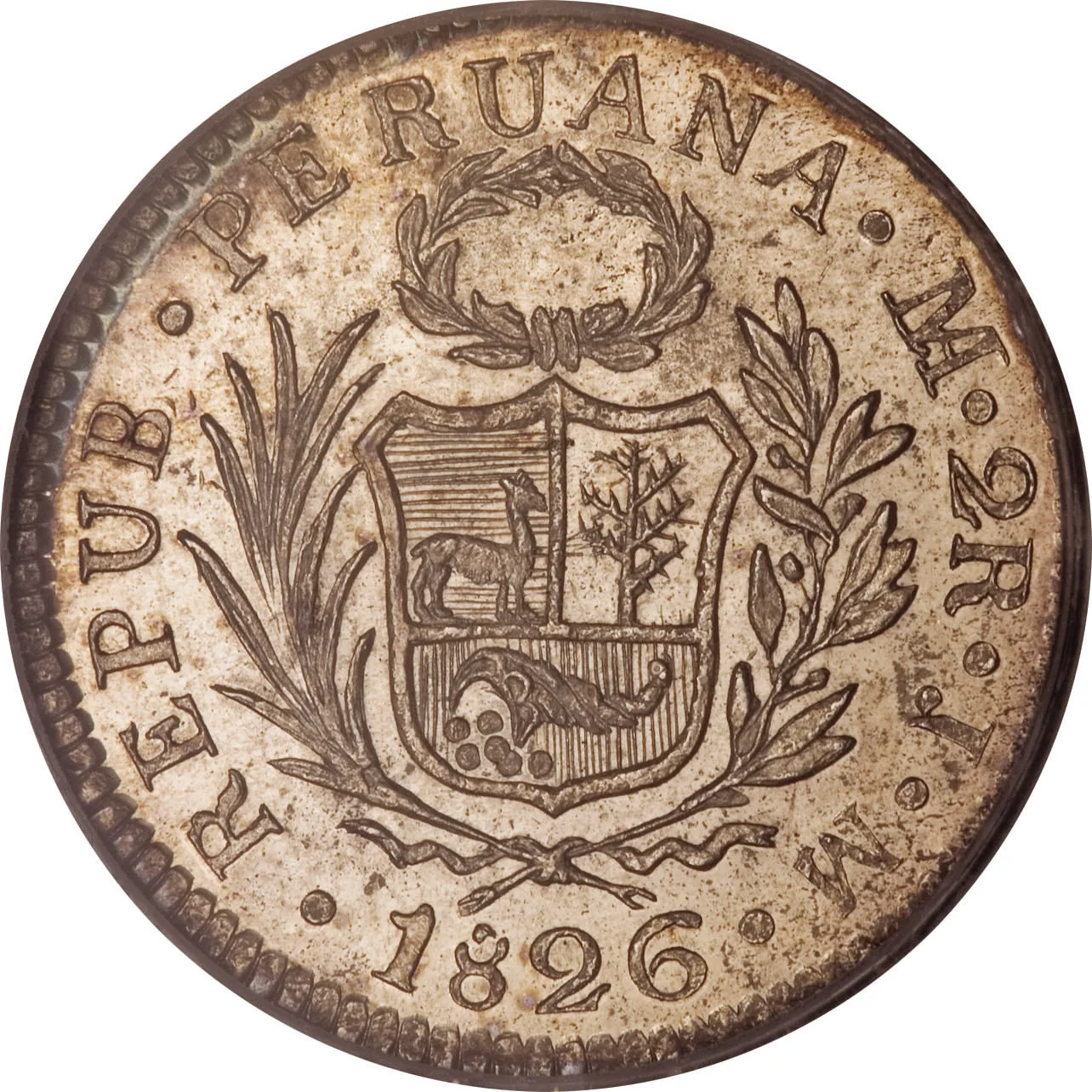
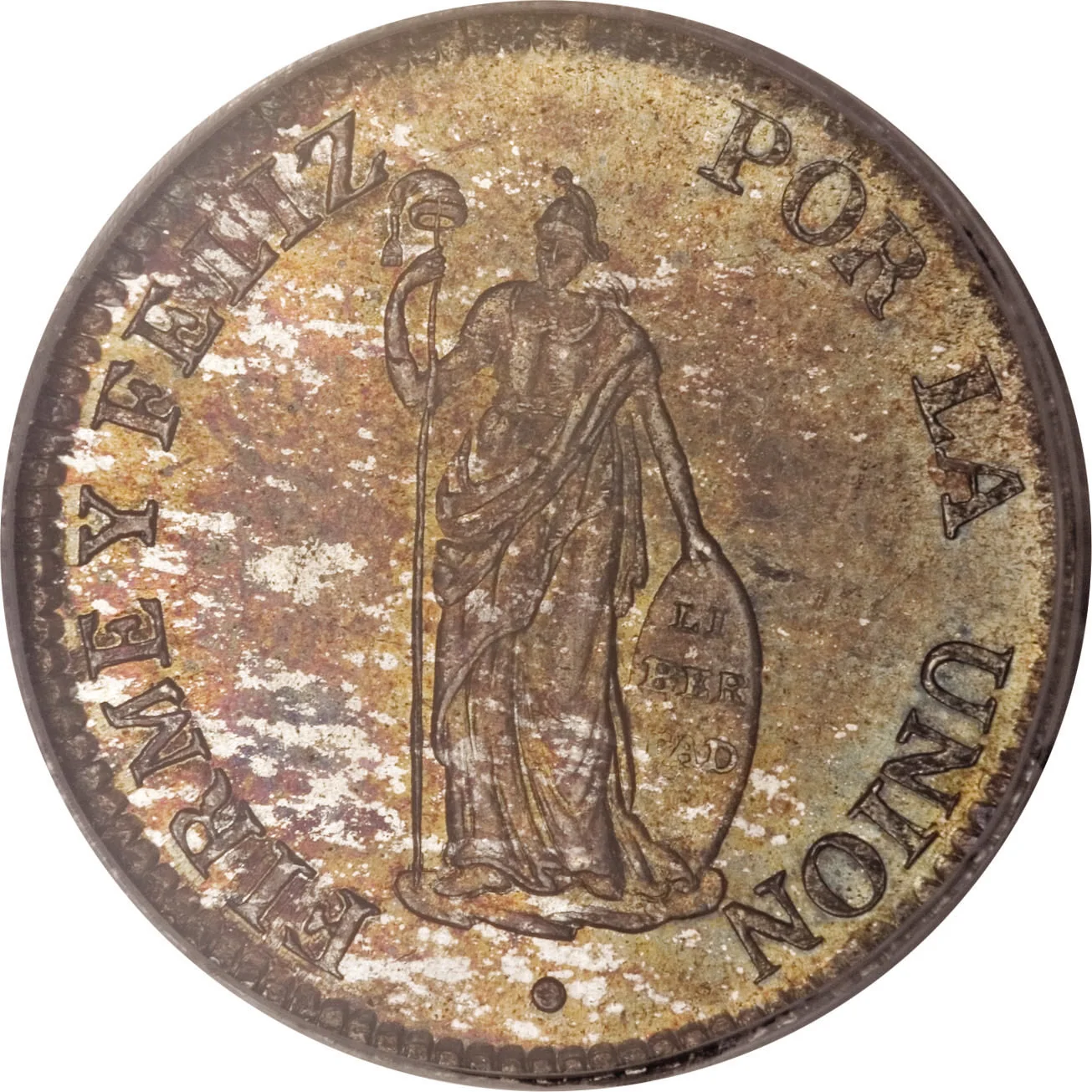
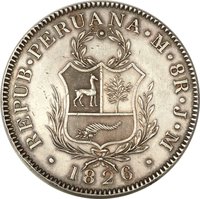
Obverse
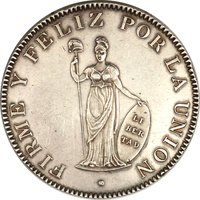
Reverse
Edge
© DMK Collection
Categories
| Symbol> Allegory |
| Symbols> Coat of Arms |
Mintings
| Year | Mint Mark | Mintage | Quality | Collection |
|---|---|---|---|---|
| 1825 | LIMA | — | ||
| 1826 | LIMA | — | ||
| 1827 | CUZo | — | ||
| 1827 | LIMA | — | ||
| 1828 | CUZo | — | ||
| 1828 | LIMA | — | ||
| 1829 | CUZo | — | ||
| 1829 | LIMA | — | ||
| 1830 | CUZo | — | ||
| 1830 | LIMA | — | ||
| 1831 | CUZo | — | ||
| 1831 | LIMA | — | ||
| 1832 | LIMA | — | ||
| 1833 | LIMA | — | ||
| 1834 | LIMA | — | ||
| 1835 | CUZo | — | ||
| 1835 | LIMA | — | ||
| 1836 | LIMA | — | ||
| 1839 | LIMA | — | ||
| 1840 | LIMA | — | ||
| 1840 | LIMAE | — | ||
| 1841 | LIMAE | — | ||
| 1842 | LIMAE | — | ||
| 1843 | Po | — | ||
| 1843 | LIMAE | — | ||
| 1845 | LIMAE | — | ||
| 1846 | LIMAE | — | ||
| 1848 | LIMAE | — | ||
| 1849 | LIMAE | — | ||
| 1850 | LIMAE | — | ||
| 1851 | LIMAE | — | ||
| 1854 | LIMAE | — | ||
| 1855 | LIMAE | — | ||
| 1856 | LIMAE | — |
Historical background
In 1825, Peru’s currency situation was chaotic and transitional, reflecting the turbulent aftermath of its independence from Spain in 1821. The new republic inherited a fragmented monetary system comprising a mix of Spanish colonial coins (like pesos, reales, and the gold escudo), coins from other former Spanish colonies, and even counterstamped or cut pieces used to make change. The wars of independence had severely disrupted mining, the traditional source of Peru’s silver wealth, leading to a scarcity of circulating specie. To finance the conflict, both royalist and patriot forces had issued vast quantities of low-quality debased coinage and paper money, which eroded public trust in the monetary system and caused significant inflation.
Facing this crisis, the government of Simón Bolívar, who was then exercising dictatorial authority in Peru, undertook a major monetary reform in 1825. The cornerstone was the introduction of a new national currency, the sol (meaning "sun" in Spanish), divided into 10 dineros or 100 centavos. This decimal system was a deliberate break from the old Spanish octal system and aligned with republican ideals and the French metric model. The government began minting new silver soles and gold escudos (worth 8 soles) at the revitalized Lima mint, featuring republican iconography like the sun and the Andes. The goal was to establish a uniform, trustworthy national coinage to displace the chaotic mix of old and provisional currencies.
Despite this ambitious reform, the currency situation in 1825 remained one of transition and challenge. The production and distribution of the new soles could not instantly replace all the old money in circulation, meaning multiple coinages continued to be used side-by-side for years. Furthermore, the state's fiscal woes, a struggling economy, and the costs of hosting the liberation armies (including the unpaid foreign debt from the independence struggle) continued to exert severe pressure. Thus, while 1825 marked the critical founding moment for Peru's national currency, establishing true monetary stability and uniformity would be a protracted process throughout the early republican period.
Facing this crisis, the government of Simón Bolívar, who was then exercising dictatorial authority in Peru, undertook a major monetary reform in 1825. The cornerstone was the introduction of a new national currency, the sol (meaning "sun" in Spanish), divided into 10 dineros or 100 centavos. This decimal system was a deliberate break from the old Spanish octal system and aligned with republican ideals and the French metric model. The government began minting new silver soles and gold escudos (worth 8 soles) at the revitalized Lima mint, featuring republican iconography like the sun and the Andes. The goal was to establish a uniform, trustworthy national coinage to displace the chaotic mix of old and provisional currencies.
Despite this ambitious reform, the currency situation in 1825 remained one of transition and challenge. The production and distribution of the new soles could not instantly replace all the old money in circulation, meaning multiple coinages continued to be used side-by-side for years. Furthermore, the state's fiscal woes, a struggling economy, and the costs of hosting the liberation armies (including the unpaid foreign debt from the independence struggle) continued to exert severe pressure. Thus, while 1825 marked the critical founding moment for Peru's national currency, establishing true monetary stability and uniformity would be a protracted process throughout the early republican period.
🌟 Limited