

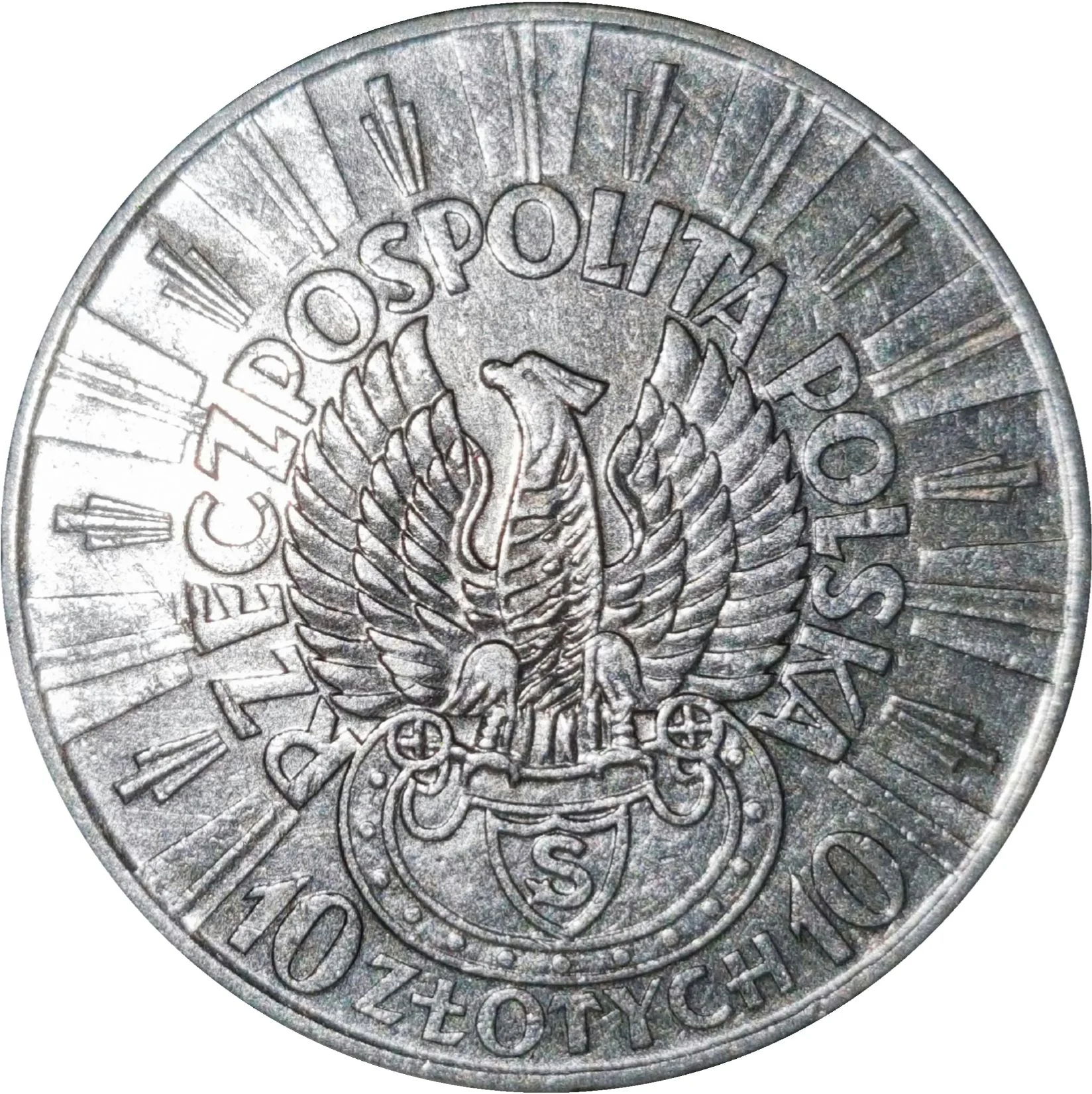
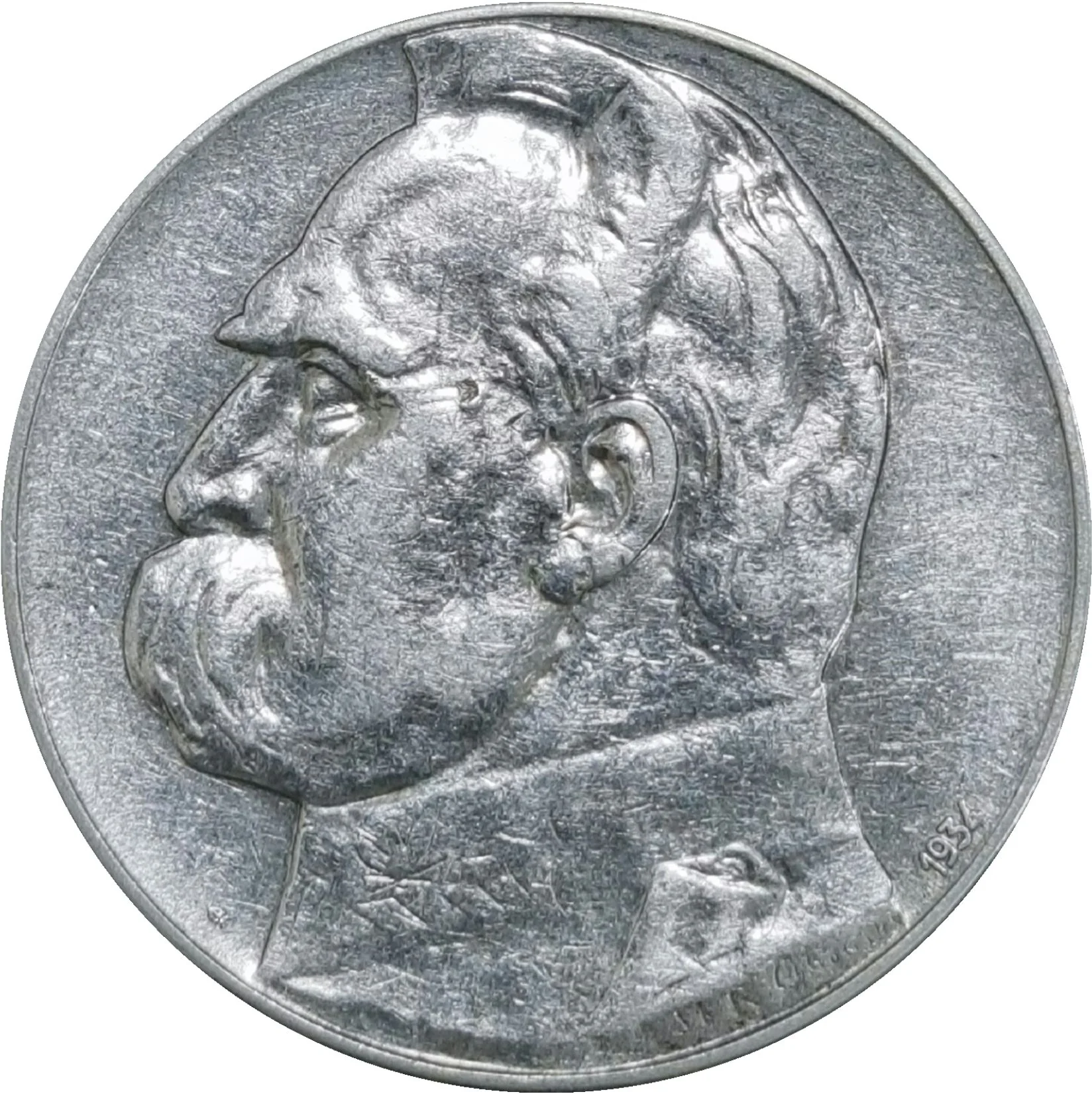
10 zlotys (March of the First Cadre Company of the Legions) – Poland
Add to wishlist
Circulating commemorative coins
Commemoration: 20th anniversary of the march of the First Cadre Company of the Legions
Poland
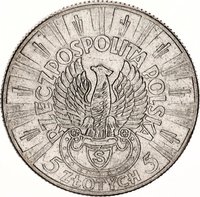
Obverse
Reverse
Description:
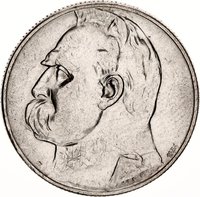
Józef Piłsudski left. Small date behind head.
Edge
Reeded
Categories
| Mustache/Beard |
Mintings
| Year | Mint Mark | Mintage | Quality | Collection |
|---|---|---|---|---|
| 1934 | — | 300,000 |
Historical background
In 1934, Poland’s currency situation was defined by the aftermath of the Great Depression and the struggle to maintain the stability of the złoty. Following a period of hyperinflation in the early 1920s, Poland had introduced a new złoty in 1924, backed by gold and pegged to both the US dollar and gold under the gold exchange standard. However, the global economic collapse after 1929 placed immense pressure on this system, as falling agricultural prices (a key Polish export) led to a drastic decline in foreign currency reserves and a large budget deficit.
By 1934, the government, under the guidance of Deputy Prime Minister Eugeniusz Kwiatkowski, was implementing a stringent austerity and reform program to defend the złoty's peg. This involved severe cuts in public spending, increased taxation, and efforts to boost industrial production. While these measures were socially painful, they were successful in their primary goal: Poland did not devalue its currency in 1934, unlike many other countries during the 1930s. The złoty remained one of the few European currencies still nominally on the gold standard, a point of national pride for the authoritarian Sanacja government.
Nevertheless, this stability came at a significant economic cost. The overvalued złoty made Polish exports less competitive, exacerbating trade imbalances and contributing to high unemployment and slow recovery. The currency defense also depended heavily on restrictive exchange controls and limited access to foreign currency. Thus, the situation in 1934 was one of fragile and costly stability, where the złoty's nominal parity was preserved through strict government management, but the underlying economy remained weak, setting the stage for future challenges as the decade progressed.
By 1934, the government, under the guidance of Deputy Prime Minister Eugeniusz Kwiatkowski, was implementing a stringent austerity and reform program to defend the złoty's peg. This involved severe cuts in public spending, increased taxation, and efforts to boost industrial production. While these measures were socially painful, they were successful in their primary goal: Poland did not devalue its currency in 1934, unlike many other countries during the 1930s. The złoty remained one of the few European currencies still nominally on the gold standard, a point of national pride for the authoritarian Sanacja government.
Nevertheless, this stability came at a significant economic cost. The overvalued złoty made Polish exports less competitive, exacerbating trade imbalances and contributing to high unemployment and slow recovery. The currency defense also depended heavily on restrictive exchange controls and limited access to foreign currency. Thus, the situation in 1934 was one of fragile and costly stability, where the złoty's nominal parity was preserved through strict government management, but the underlying economy remained weak, setting the stage for future challenges as the decade progressed.
🌟 Limited