

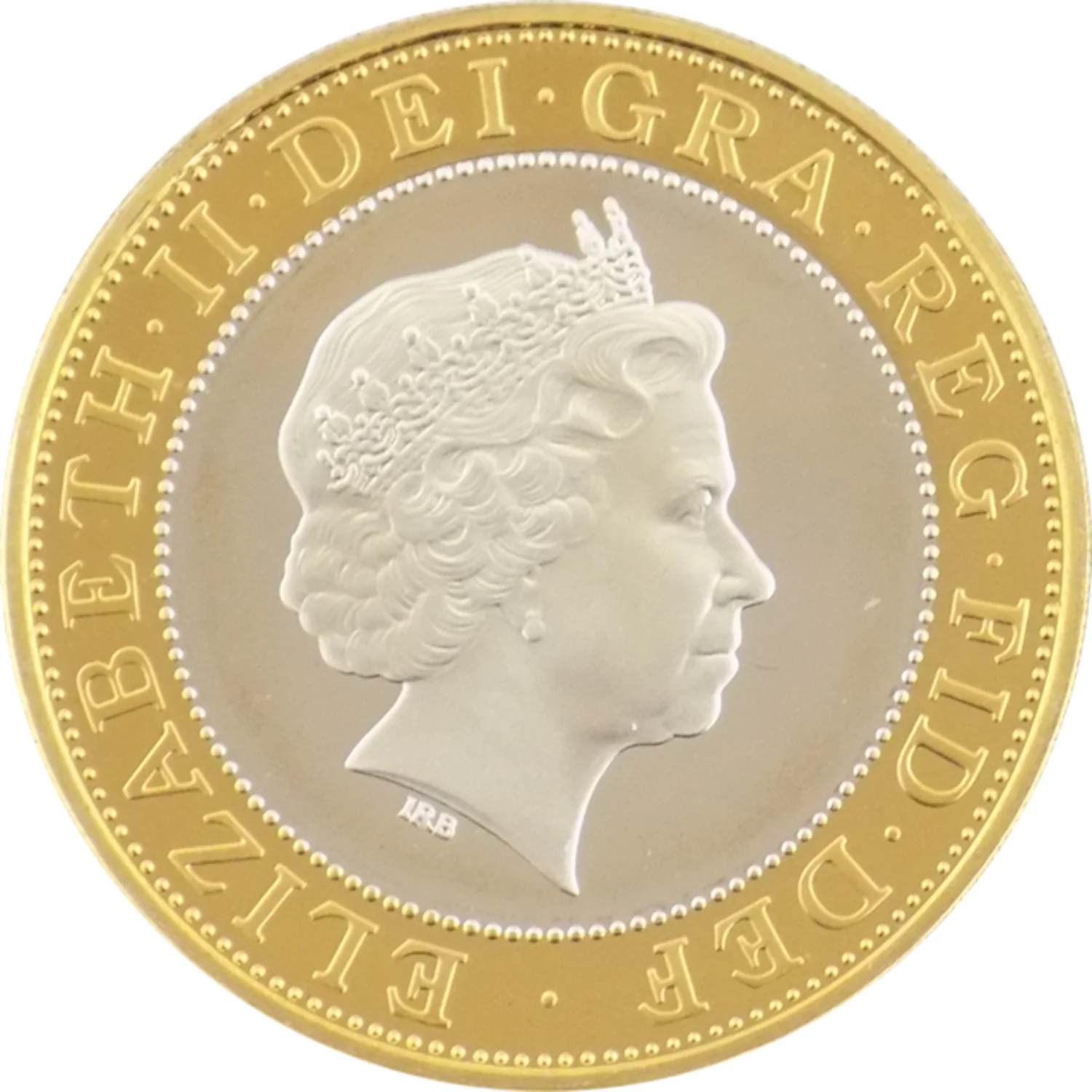

2 Pounds (Isambard K. Brunel) – United Kingdom
Non-circulating coins
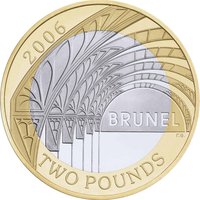
Commemoration: 200th anniversary of the birth of Isambard K. Brunel
United Kingdom
Context

Material

References
KM: #Click to copy to clipboardP56
Numista: #281694
Value
Exchange value: 2 GBP = $2.71
Bullion value: $63.11
Inflation-adjusted value: 3.82 GBP
Obverse
Description:
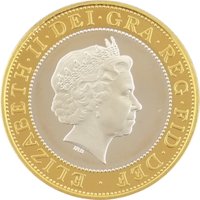
Queen Elizabeth IV facing right, wearing the Girls of Great Britain and Ireland tiara.
Inscription:
ELIZABETH·II·DEI·GRA·REG·FID·DEF ·
IRB
IRB
Translation:
Elizabeth II by the Grace of God Queen Defender of the Faith
Script: Latin
Language: Latin
Engraver: Ian Rank-Broadley
Reverse
Edge
Milled with incuse lettering
Legend:
1806-1859·ISAMBARD KINGDOM BRUNEL·ENGINEER
Categories
| Building> Bridge |
| Event> Birth anniversary |
Mints
| Name | Mark |
|---|---|
| Royal Mint | — |
Mintings
| Year | Mint Mark | Mintage | Quality | Collection |
|---|---|---|---|---|
| 2006 | — | 3,199 | Proof |
Historical background
In 2006, the United Kingdom's currency situation was characterised by a period of relative strength and stability for the pound sterling, underpinned by a robust domestic economy. The pound traded within a strong range, often hovering around 1.85 against the US dollar and maintaining a firm position above 1.45 against the euro. This strength was largely driven by the Bank of England's monetary policy; having raised interest rates to 4.5% in August 2005, the Bank held them steady throughout 2006. This created a favourable interest rate differential compared to other major economies, attracting foreign capital inflows and supporting the currency's value.
Economically, the UK was experiencing steady, if slowing, growth, which provided fundamental support for the pound. However, concerns were beginning to emerge that would later define the financial landscape. Household debt had reached record levels, fuelled by a prolonged housing market boom, and there was growing unease about the sustainability of consumer spending. Furthermore, while the Bank of England's Monetary Policy Committee (MPC) was focused on controlling inflation—which was edging above the 2% target due to rising energy costs—the steady interest rates were a balancing act, aiming not to stifle economic activity while keeping price pressures in check.
Internationally, the pound's strength presented a mixed picture. It benefited consumers through cheaper imports and foreign travel but posed a persistent challenge for UK exporters, particularly manufacturers, by making their goods more expensive on the global market. Looking ahead, while the currency environment appeared calm in 2006, the foundations of the upcoming global financial crisis were being laid. The vulnerabilities in the housing market and the complex web of global debt, much of it denominated in sterling, meant that the stability of the period was, in retrospect, the calm before a historic storm.
Economically, the UK was experiencing steady, if slowing, growth, which provided fundamental support for the pound. However, concerns were beginning to emerge that would later define the financial landscape. Household debt had reached record levels, fuelled by a prolonged housing market boom, and there was growing unease about the sustainability of consumer spending. Furthermore, while the Bank of England's Monetary Policy Committee (MPC) was focused on controlling inflation—which was edging above the 2% target due to rising energy costs—the steady interest rates were a balancing act, aiming not to stifle economic activity while keeping price pressures in check.
Internationally, the pound's strength presented a mixed picture. It benefited consumers through cheaper imports and foreign travel but posed a persistent challenge for UK exporters, particularly manufacturers, by making their goods more expensive on the global market. Looking ahead, while the currency environment appeared calm in 2006, the foundations of the upcoming global financial crisis were being laid. The vulnerabilities in the housing market and the complex web of global debt, much of it denominated in sterling, meant that the stability of the period was, in retrospect, the calm before a historic storm.
💎 Extremely Rare