

5 shillings (Independence) – Kenya
Add to wishlist
Circulating commemorative coins
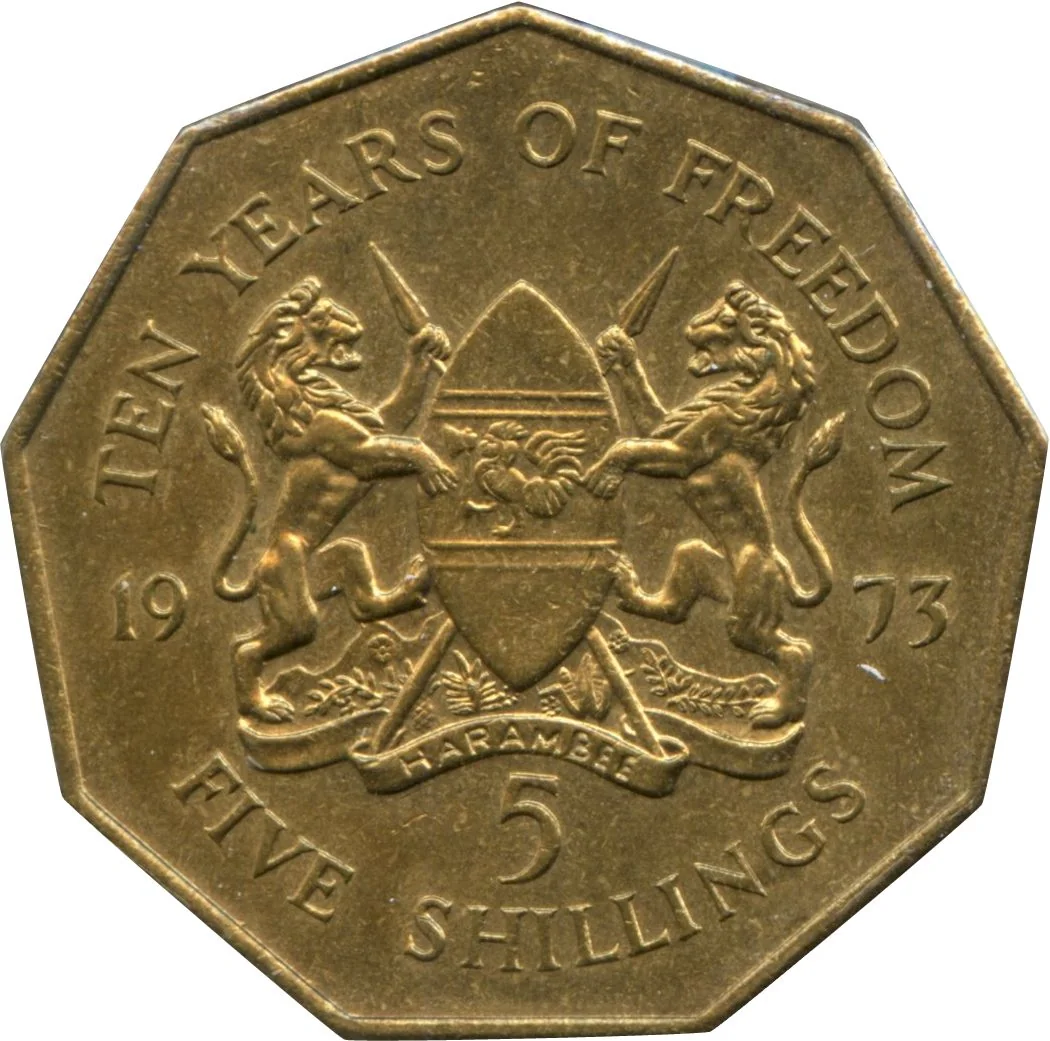
Commemoration: 10th Anniversary of Independence
Kenya
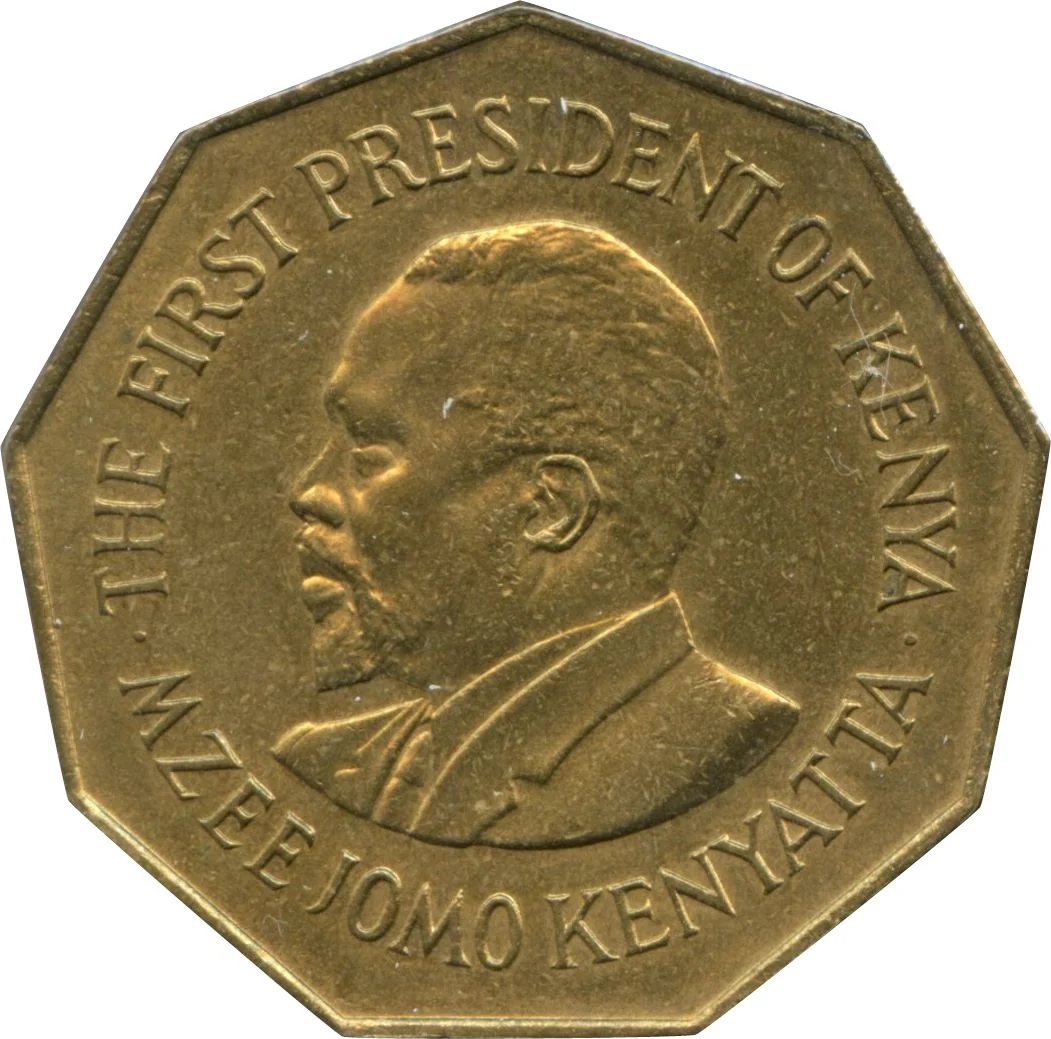
Obverse
Reverse
Description:
Bust of Jomo Kenyatta, left profile.
Inscription:
THE FIRST PRESIDENT OF KENYA
· MZEE JOMO KENYATTA ·
· MZEE JOMO KENYATTA ·
Script: Latin
Edge
Plain
Categories
| Event> Independence |
| Person> Politician |
| Symbols> Coat of Arms |
Mints
| Name | Mark |
|---|---|
| Royal Mint | — |
Mintings
| Year | Mint Mark | Mintage | Quality | Collection |
|---|---|---|---|---|
| 1973 | — | 100,000 | ||
| 1973 | — | 1,500 | Proof |
Historical background
In 1973, Kenya's currency situation was defined by its recent transition to a fully independent monetary system. Just two years prior, in 1971, the country had introduced the Kenyan shilling, replacing the East African shilling that had been the common currency of Kenya, Uganda, and Tanzania under the East African Currency Board. This move was a significant step in asserting national economic sovereignty following independence. The new Central Bank of Kenya, established in 1966, now had full control over monetary policy and currency issuance, operating within a framework of a fixed exchange rate pegged to the US dollar under the Bretton Woods system.
The year was marked by significant external shocks that tested this nascent system. The collapse of the Bretton Woods system in 1971 had already ushered in an era of global monetary instability, and in 1973, the first global oil crisis triggered by the OPEC embargo caused worldwide inflation and balance of payments pressures. For Kenya, an oil-importing nation with a growing but vulnerable economy, this led to a widening trade deficit and inflationary pressures, as the cost of imports surged. The fixed peg to the dollar, while providing stability, began to constrain policy options in responding to these external pressures.
Consequently, 1973 became a pivotal year where the foundations of the new currency were stress-tested. The government, under President Jomo Kenyatta, maintained the shilling's peg but began implementing tighter fiscal and monetary policies to curb the growing imbalance. The focus was on managing inflation and preserving foreign exchange reserves, setting the stage for the economic challenges of the mid-1970s. This period underscored the vulnerabilities of a developing economy to global commodity shocks and the complex task of managing a sovereign currency in an unstable international monetary environment.
The year was marked by significant external shocks that tested this nascent system. The collapse of the Bretton Woods system in 1971 had already ushered in an era of global monetary instability, and in 1973, the first global oil crisis triggered by the OPEC embargo caused worldwide inflation and balance of payments pressures. For Kenya, an oil-importing nation with a growing but vulnerable economy, this led to a widening trade deficit and inflationary pressures, as the cost of imports surged. The fixed peg to the dollar, while providing stability, began to constrain policy options in responding to these external pressures.
Consequently, 1973 became a pivotal year where the foundations of the new currency were stress-tested. The government, under President Jomo Kenyatta, maintained the shilling's peg but began implementing tighter fiscal and monetary policies to curb the growing imbalance. The focus was on managing inflation and preserving foreign exchange reserves, setting the stage for the economic challenges of the mid-1970s. This period underscored the vulnerabilities of a developing economy to global commodity shocks and the complex task of managing a sovereign currency in an unstable international monetary environment.
🌟 Uncommon