

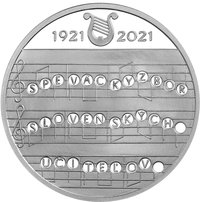
10 Euro (Slovak Teachers' Choir) – Slovakia
Non-circulating coins
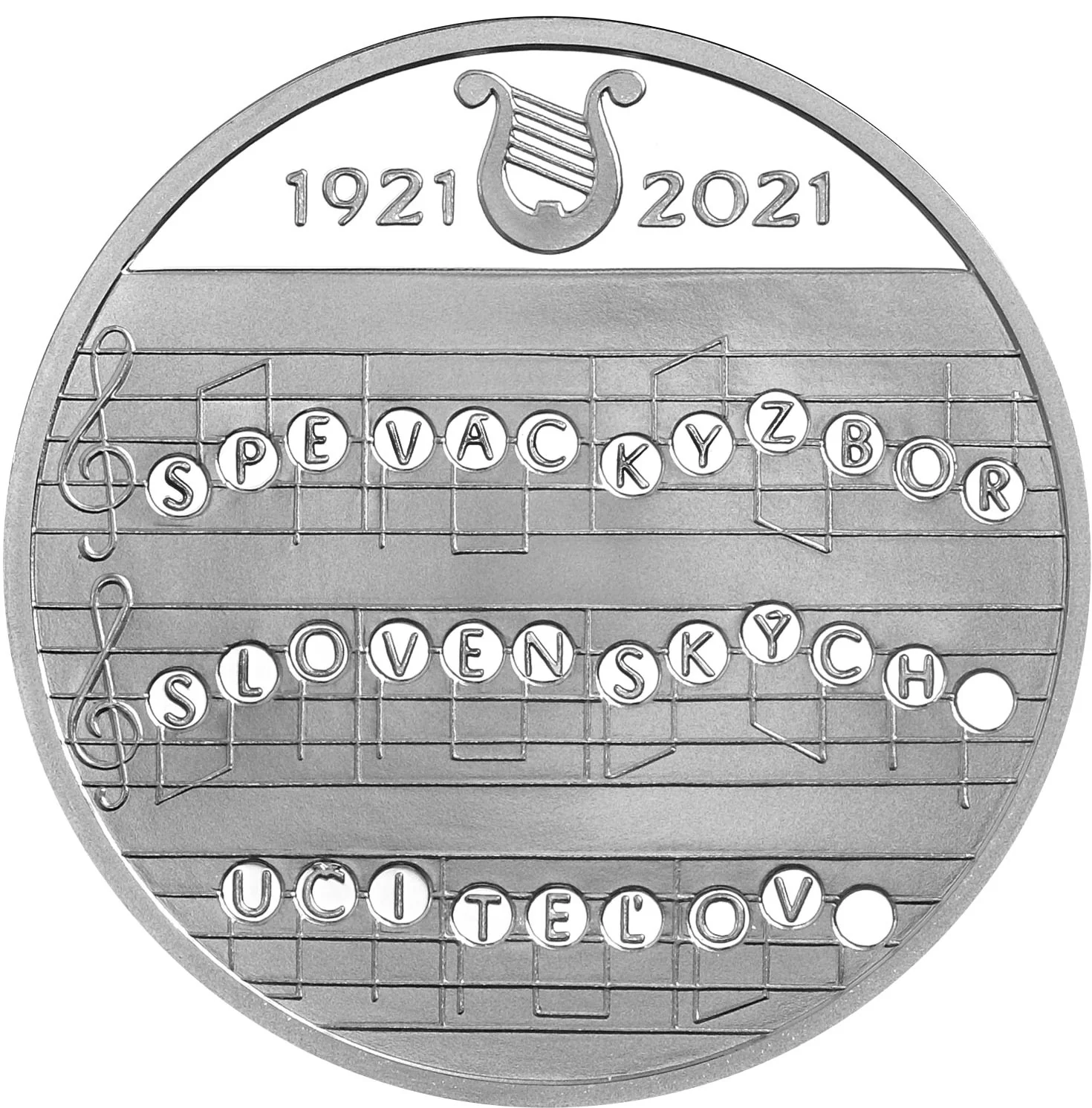
Commemoration: 100th anniversary of the Slovak Teachers' Choir
Slovakia
Context
Material
References
KM: #Click to copy to clipboard180
Numista: #280183
Value
Exchange value: 10 EUR = $11.81
Bullion value: $46.70
Inflation-adjusted value: 13.66 EUR
Obverse
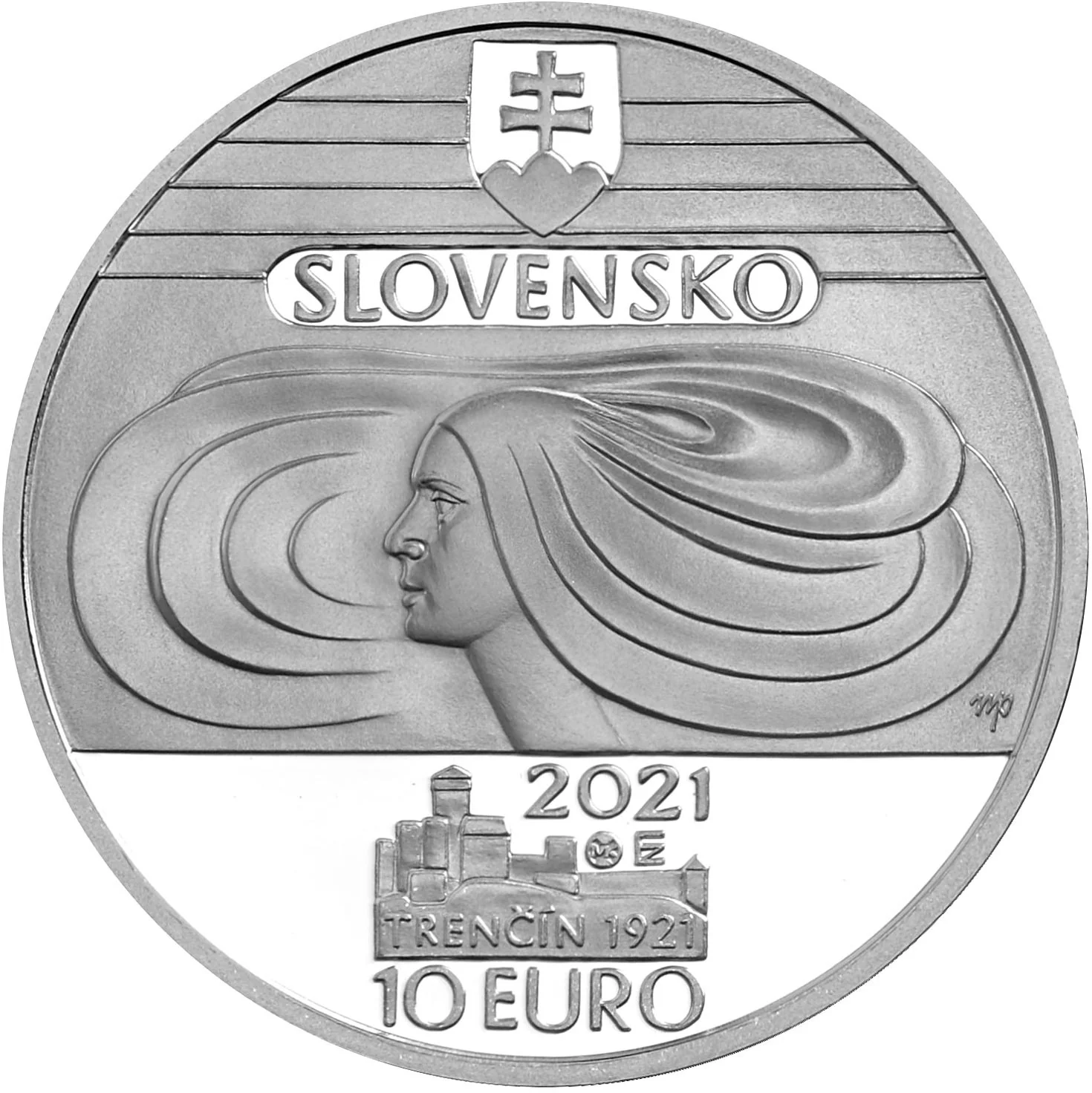
Inscription:
SLOVENSKO
2021
TRENČIN 1921
10 EURO
2021
TRENČIN 1921
10 EURO
Translation:
SLOVAKIA
2021
TRENČÍN 1921
10 EURO
2021
TRENČÍN 1921
10 EURO
Script: Latin
Engraver: Dalibor Schmidt
Designer: Zbyněk Fojtů
Reverse
Edge
Smooth with inscriptions
Legend:
DUCH NÁRODA ŽIJE V PIESNÍ, V ŇOM SA VZNÁŠA K VÝŠINÁM
Translation:
The spirit of the nation lives in song, in it, it soars to the heights.
Language: Slovak
Categories
| Symbols> Coat of Arms |
| Art> Music |
Mints
| Name | Mark |
|---|---|
| Kremnica | (MK) |
Mintings
| Year | Mint Mark | Mintage | Quality | Collection |
|---|---|---|---|---|
| 2021 | MK | 2,800 | ||
| 2021 | MK | 6,500 | Proof |
Historical background
In 2021, Slovakia remained a committed member of the Eurozone, having adopted the euro as its official currency in 2009. The country's monetary policy was therefore set by the European Central Bank (ECB), which focused on maintaining price stability across the bloc. The primary domestic currency issue for Slovakia, as for all Eurozone members, was navigating the ECB's ultra-accommodative policies, including historically low interest rates and pandemic-era bond-buying programs, aimed at stimulating the euro area economy in the wake of the COVID-19 crisis.
The year was marked by significant inflationary pressures, which became the central economic and currency-related concern. While not having direct control over interest rates, Slovak policymakers and the National Bank of Slovakia (NBS) closely monitored the surge in consumer prices, driven initially by supply chain disruptions and later by soaring energy costs. Annual inflation in Slovakia reached 3.8% by the end of 2021, exceeding the Eurozone average and prompting public debate about the cost of living, though the ECB initially viewed the rise as largely "transitory."
Domestically, the currency situation was stable, with no serious political debate about leaving the euro. The focus was instead on the practical implications of the common currency, including the benefits of trade and investment stability within the EU single market versus the inability to devalue the national currency to boost competitiveness. The government's economic policy was thus channeled through fiscal measures, utilizing EU recovery funds to support the economy, while the NBS contributed to macroprudential policy and participated in the ECB's governing council discussions shaping the monetary stance for the entire currency union.
The year was marked by significant inflationary pressures, which became the central economic and currency-related concern. While not having direct control over interest rates, Slovak policymakers and the National Bank of Slovakia (NBS) closely monitored the surge in consumer prices, driven initially by supply chain disruptions and later by soaring energy costs. Annual inflation in Slovakia reached 3.8% by the end of 2021, exceeding the Eurozone average and prompting public debate about the cost of living, though the ECB initially viewed the rise as largely "transitory."
Domestically, the currency situation was stable, with no serious political debate about leaving the euro. The focus was instead on the practical implications of the common currency, including the benefits of trade and investment stability within the EU single market versus the inability to devalue the national currency to boost competitiveness. The government's economic policy was thus channeled through fiscal measures, utilizing EU recovery funds to support the economy, while the NBS contributed to macroprudential policy and participated in the ECB's governing council discussions shaping the monetary stance for the entire currency union.
💎 Very Rare