

2 rand – South Africa
Add to wishlist
Circulating commemorative coins
Commemoration: Right of Feedom and Security
South Africa
Context
Material
References
KM: #
Numista: #280077
Value
Exchange value: 2 ZAR
Inflation-adjusted value: 2.59 ZAR
Obverse
Description:
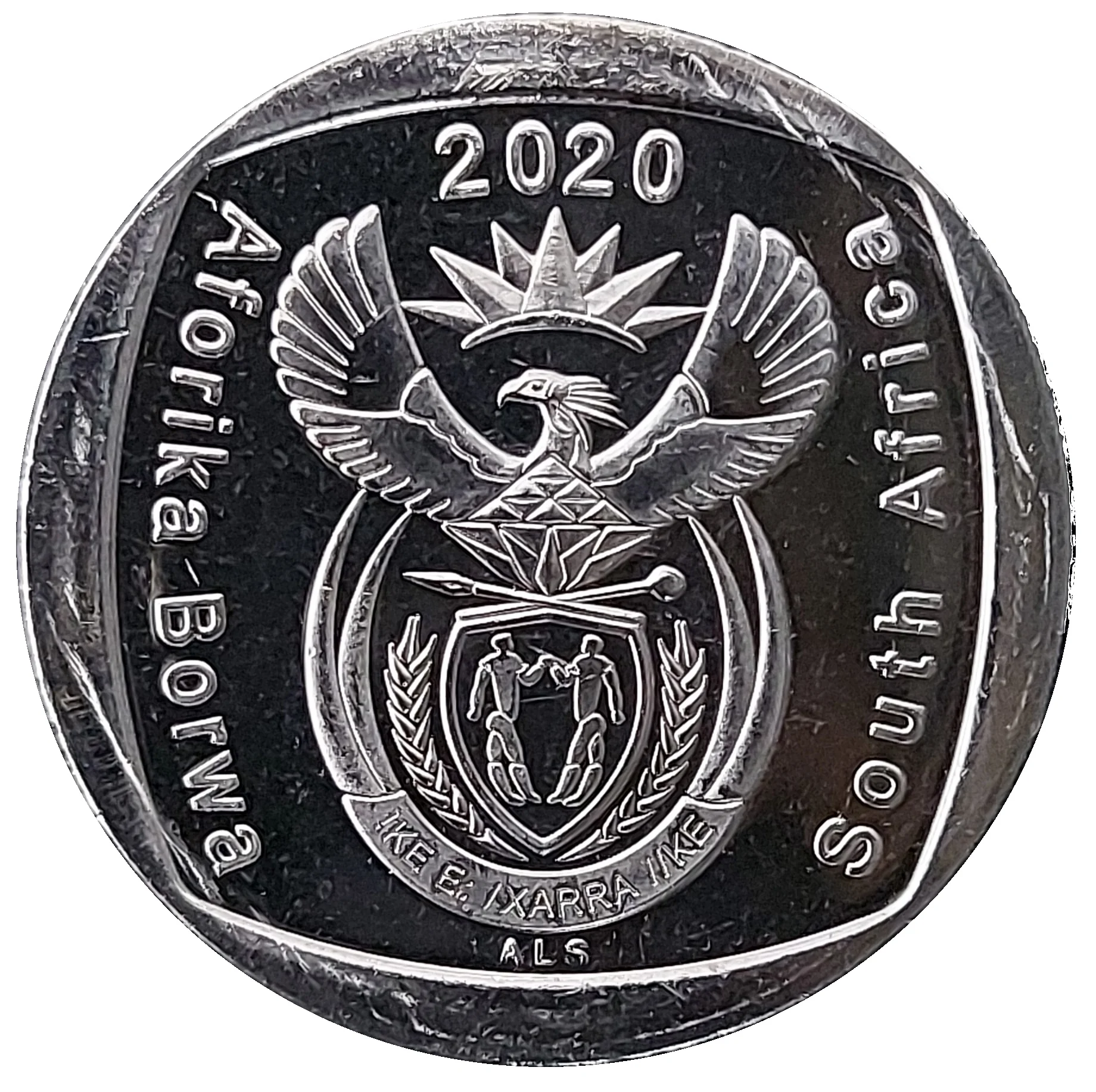
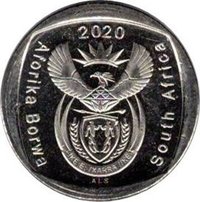
South Africa's coat of arms with ethnic languages flanking it and the date above.
Inscription:
Afurika Tshipembe
2020
iSewula Afrika
ALS
2020
iSewula Afrika
ALS
Translation:
South Africa
2020
South Africa
ALS
2020
South Africa
ALS
Script: Latin
Engraver: Arthur Sutherland
Reverse
Description:
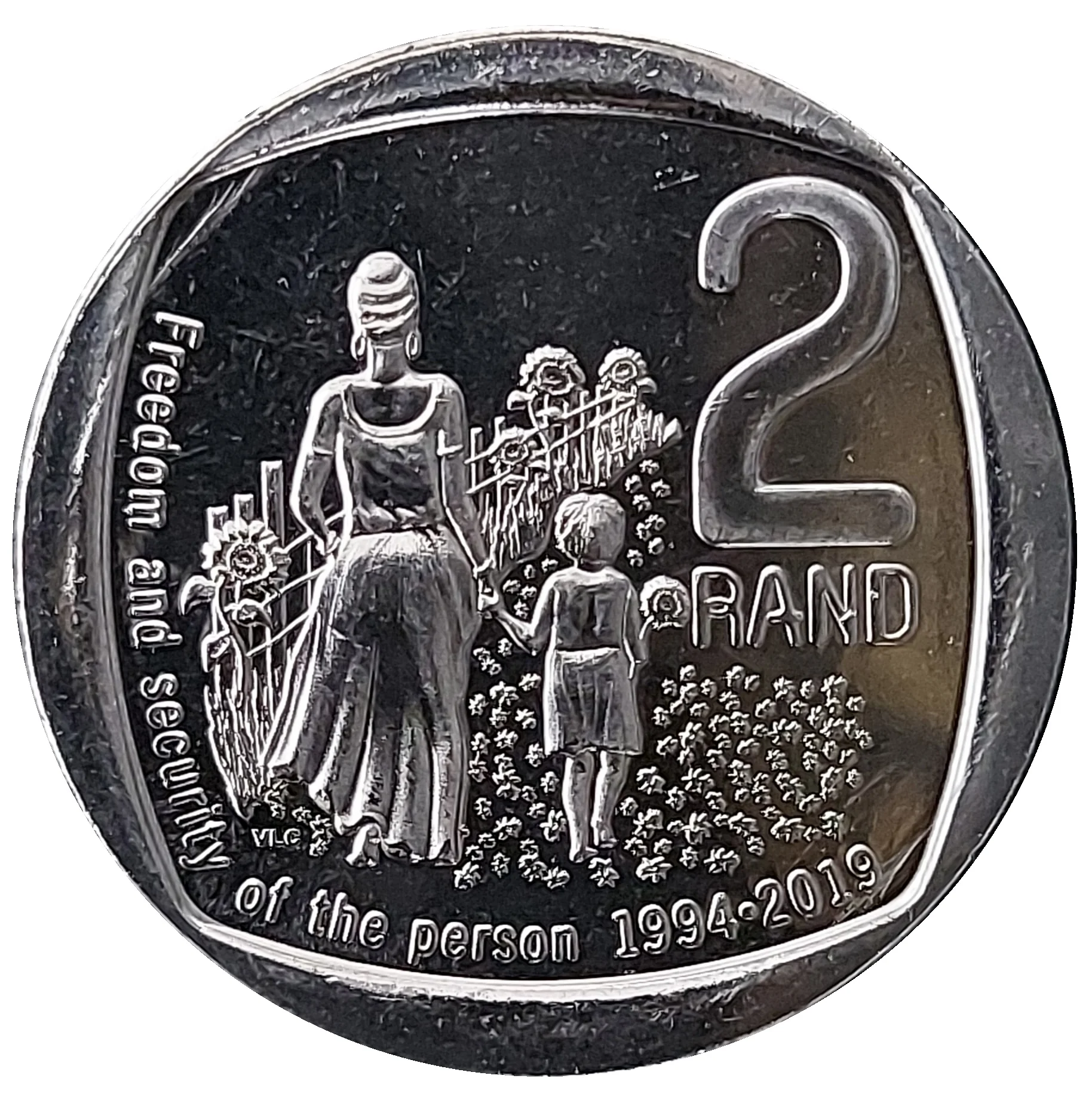
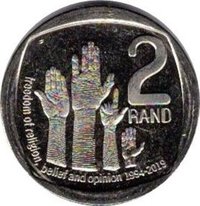
A mother and daughter walk in nature. The daughter holds a magical sunflower, its sunward turn reflecting youthful resilience and hope.
Inscription:
Freedom and security of the person 1994-2019
2 RAND
VLC
2 RAND
VLC
Script: Latin
Engraver: Vincent Chipa
Designer: Esta Quirk
Edge
Segmented reeding
Mints
| Name | Mark |
|---|---|
| South African Mint | — |
Mintings
| Year | Mint Mark | Mintage | Quality | Collection |
|---|---|---|---|---|
| 2020 | — | — |
Historical background
In 2020, South Africa's currency, the rand, experienced extreme volatility and significant depreciation, driven by a "perfect storm" of domestic and global shocks. The year began with ongoing concerns over stagnant economic growth, rampant state-owned enterprise debt (notably Eskom), and persistent budget deficits, which had already weakened investor confidence. The arrival of the COVID-19 pandemic in March was the primary catalyst for a sharp decline. As global risk aversion spiked, investors fled emerging market assets, causing the rand to plummet to its worst-ever level of nearly R19 to the US dollar in April. This was exacerbated by a historic crash in global oil prices and a sovereign credit rating downgrade by Moody's to "junk" status, which removed South Africa from key global bond indices and triggered further capital outflows.
The government's response to the crisis involved a mix of monetary and fiscal interventions. The South African Reserve Bank (SARB) cut interest rates aggressively to a historic low to support the struggling economy, which provided some relief but also reduced the yield advantage that attracts foreign investment. Concurrently, the government announced a substantial R500 billion COVID-19 relief package, raising fears about a dramatic increase in public debt and the potential for unsustainable money printing. While the rand recovered some ground in the latter half of the year as global markets stabilized and commodity prices rose, it remained vulnerable and weaker than pre-pandemic levels, reflecting deep-seated structural concerns.
Ultimately, the currency situation in 2020 laid bare the underlying fragility of the South African economy. The rand's trajectory was not merely a reflection of a global crisis but a stark indicator of chronic domestic issues: low growth, fiscal strain, and unreliable electricity supply. The year ended with the currency still highly sensitive to both shifts in global risk sentiment and any negative domestic political or economic developments, highlighting a prolonged path to recovery dependent on credible economic reforms and improved investor confidence.
The government's response to the crisis involved a mix of monetary and fiscal interventions. The South African Reserve Bank (SARB) cut interest rates aggressively to a historic low to support the struggling economy, which provided some relief but also reduced the yield advantage that attracts foreign investment. Concurrently, the government announced a substantial R500 billion COVID-19 relief package, raising fears about a dramatic increase in public debt and the potential for unsustainable money printing. While the rand recovered some ground in the latter half of the year as global markets stabilized and commodity prices rose, it remained vulnerable and weaker than pre-pandemic levels, reflecting deep-seated structural concerns.
Ultimately, the currency situation in 2020 laid bare the underlying fragility of the South African economy. The rand's trajectory was not merely a reflection of a global crisis but a stark indicator of chronic domestic issues: low growth, fiscal strain, and unreliable electricity supply. The year ended with the currency still highly sensitive to both shifts in global risk sentiment and any negative domestic political or economic developments, highlighting a prolonged path to recovery dependent on credible economic reforms and improved investor confidence.

🌟 Uncommon