

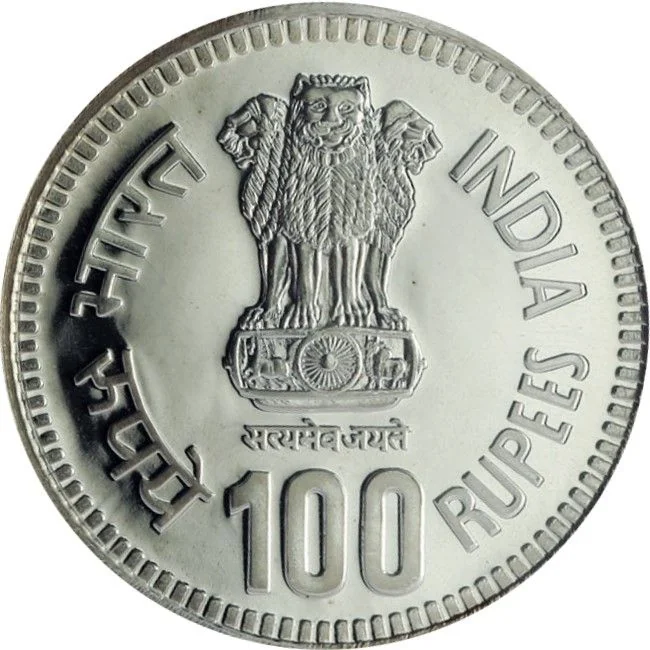
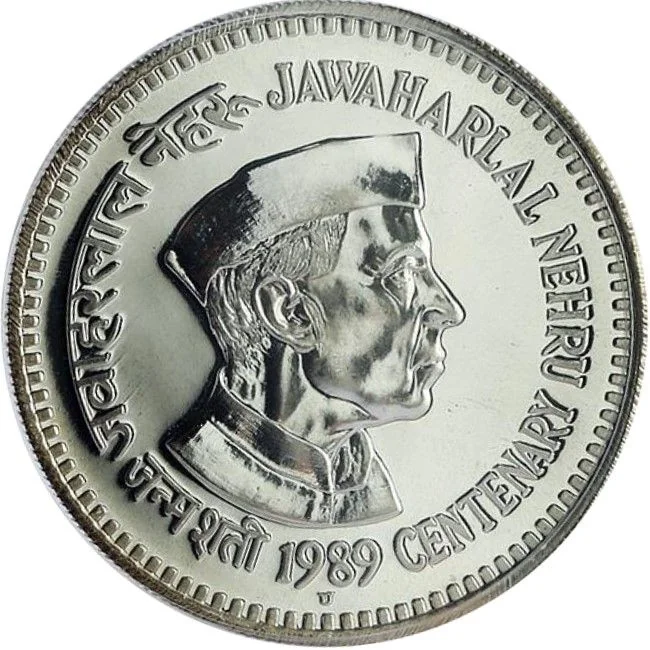
100 Rupees (Jawaharlal Nehru) – India
Non-circulating coins
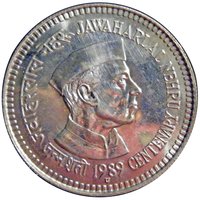
Commemoration: 100th Anniversary of Birth of Nehru
India

Material
References
KM: #Click to copy to clipboard285
Numista: #27822
Value
Exchange value: 100 INR = $1.10
Bullion value: $50.45
Inflation-adjusted value: 1210.31 INR
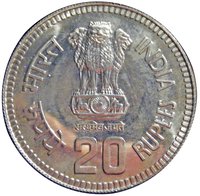
Obverse
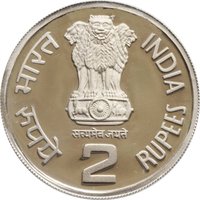
Reverse
Edge
Reeded
Mints
| Name | Mark |
|---|---|
| Mumbai / Bombay | B |
| Mumbai / Bombay | U |
Historical background
In 1989, India's currency situation was characterized by a complex and strained balance of payments position, heavily reliant on external borrowing and remittances. The economy operated under a tightly controlled exchange rate regime, with the Indian Rupee pegged to a basket of currencies but effectively managed by the Reserve Bank of India (RBI). A significant feature was the existence of a dual exchange rate: the official rate for essential imports and a less favourable "Rupee-USD bearer bond" scheme for other transactions, a mechanism introduced to conserve scarce foreign exchange. Internally, high fiscal deficits, driven by expansive government spending and subsidies, were monetized by the RBI, fueling inflationary pressures and eroding the rupee's domestic value.
Externally, the situation was precarious. The current account deficit widened to concerning levels, exceeding 2% of GDP, due to rising oil prices and strong import demand for capital goods and gold. While worker remittances and non-resident Indian (NRI) deposits provided a crucial inflow, the country's foreign exchange reserves had fallen to a critically low level, covering barely three weeks of imports by 1990-91. This made the economy extremely vulnerable to external shocks and reliant on short-term borrowing to bridge the gap, creating a looming debt servicing crisis.
Politically, 1989 was a year of instability, with a fragile minority government under Prime Minister V.P. Singh coming to power. This political uncertainty hampered decisive economic action. Consequently, the underlying macroeconomic imbalances of fiscal profligacy, a fragile external sector, and an over-regulated economy continued to fester. The currency controls and complex exchange rate mechanisms of 1989 were ultimately unsustainable stopgaps, setting the stage for the severe balance of payments crisis that would erupt in 1991, forcing a dramatic economic liberalization and a shift to a market-determined exchange rate.
Externally, the situation was precarious. The current account deficit widened to concerning levels, exceeding 2% of GDP, due to rising oil prices and strong import demand for capital goods and gold. While worker remittances and non-resident Indian (NRI) deposits provided a crucial inflow, the country's foreign exchange reserves had fallen to a critically low level, covering barely three weeks of imports by 1990-91. This made the economy extremely vulnerable to external shocks and reliant on short-term borrowing to bridge the gap, creating a looming debt servicing crisis.
Politically, 1989 was a year of instability, with a fragile minority government under Prime Minister V.P. Singh coming to power. This political uncertainty hampered decisive economic action. Consequently, the underlying macroeconomic imbalances of fiscal profligacy, a fragile external sector, and an over-regulated economy continued to fester. The currency controls and complex exchange rate mechanisms of 1989 were ultimately unsustainable stopgaps, setting the stage for the severe balance of payments crisis that would erupt in 1991, forcing a dramatic economic liberalization and a shift to a market-determined exchange rate.

⭐ Rare