


Obverse
Description:
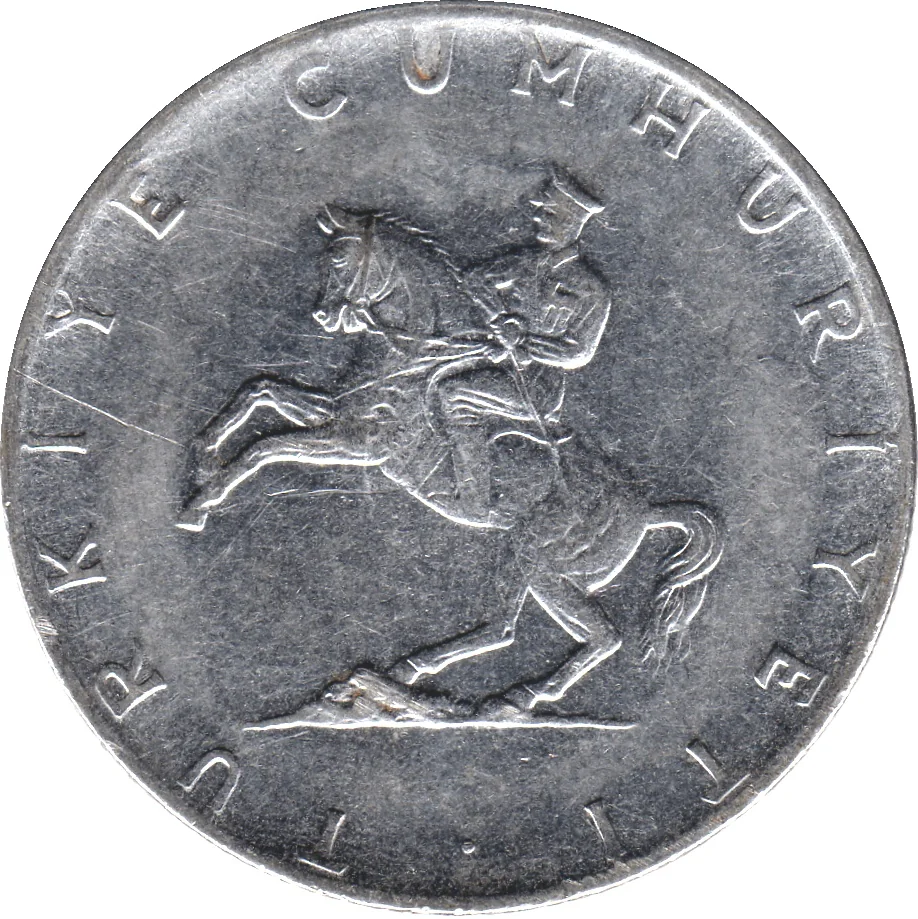
Atatürk riding a horse.
Inscription:
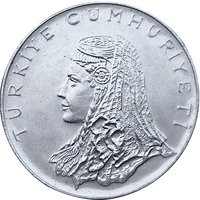
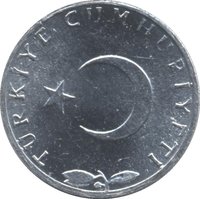
TÜRKİYE CUMHURİYETİ
Translation:
REPUBLIC OF TURKEY
Script: Latin
Language: Turkish
Engraver: İ. Avni Kumuk
Reverse
Edge
Milled
Mints
| Name | Mark |
|---|---|
| Turkish State Mint | — |
Mintings
| Year | Mint Mark | Mintage | Quality | Collection |
|---|---|---|---|---|
| 1974 | — | 2,842,000 | ||
| 1975 | — | 10,855,000 | ||
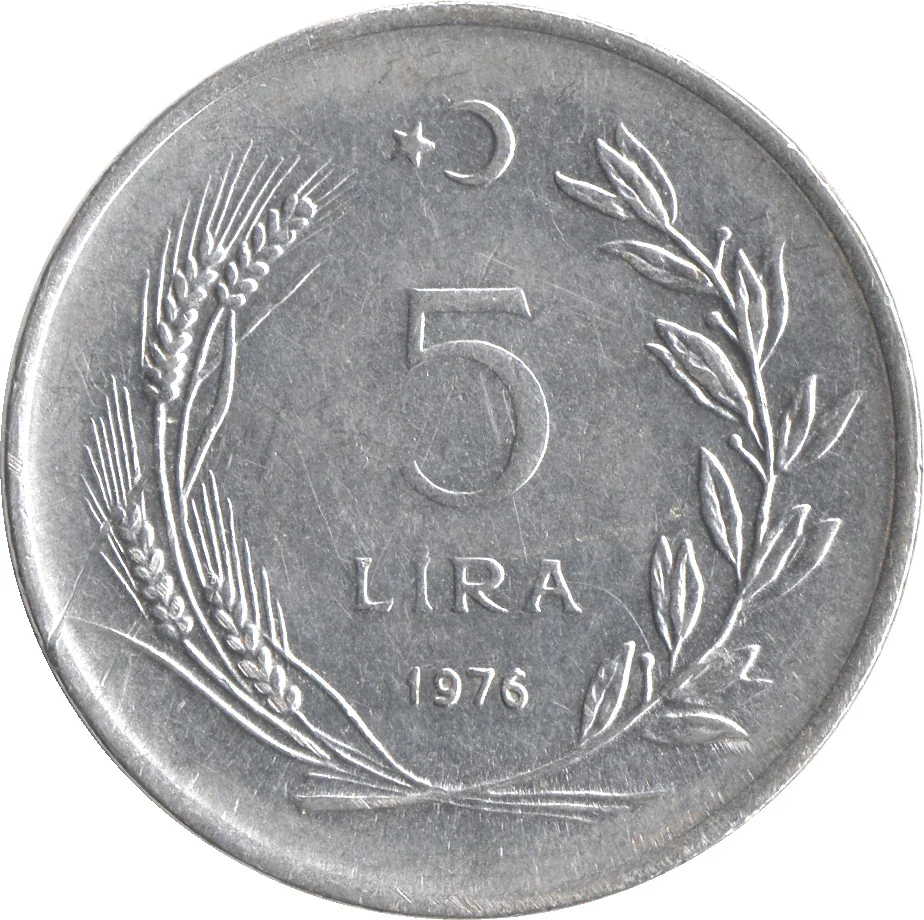
| 1976 | — | 20,340,000 | ||
| 1977 | — | 6,205,000 | ||
| 1978 | — | 247,000 | ||
| 1979 | — | 6,054,000 |
Historical background
In 1974, Turkey's currency situation was characterized by significant strain and instability, largely stemming from a combination of external shocks and expansive domestic economic policies. The year was dominated by the aftermath of the 1973 global oil crisis, which severely inflated Turkey's import bill and led to a growing current account deficit. This external pressure was compounded by a period of populist, inward-looking economic policies under Prime Minister Bülent Ecevit, which included heavy state subsidies, large public sector wage increases, and protectionist import substitution measures. These policies fueled domestic demand but also widened fiscal deficits and increased inflationary pressures.
The Turkish lira, which had maintained a fixed parity with the US dollar since 1960 as part of a stabilization program, came under intense devaluation pressure. The Central Bank of Turkey was forced to expend substantial foreign exchange reserves in a largely futile attempt to defend the peg. By the end of 1974, the country's foreign reserves were critically depleted, and the black-market premium for foreign currency had widened significantly, indicating a severe loss of confidence in the official exchange rate. This period marked the beginning of the end for the fixed exchange rate regime that had provided relative stability for over a decade.
Consequently, 1974 served as a pivotal prelude to a profound economic crisis that would fully erupt later in the decade. The unsustainable policies and external imbalances of that year set the stage for the severe foreign exchange shortages, soaring inflation, and debt problems that culminated in the mandatory austerity measures of the 1978-79 period and the dramatic January 1980 devaluation. Thus, the currency situation in 1974 represented the critical inflection point where post-war economic stability gave way to a prolonged period of monetary instability and eventual structural transformation.
The Turkish lira, which had maintained a fixed parity with the US dollar since 1960 as part of a stabilization program, came under intense devaluation pressure. The Central Bank of Turkey was forced to expend substantial foreign exchange reserves in a largely futile attempt to defend the peg. By the end of 1974, the country's foreign reserves were critically depleted, and the black-market premium for foreign currency had widened significantly, indicating a severe loss of confidence in the official exchange rate. This period marked the beginning of the end for the fixed exchange rate regime that had provided relative stability for over a decade.
Consequently, 1974 served as a pivotal prelude to a profound economic crisis that would fully erupt later in the decade. The unsustainable policies and external imbalances of that year set the stage for the severe foreign exchange shortages, soaring inflation, and debt problems that culminated in the mandatory austerity measures of the 1978-79 period and the dramatic January 1980 devaluation. Thus, the currency situation in 1974 represented the critical inflection point where post-war economic stability gave way to a prolonged period of monetary instability and eventual structural transformation.
🌱 Very Common