

50000 Dinars – Iran
Non-circulating coins
Commemoration: Reward for Valour
Iran
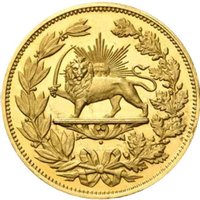
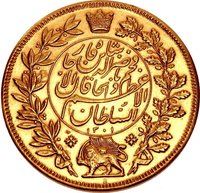
Obverse
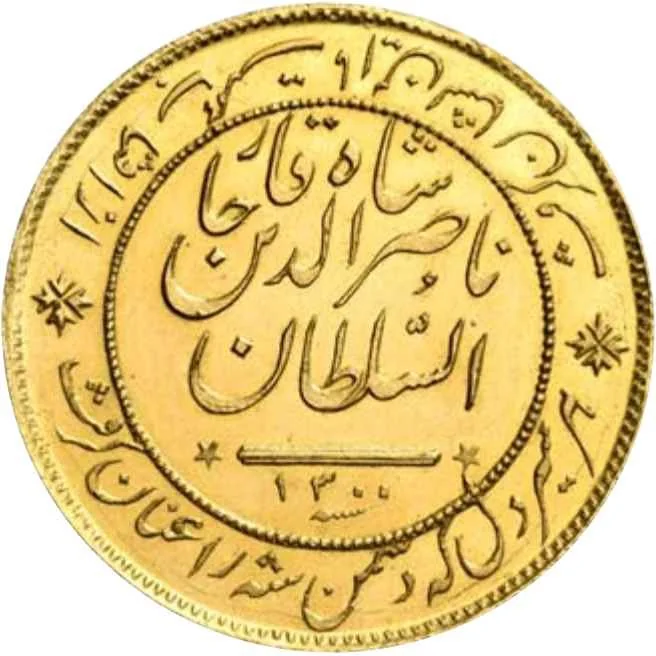
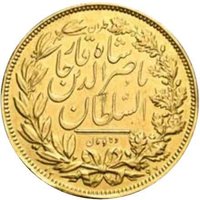
Inscription:
السّلطان ناصرالدین شاه قاجار
سنه ۱۳۰۰
هر شیردل که دشمن شه را عنان گرفت
ار آفتاب همت ما این نشان گرفت
سنه ۱۳۰۰
هر شیردل که دشمن شه را عنان گرفت
ار آفتاب همت ما این نشان گرفت
Translation:
The Sultan Naser al-Din Shah Qajar
Year 1300
Any lion-hearted one who seized the reins of the Shah's enemy,
If he had the ambition of our sun, he would obtain this mark.
Year 1300
Any lion-hearted one who seized the reins of the Shah's enemy,
If he had the ambition of our sun, he would obtain this mark.
Language: Persian
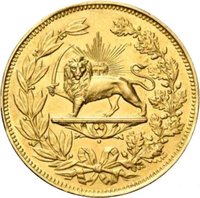
Reverse
Edge
Plain
Mints
| Name | Mark |
|---|---|
| Tehran | — |
Mintings
| Year | Mint Mark | Mintage | Quality | Collection |
|---|---|---|---|---|
| 1881 | — | — | ||
| 1883 | — | — | ||
| 1884 | — | — |
Historical background
In 1881, Iran’s currency system was in a state of profound disarray, characterized by a chaotic multiplicity of coins and a severe shortage of specie. The monetary landscape was a fragmented patchwork of domestic and foreign currencies. Domestically, the principal silver coin was the kran, but its value and silver content varied significantly across different provinces and mint towns, leading to widespread confusion in trade. Alongside these, foreign currencies like the British gold sovereign, the Russian ruble, and the Ottoman lira circulated freely, often holding more trust than local coinage. This lack of a unified, standardized national currency severely hampered economic integration and state revenue collection.
The root of the crisis lay in decades of Qajar fiscal mismanagement and external pressures. The state treasury was chronically depleted due to extravagant court expenditures, military costs, and the payment of large indemnities, such as the one to Russia following the 1828 Treaty of Turkmanchay. To meet obligations, successive shahs had debased the silver coinage by reducing its precious metal content, which fueled inflation and destroyed public confidence in the currency. Furthermore, the growing integration of Iran into the global economy, particularly through trade concessions granted to British and Russian interests, meant that international economic fluctuations directly impacted the already fragile monetary system.
Recognizing the crisis, the Qajar government under Naser al-Din Shah had begun tentative reforms. The most significant was the establishment of a state mint (Dar al-Zarb) and the introduction of a new silver coin, the rial, valued at 10 krans, in an attempt to create a standardized unit. However, in 1881, these measures were still in their infancy and faced immense practical challenges. The scarcity of silver bullion, continued provincial autonomy in minting, and a lack of central banking infrastructure meant that the old, chaotic system persisted. Thus, 1881 represents a pivotal moment of acute monetary weakness, with the state struggling to implement centralizing reforms against a backdrop of deep-seated economic instability and foreign influence.
The root of the crisis lay in decades of Qajar fiscal mismanagement and external pressures. The state treasury was chronically depleted due to extravagant court expenditures, military costs, and the payment of large indemnities, such as the one to Russia following the 1828 Treaty of Turkmanchay. To meet obligations, successive shahs had debased the silver coinage by reducing its precious metal content, which fueled inflation and destroyed public confidence in the currency. Furthermore, the growing integration of Iran into the global economy, particularly through trade concessions granted to British and Russian interests, meant that international economic fluctuations directly impacted the already fragile monetary system.
Recognizing the crisis, the Qajar government under Naser al-Din Shah had begun tentative reforms. The most significant was the establishment of a state mint (Dar al-Zarb) and the introduction of a new silver coin, the rial, valued at 10 krans, in an attempt to create a standardized unit. However, in 1881, these measures were still in their infancy and faced immense practical challenges. The scarcity of silver bullion, continued provincial autonomy in minting, and a lack of central banking infrastructure meant that the old, chaotic system persisted. Thus, 1881 represents a pivotal moment of acute monetary weakness, with the state struggling to implement centralizing reforms against a backdrop of deep-seated economic instability and foreign influence.
✨ Legendary