

5 Pounds (Queen Elizabeth I accession) – United Kingdom
Non-circulating coins
Commemoration: 450th anniversary of accession of Queen Elizabeth I
United Kingdom
Context

Material
References
Numista: #276045
Value
Exchange value: 5 GBP = $6.77
Bullion value: $0.00
Inflation-adjusted value: 8.86 GBP
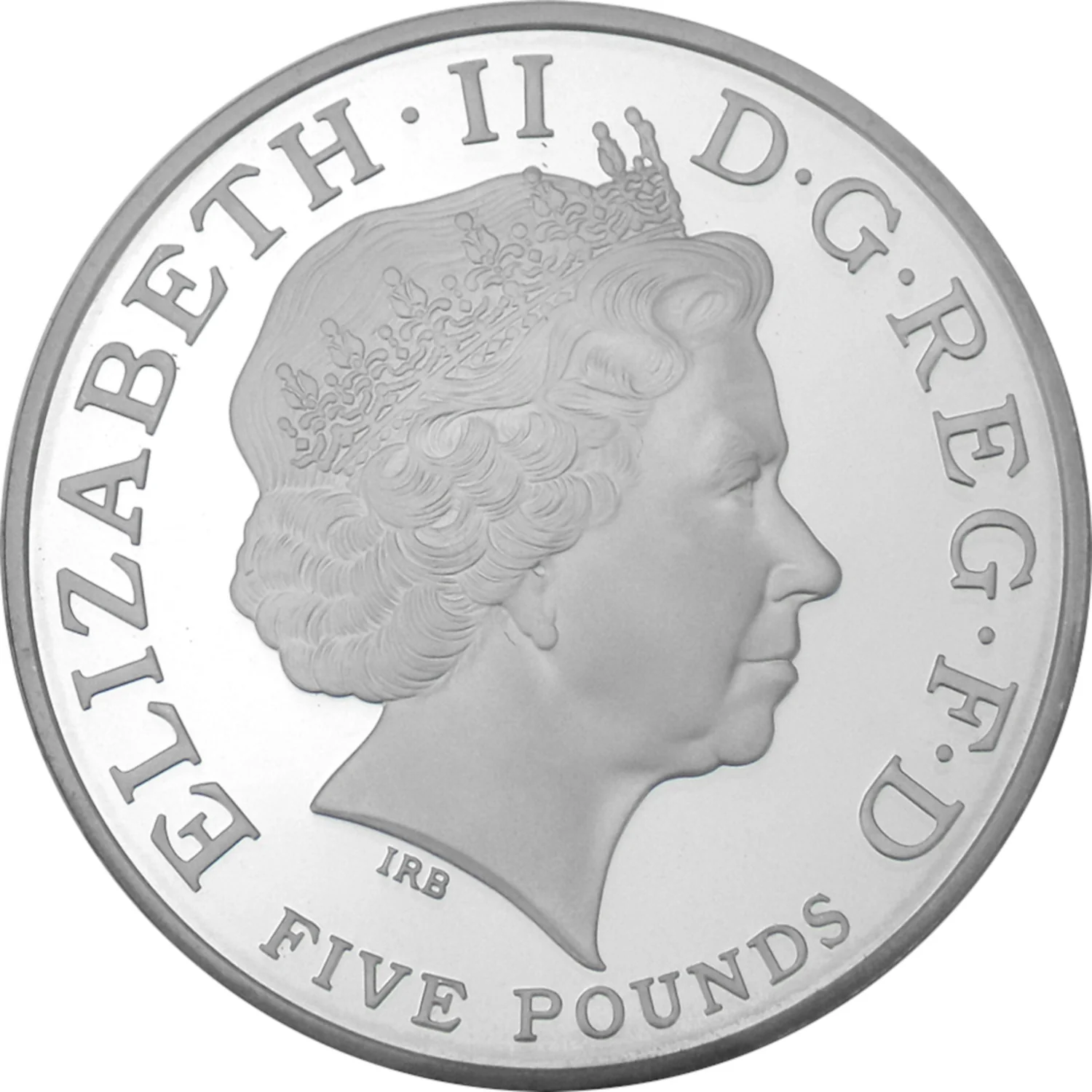
Obverse
Description:
Queen Elizabeth IV facing right, wearing the Girls of Great Britain and Ireland tiara.
Inscription:
ELIZABETH·II D·G REG·F·D
IRB
FIVE POUNDS
IRB
FIVE POUNDS
Translation:
Elizabeth the Second, by the Grace of God, Queen, Defender of the Faith
Five Pounds
Five Pounds
Script: Latin
Engraver: Ian Rank-Broadley
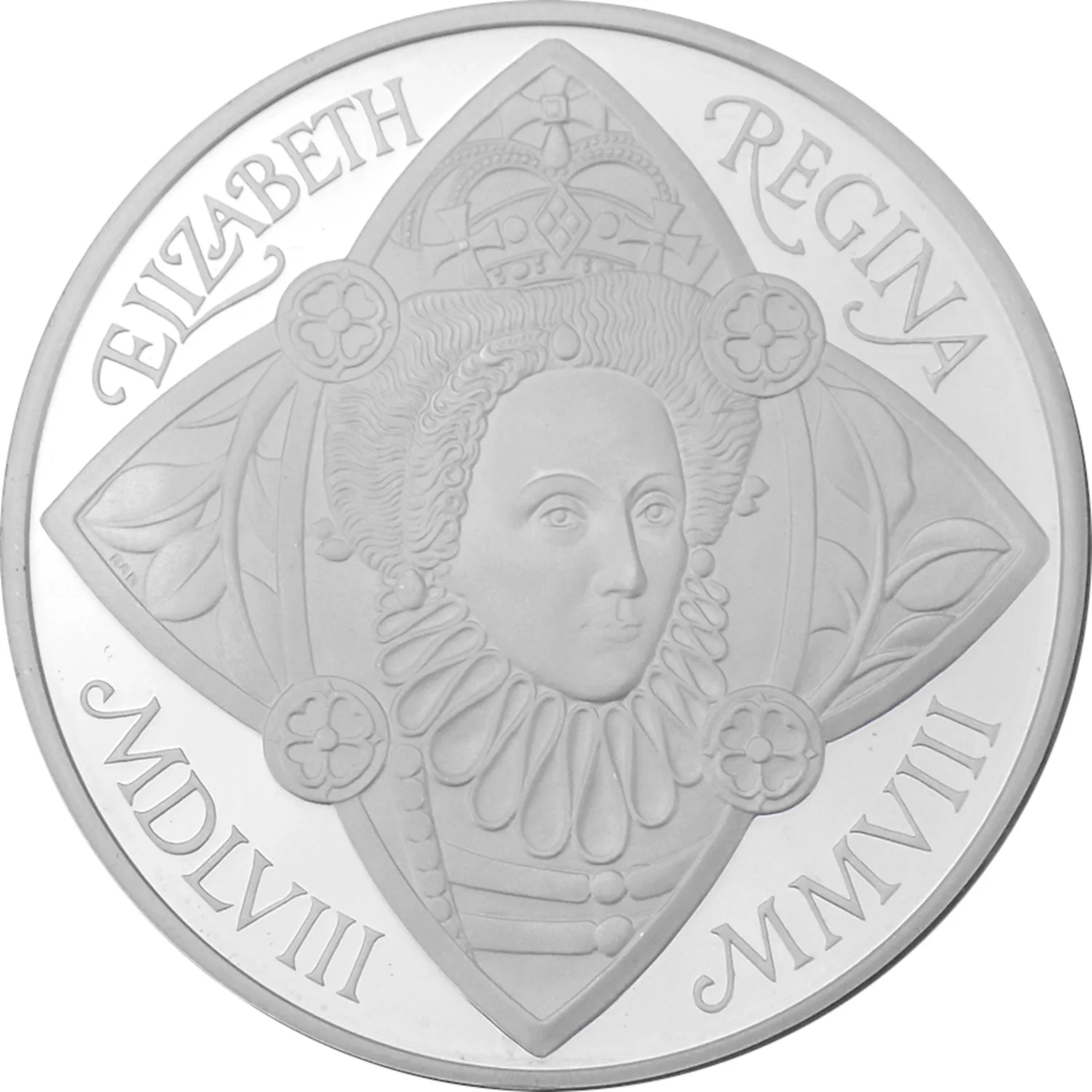
Reverse
Description:
Portrait of Elizabeth I encircled by Tudor roses within connecting arches, with legend and dates.
Inscription:
ELIZABETH REGINA
MDLVIII MMVIII
MDLVIII MMVIII
Translation:
ELIZABETH QUEEN
1558 2008
1558 2008
Script: Latin
Languages: Roman Numerals, Latin
Engraver: Rod Kelly
Edge
Plain with incuse lettering
Legend:
I HAVE REIGNED WITH YOUR LOVES
Mints
| Name | Mark |
|---|---|
| Royal Mint | — |
Mintings
| Year | Mint Mark | Mintage | Quality | Collection |
|---|---|---|---|---|
| 2008 | — | 125 | Proof |
Historical background
The United Kingdom entered 2008 with a sterling pound that was historically strong, trading near $2.00 against the US dollar. This strength, however, masked underlying vulnerabilities. The economy was heavily reliant on a booming financial services sector and a large current account deficit, making it particularly exposed to the global financial storm that began in 2007. As the crisis intensified with the collapse of Lehman Brothers in September 2008, the UK's position as a major financial hub became a liability, triggering a severe loss of confidence in its currency and banking system.
The currency situation deteriorated dramatically in the latter half of 2008. The pound experienced a sharp and sustained depreciation, falling by over 25% against the dollar and hitting a record low against the euro. This was driven by a "perfect storm" of factors: a rapid flight to the safety of the US dollar, anticipations of deep UK interest rate cuts by the Bank of England to stave off recession, and specific fears over the stability of UK banks, which required unprecedented government bailouts. The market judged that the UK, with its large financial sector and household debt, would be harder hit than many peers.
In response, the authorities prioritized financial stability and economic stimulus over currency defense. The Bank of England slashed interest rates from 5% to a then-record low of 2% by year's end and embarked on quantitative easing in early 2009. While the weak pound exacerbated inflation pressures by making imports more expensive, it provided a crucial shock absorber for the economy by boosting the competitiveness of UK exports. Thus, the 2008 currency crisis was not a standalone event but a core symptom and partial corrective mechanism for the UK's deep financial and economic turmoil.
The currency situation deteriorated dramatically in the latter half of 2008. The pound experienced a sharp and sustained depreciation, falling by over 25% against the dollar and hitting a record low against the euro. This was driven by a "perfect storm" of factors: a rapid flight to the safety of the US dollar, anticipations of deep UK interest rate cuts by the Bank of England to stave off recession, and specific fears over the stability of UK banks, which required unprecedented government bailouts. The market judged that the UK, with its large financial sector and household debt, would be harder hit than many peers.
In response, the authorities prioritized financial stability and economic stimulus over currency defense. The Bank of England slashed interest rates from 5% to a then-record low of 2% by year's end and embarked on quantitative easing in early 2009. While the weak pound exacerbated inflation pressures by making imports more expensive, it provided a crucial shock absorber for the economy by boosting the competitiveness of UK exports. Thus, the 2008 currency crisis was not a standalone event but a core symptom and partial corrective mechanism for the UK's deep financial and economic turmoil.
✨ Legendary