

2 perpera – Montenegro
Add to wishlist
Montenegro
Context
Year: 1914
Issuer: Montenegro
Ruler: Nicholas I
Currency:
(1906—1918)
Demonetized: Yes
Total mintage: 200,008
Material
References
KM: #
Numista: #27589
Value
Bullion value: $20.30
Obverse
Description:
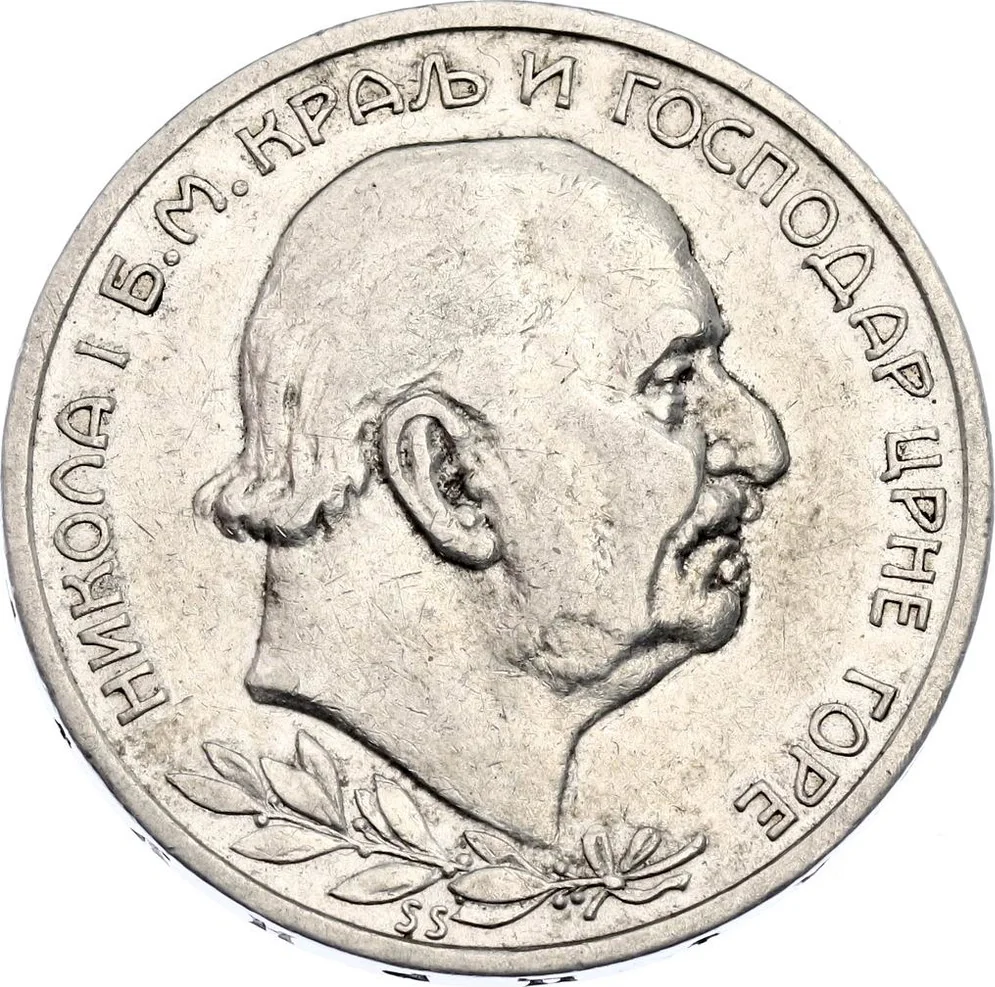
Nicolas I of Montenegro, facing right, with surrounding lettering.
Inscription:
НИКОЛА I Б.М. КРАЉ И ГОСПОДАР ЦРНЕ ГОРЕ
SS
SS
Translation:
NICHOLAS I BY THE GRACE OF GOD KING AND LORD OF MONTENEGRO
Languages: Church Slavonic, Serbian
Engraver: Stephen Schwartz
Reverse
Description:
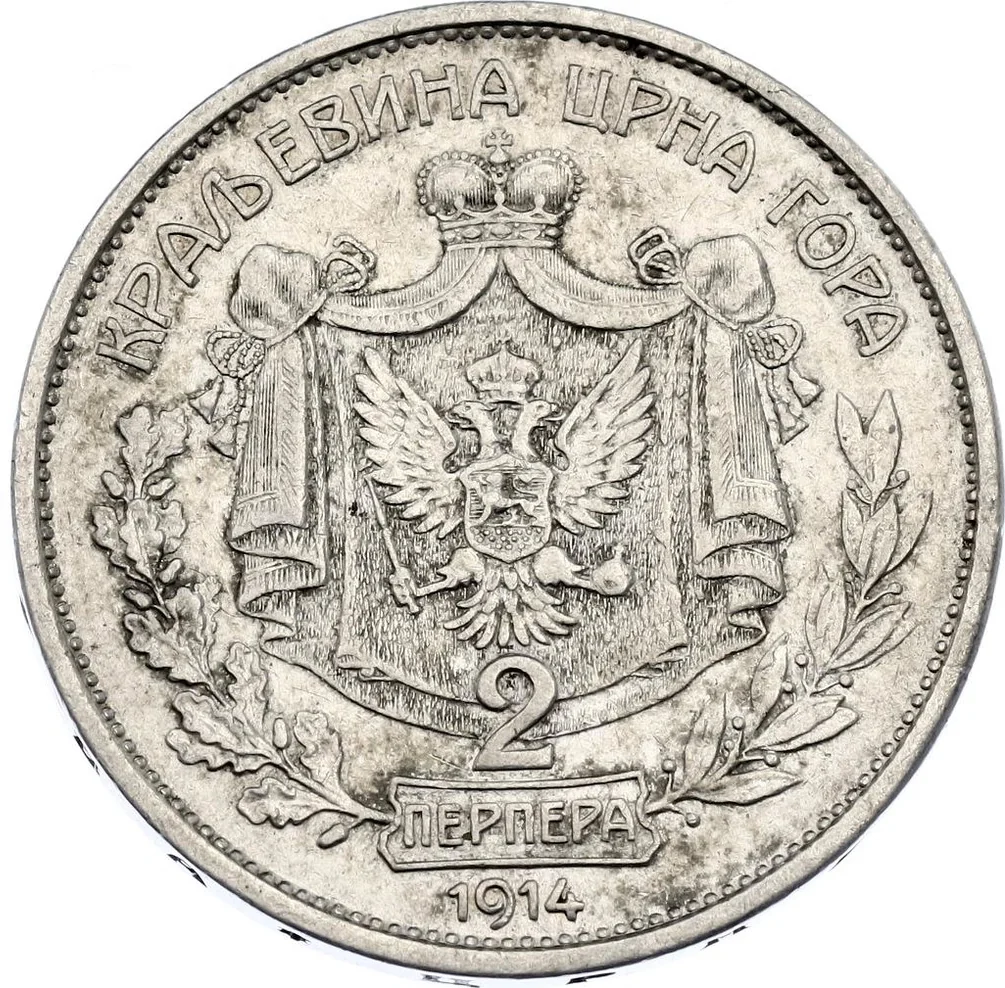
Arms with crown and mantle, flanked by sprigs above date and value.
Inscription:
КРАЉЕВИНА ЦРНА ГОРА
2 ПЕРПЕРA
1914
2 ПЕРПЕРA
1914
Translation:
KINGDOM OF MONTENEGRO
2 PERPERA
1914
2 PERPERA
1914
Script: Cyrillic
Language: Serbian
Engraver: Stephen Schwartz
Edge
Categories
| Animal> Bird |
| Person> Monarch |
| Mustache/Beard |
| Symbol> Crown |
| Symbols> Coat of Arms |
| Symbol> Double-headed eagle |
| Object> Globus cruciger |
Mintings
| Year | Mint Mark | Mintage | Quality | Collection |
|---|---|---|---|---|
| 1914 | — | 200,008 |
Historical background
In 1914, Montenegro, a small and mountainous Balkan kingdom, did not issue its own independent national currency. Its monetary system was a complex and practical reflection of its geopolitical position and economic ties. The country was deeply integrated into the wider regional economy, and as a result, a variety of foreign currencies circulated freely and were accepted for daily transactions. This situation was typical for many smaller states in the region at the time.
The most dominant currency in circulation was the Austro-Hungarian krone (or crown), reflecting the economic hegemony of the Habsburg Empire in the western Balkans. Alongside it, the Turkish lira (Ottoman currency), the French franc, the Italian lira, and the Russian ruble were also commonly used. This multi-currency environment was facilitated by Montenegro's reliance on trade, remittances from emigrants working abroad, and foreign subsidies, particularly from Russia, which was Montenegro's key patron and ally.
This dependence on foreign coinage underscored Montenegro's limited economic sovereignty as it entered World War I in August 1914. The nation's immediate alignment with the Allied Powers (specifically Serbia and Russia) against the Central Powers would soon disrupt the flow of the Austro-Hungarian krone, creating practical economic difficulties. The war would ultimately lead to a more formalized monetary system under Serbian, and later Yugoslav, authority following Montenegro's absorption into the new Kingdom of Serbs, Croats, and Slovenes in 1918.
The most dominant currency in circulation was the Austro-Hungarian krone (or crown), reflecting the economic hegemony of the Habsburg Empire in the western Balkans. Alongside it, the Turkish lira (Ottoman currency), the French franc, the Italian lira, and the Russian ruble were also commonly used. This multi-currency environment was facilitated by Montenegro's reliance on trade, remittances from emigrants working abroad, and foreign subsidies, particularly from Russia, which was Montenegro's key patron and ally.
This dependence on foreign coinage underscored Montenegro's limited economic sovereignty as it entered World War I in August 1914. The nation's immediate alignment with the Allied Powers (specifically Serbia and Russia) against the Central Powers would soon disrupt the flow of the Austro-Hungarian krone, creating practical economic difficulties. The war would ultimately lead to a more formalized monetary system under Serbian, and later Yugoslav, authority following Montenegro's absorption into the new Kingdom of Serbs, Croats, and Slovenes in 1918.
⭐ Somewhat Rare