

50 santeem – Ethiopian Empire
Add to wishlist
Ethiopia
Context
Year: 1947
Ethiopian Year:: 1936
Country: Ethiopia
Issuer: Ethiopian Empire
Ruler: Haile Selassie I
Currency:
(1945—1976)
Demonetization: September 1976
Total mintage: 20,433,730
Material
References
KM: #
Numista: #27434
Value
Bullion value: $12.43
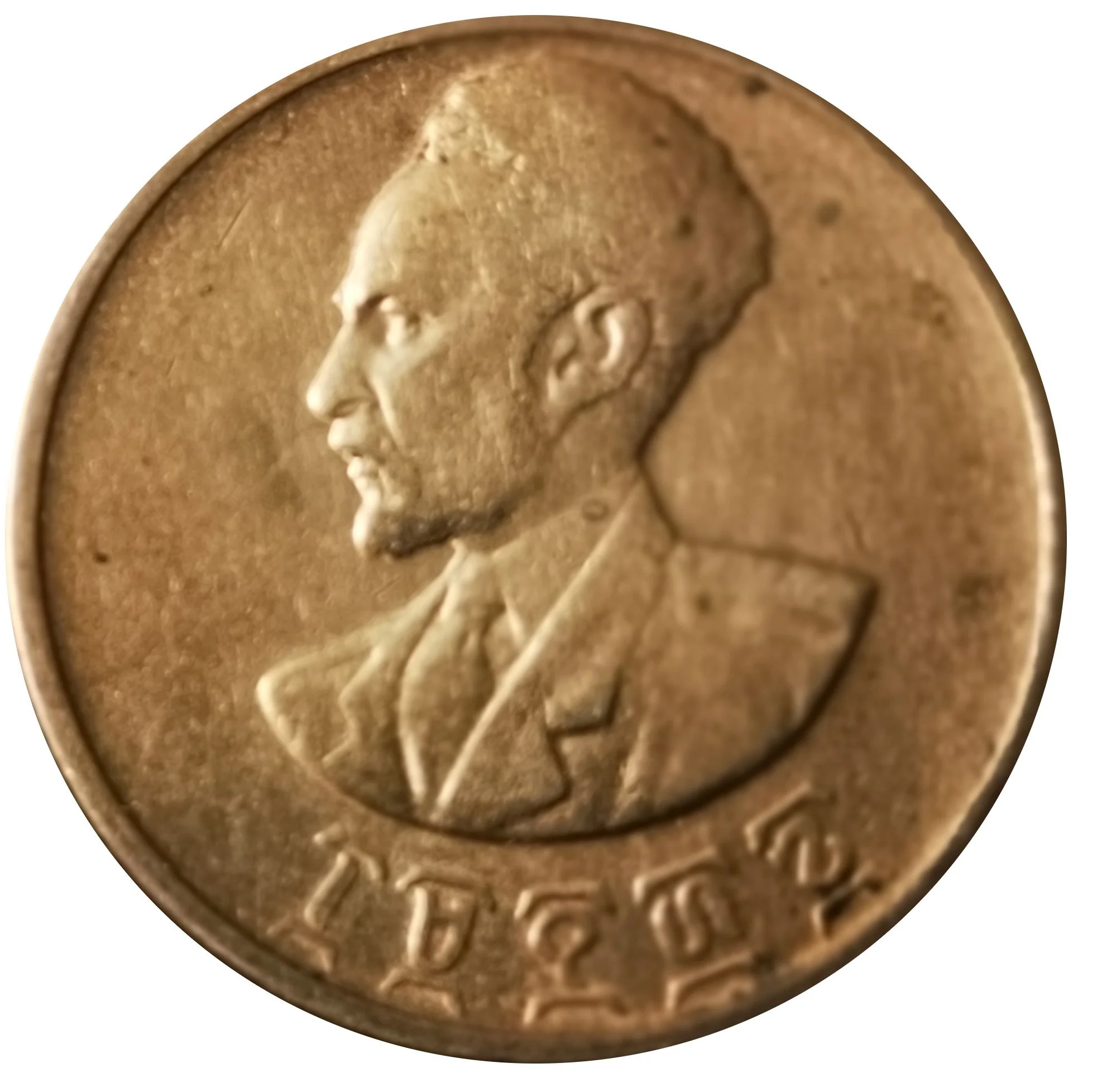
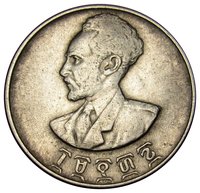
Obverse
Description:
Haile Selassie bust left, date beneath.
Inscription:
፲፱፻፴፮
Translation:
Nineteen Hundred Thirty-Six
Script: Ge'ez
Language: Ge'ez
Engraver: Gilroy Roberts
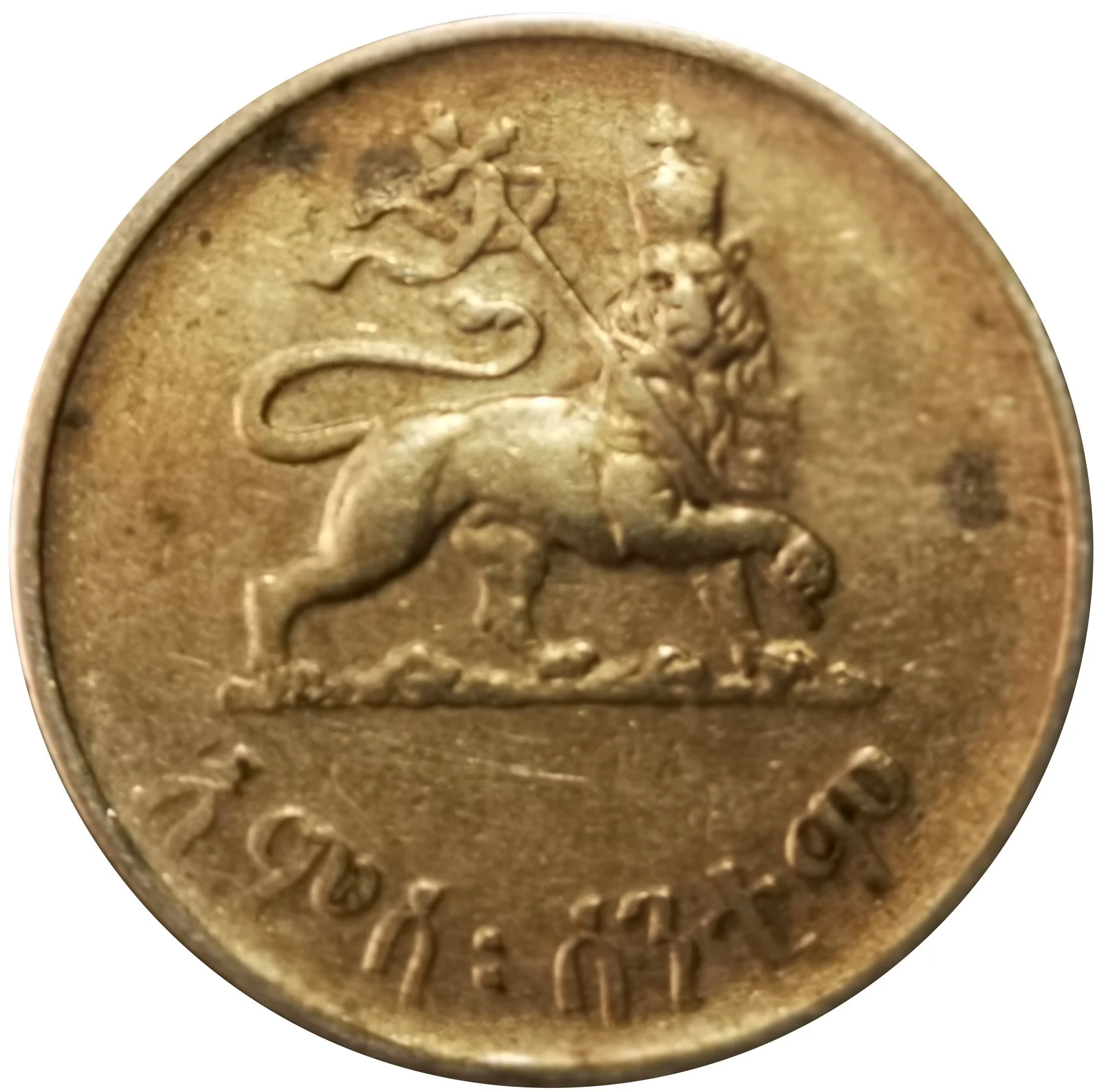
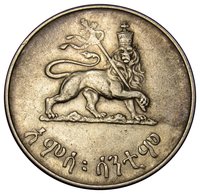
Reverse
Description:
Lion of Judah holding cross.
Inscription:
አምሳ፡ሳንቲም (āmisa sanitīmi)
Translation:
Fifty Cents
Script: Ge'ez
Language: Amharic
Engraver: Gilroy Roberts
Edge
Reeded
Mints
| Name | Mark |
|---|---|
| United States Mint of Philadelphia | — |
Mintings
| Year | Mint Mark | Mintage | Quality | Collection |
|---|---|---|---|---|
| 1947 | — | 20,433,730 |
Historical background
In 1947, the Ethiopian Empire's currency situation was defined by the legacy of Italian occupation and the ongoing project of post-war reconstruction. The national currency, the Ethiopian birr (then known as the Ethiopian dollar), was managed by the State Bank of Ethiopia, which had been re-established in 1943 following liberation. However, the monetary system was not fully unified; alongside the birr, the East African shilling—a currency of the British military administration—remained in significant circulation, particularly in former occupied areas, creating a complex dual-currency environment that reflected lingering foreign influence.
Economically, the country faced substantial challenges, including high inflation and a shortage of minted coinage. The war had disrupted agriculture and infrastructure, leading to increased money supply to finance rebuilding efforts, which in turn devalued the currency. A critical issue was the widespread circulation of low-denomination Italian lira notes from the occupation period, which the government was actively demonetizing and replacing to assert monetary sovereignty and economic stability.
Emperor Haile Selassie's government was therefore focused on consolidating monetary authority as a key pillar of restored independence. Efforts were underway to standardize the birr, phase out foreign currencies, and rebuild the nation's fiscal infrastructure. This period set the stage for the formal introduction of a decimal currency system in the early 1950s, marking 1947 as a transitional year where Ethiopia sought to shed the vestiges of occupation and re-establish control over its own economic destiny.
Economically, the country faced substantial challenges, including high inflation and a shortage of minted coinage. The war had disrupted agriculture and infrastructure, leading to increased money supply to finance rebuilding efforts, which in turn devalued the currency. A critical issue was the widespread circulation of low-denomination Italian lira notes from the occupation period, which the government was actively demonetizing and replacing to assert monetary sovereignty and economic stability.
Emperor Haile Selassie's government was therefore focused on consolidating monetary authority as a key pillar of restored independence. Efforts were underway to standardize the birr, phase out foreign currencies, and rebuild the nation's fiscal infrastructure. This period set the stage for the formal introduction of a decimal currency system in the early 1950s, marking 1947 as a transitional year where Ethiopia sought to shed the vestiges of occupation and re-establish control over its own economic destiny.
⭐ Somewhat Rare