

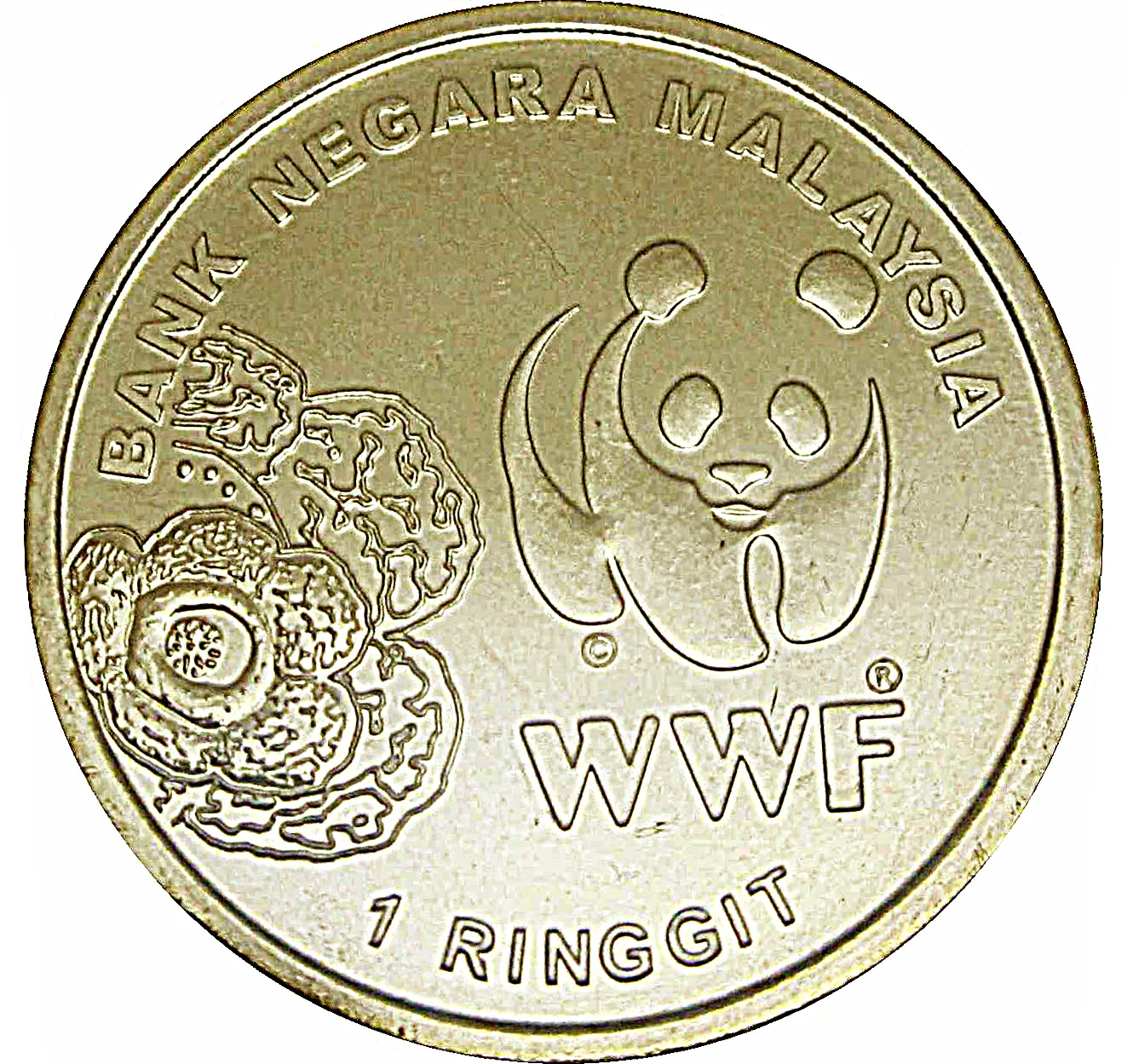
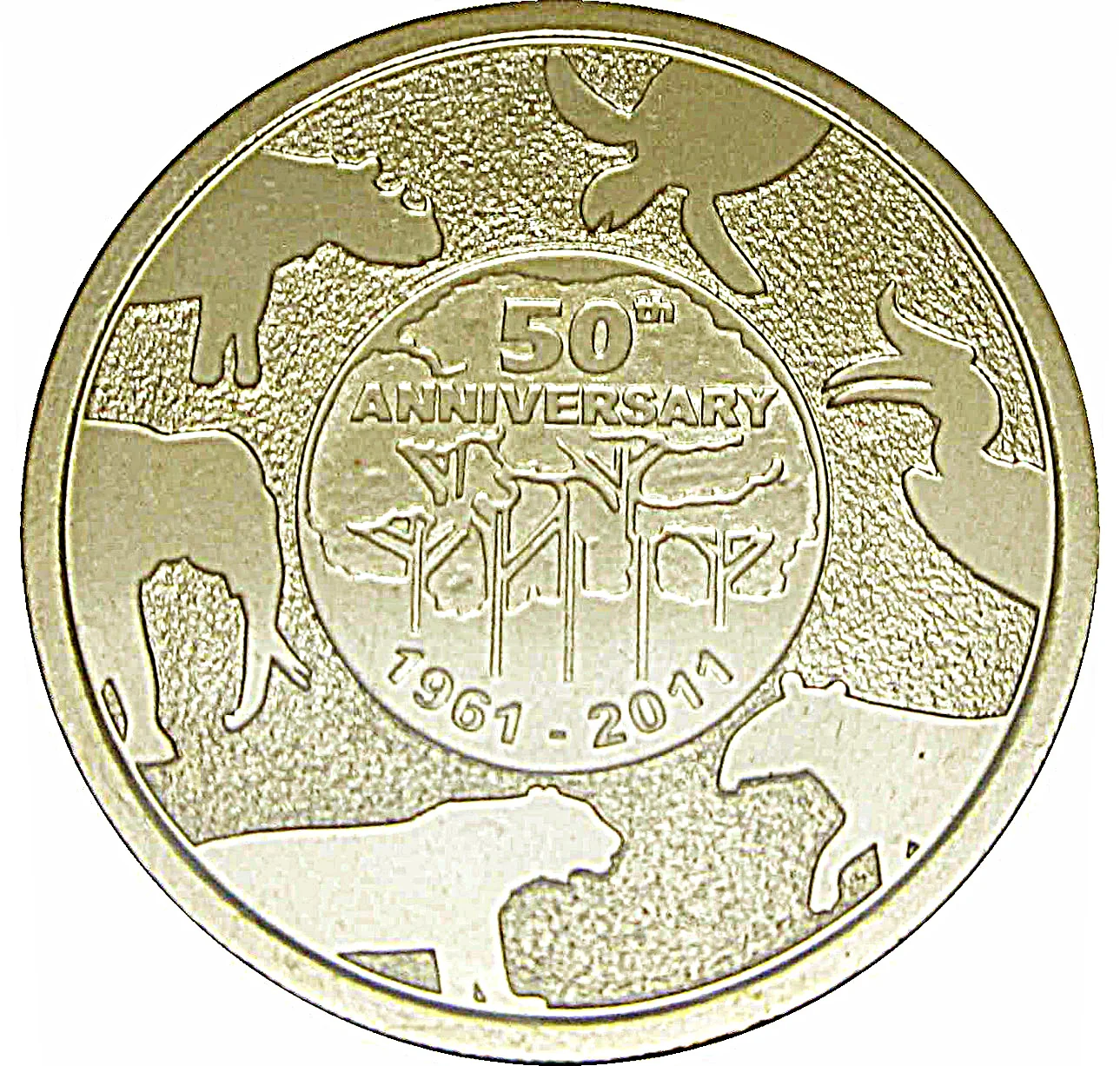
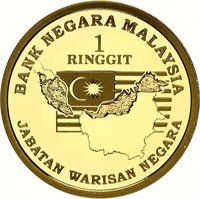
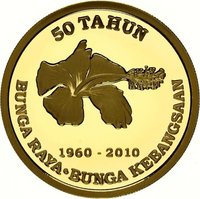
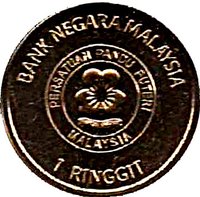
1 ringgit (World Wildlife Fund) – Malaysia
Add to wishlist
Non-circulating coins
Commemoration: 50th Anniversary of the World Wildlife Fund
Malaysia
Context
Material
Diameter: 30 mm
Weight: 8.8 g
Thickness: 1.8 mm
Shape: Round
Composition: Nordic gold
Magnetic: No
Technique: Milled
Alignment: Medal alignment
flip
References
Numista: #27385
Value
Exchange value: 1 MYR
Categories
| Organization> WWF |
| Plant> Tree |
Mintings
| Year | Mint Mark | Mintage | Quality | Collection |
|---|---|---|---|---|
| 2011 | — | 10,000 |
Historical background
In 2011, Malaysia's currency, the Ringgit (MYR), experienced a year of significant appreciation, marking one of its strongest performances in the post-Asian Financial Crisis era. The currency strengthened by approximately 8.5% against the US Dollar, rising from around 3.08 at the start of the year to close near 3.17. This robust performance was primarily driven by strong regional economic growth, sustained high commodity prices (particularly for Malaysia's key exports of oil, gas, and palm oil), and continued foreign capital inflows into Malaysian bonds and equities. The positive momentum was also bolstered by market optimism surrounding Prime Minister Najib Razak's economic reform announcements under the Economic Transformation Programme (ETP).
However, this appreciation presented a complex policy challenge for Bank Negara Malaysia (BNM), the central bank. While a stronger Ringgit helped curb imported inflation and reflected confidence in the economy, it also threatened to erode the competitiveness of Malaysia's crucial export sector. BNM responded with a cautious and measured approach, focusing on maintaining financial stability and preventing the formation of asset bubbles from the influx of "hot money." The bank continued its policy of a managed float, intervening in the foreign exchange market to smooth out excessive volatility rather than targeting a specific exchange rate level.
The year concluded with the Ringgit's strength being a double-edged sword, symbolizing both economic resilience and emerging vulnerabilities. The positive external environment masked underlying domestic concerns, including a growing fiscal deficit and high household debt. Furthermore, the currency's fortunes remained tightly linked to global risk sentiment and commodity cycles, a dependency that would be tested in the coming years as the Eurozone debt crisis deepened and global growth uncertainties loomed, setting the stage for a more volatile period ahead.
However, this appreciation presented a complex policy challenge for Bank Negara Malaysia (BNM), the central bank. While a stronger Ringgit helped curb imported inflation and reflected confidence in the economy, it also threatened to erode the competitiveness of Malaysia's crucial export sector. BNM responded with a cautious and measured approach, focusing on maintaining financial stability and preventing the formation of asset bubbles from the influx of "hot money." The bank continued its policy of a managed float, intervening in the foreign exchange market to smooth out excessive volatility rather than targeting a specific exchange rate level.
The year concluded with the Ringgit's strength being a double-edged sword, symbolizing both economic resilience and emerging vulnerabilities. The positive external environment masked underlying domestic concerns, including a growing fiscal deficit and high household debt. Furthermore, the currency's fortunes remained tightly linked to global risk sentiment and commodity cycles, a dependency that would be tested in the coming years as the Eurozone debt crisis deepened and global growth uncertainties loomed, setting the stage for a more volatile period ahead.

💎 Extremely Rare