

5 Centimes (Inauguration of King Leopold I) – Belgium
Circulating commemorative coins
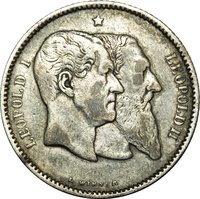
Commemoration: 25th Anniversary of the Inauguration of king Leopold I
Belgium

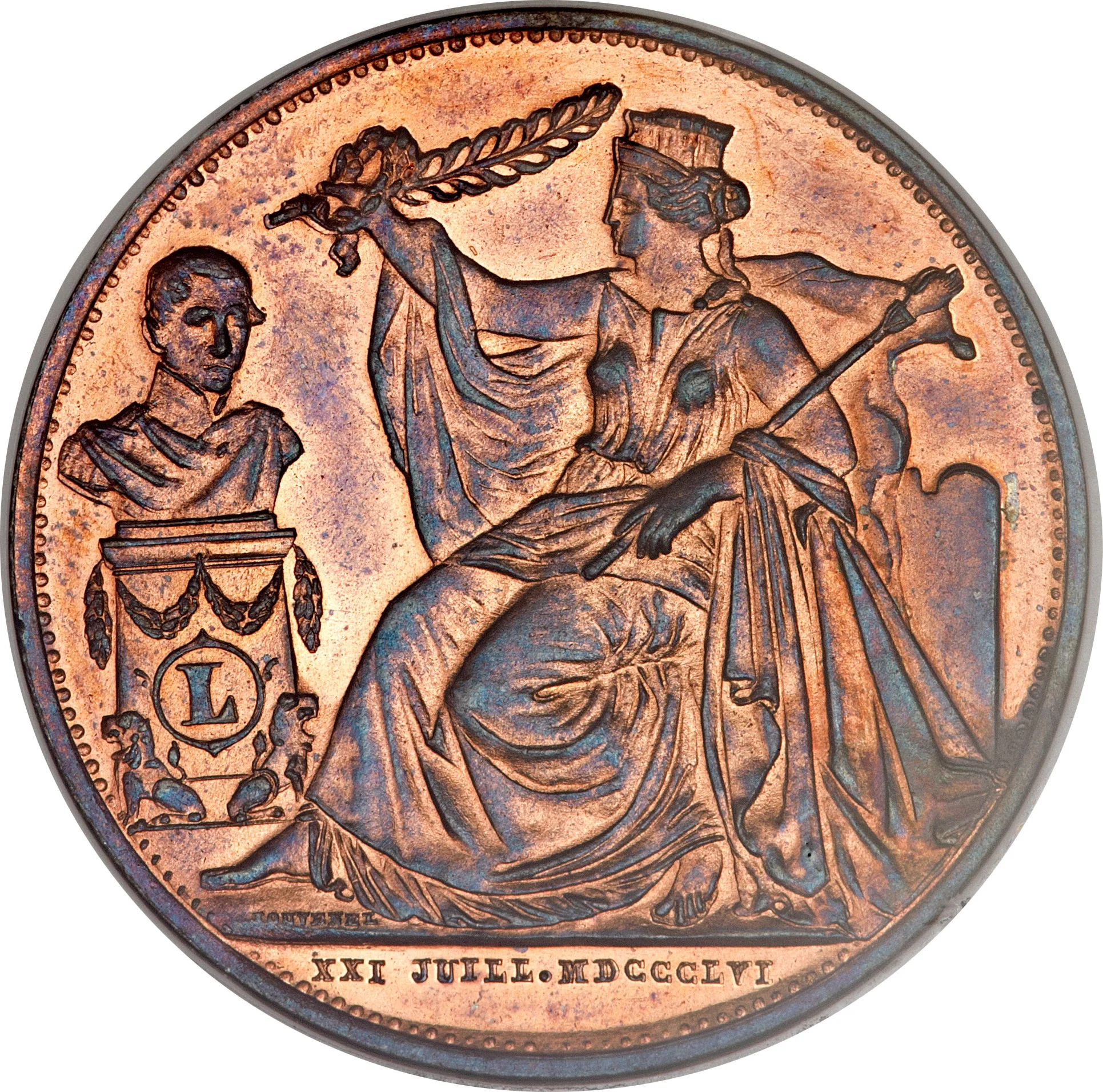
Obverse
Inscription:
XXI JUILL.MDCCCLVI
Translation:
21 July 1856
Script: Latin
Language: French
Engraver: Adolphe Jouvenel
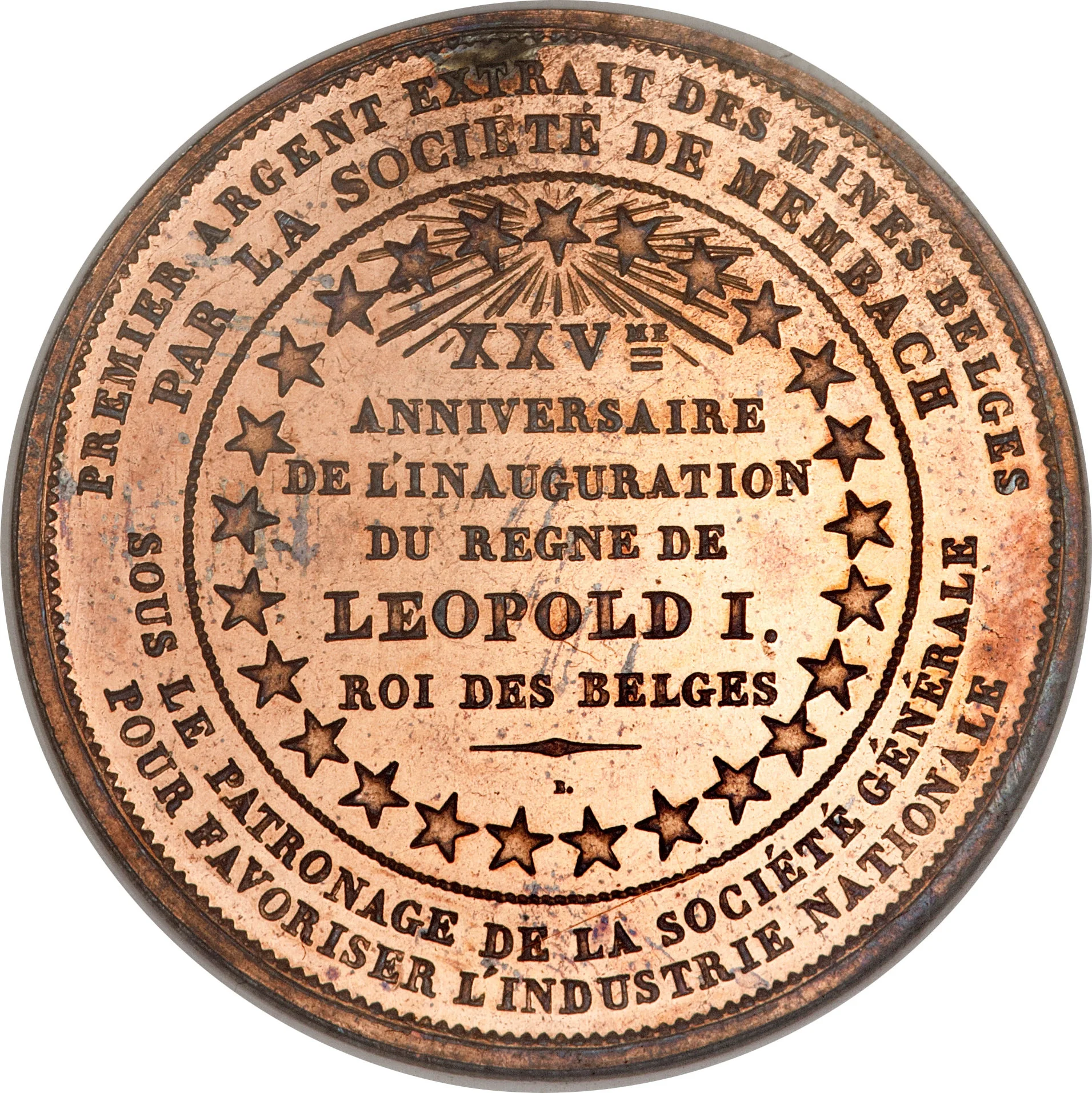
Reverse
Inscription:
PREMIER ARGENT EXTRAIT DES MINES BELGES
PAR LA SOCIETE DE MEMBACH
XXV ME
ANNIVERSAIRE
DE L'INAUGURATION
DU REGNE DE
LEOPOLD I,
ROI DES BELGES
SOUS LE PATRONAGE DE LA SOCIETE GENERALE
POUR FAVORISER L'INDUSTRIE NATIONALE
PAR LA SOCIETE DE MEMBACH
XXV ME
ANNIVERSAIRE
DE L'INAUGURATION
DU REGNE DE
LEOPOLD I,
ROI DES BELGES
SOUS LE PATRONAGE DE LA SOCIETE GENERALE
POUR FAVORISER L'INDUSTRIE NATIONALE
Translation:
FIRST SILVER EXTRACTED FROM THE BELGIAN MINES
BY THE SOCIETY OF MEMBACH
XXVTH
ANNIVERSARY
OF THE INAUGURATION
OF THE REIGN OF
LEOPOLD I,
KING OF THE BELGIANS
UNDER THE PATRONAGE OF THE GENERAL SOCIETY
TO FAVOR NATIONAL INDUSTRY
BY THE SOCIETY OF MEMBACH
XXVTH
ANNIVERSARY
OF THE INAUGURATION
OF THE REIGN OF
LEOPOLD I,
KING OF THE BELGIANS
UNDER THE PATRONAGE OF THE GENERAL SOCIETY
TO FAVOR NATIONAL INDUSTRY
Script: Latin
Language: French
Engraver: Adolphe Jouvenel
Edge
Milled
Mintings
| Year | Mint Mark | Mintage | Quality | Collection |
|---|---|---|---|---|
| 1856 | — | 214,261 |
Historical background
In 1856, Belgium's currency situation was defined by its participation in the Latin Monetary Union (LMU), a groundbreaking but nascent international agreement. The LMU, established in 1865, was still in its formative pre-history, with bilateral agreements between France, Belgium, Italy, and Switzerland laying the groundwork. Belgium, having adopted the French franc system after its independence in 1830, was a central player. The core principle was the standardization of gold and silver coinage, where a Belgian 20-franc gold coin was minted to identical size, weight, and fineness as its French counterpart, ensuring they circulated freely across borders. This facilitated trade but also tied Belgium's monetary stability closely to that of its larger neighbor, France.
The system was fundamentally bimetallic, recognizing both gold and silver as legal tender at a fixed ratio (15.5 to 1). This created an inherent vulnerability, as the market value of the two metals fluctuated. In practice, the fixed mint ratio often diverged from the commercial ratio, leading to the phenomenon of "bad money driving out good" (Gresham's Law). When silver was undervalued at the mint, it would be presented for coinage while gold coins were hoarded or exported. This placed a strain on the treasury and caused practical difficulties in maintaining sufficient circulating coinage of both metals, a problem Belgium shared with its LMU partners.
Consequently, while the framework promoted international commerce, the domestic currency situation in 1856 was one of underlying tension. The National Bank of Belgium, founded in 1850, was still consolidating its role in regulating credit and issuing banknotes, which circulated alongside metallic coinage. The state was thus navigating a complex monetary environment, committed to an international bimetallic system that was already showing its structural weaknesses, while simultaneously managing a growing modern banking sector to meet the needs of its rapidly industrializing economy.
The system was fundamentally bimetallic, recognizing both gold and silver as legal tender at a fixed ratio (15.5 to 1). This created an inherent vulnerability, as the market value of the two metals fluctuated. In practice, the fixed mint ratio often diverged from the commercial ratio, leading to the phenomenon of "bad money driving out good" (Gresham's Law). When silver was undervalued at the mint, it would be presented for coinage while gold coins were hoarded or exported. This placed a strain on the treasury and caused practical difficulties in maintaining sufficient circulating coinage of both metals, a problem Belgium shared with its LMU partners.
Consequently, while the framework promoted international commerce, the domestic currency situation in 1856 was one of underlying tension. The National Bank of Belgium, founded in 1850, was still consolidating its role in regulating credit and issuing banknotes, which circulated alongside metallic coinage. The state was thus navigating a complex monetary environment, committed to an international bimetallic system that was already showing its structural weaknesses, while simultaneously managing a growing modern banking sector to meet the needs of its rapidly industrializing economy.
💎 Extremely Rare