

1 Bu – Tajima Province
Japan
Context

Material
Weight: 1.8 g
Silver weight: 1.79 g
Shape: Irregular rectangular
Composition: 99.5% Silver
Magnetic: No
Technique: Hammered
Alignment: Medal alignment
flip
References
KM: #Click to copy to clipboard65
Numista: #27245
Value
Bullion value: $5.18
Obverse
Description:
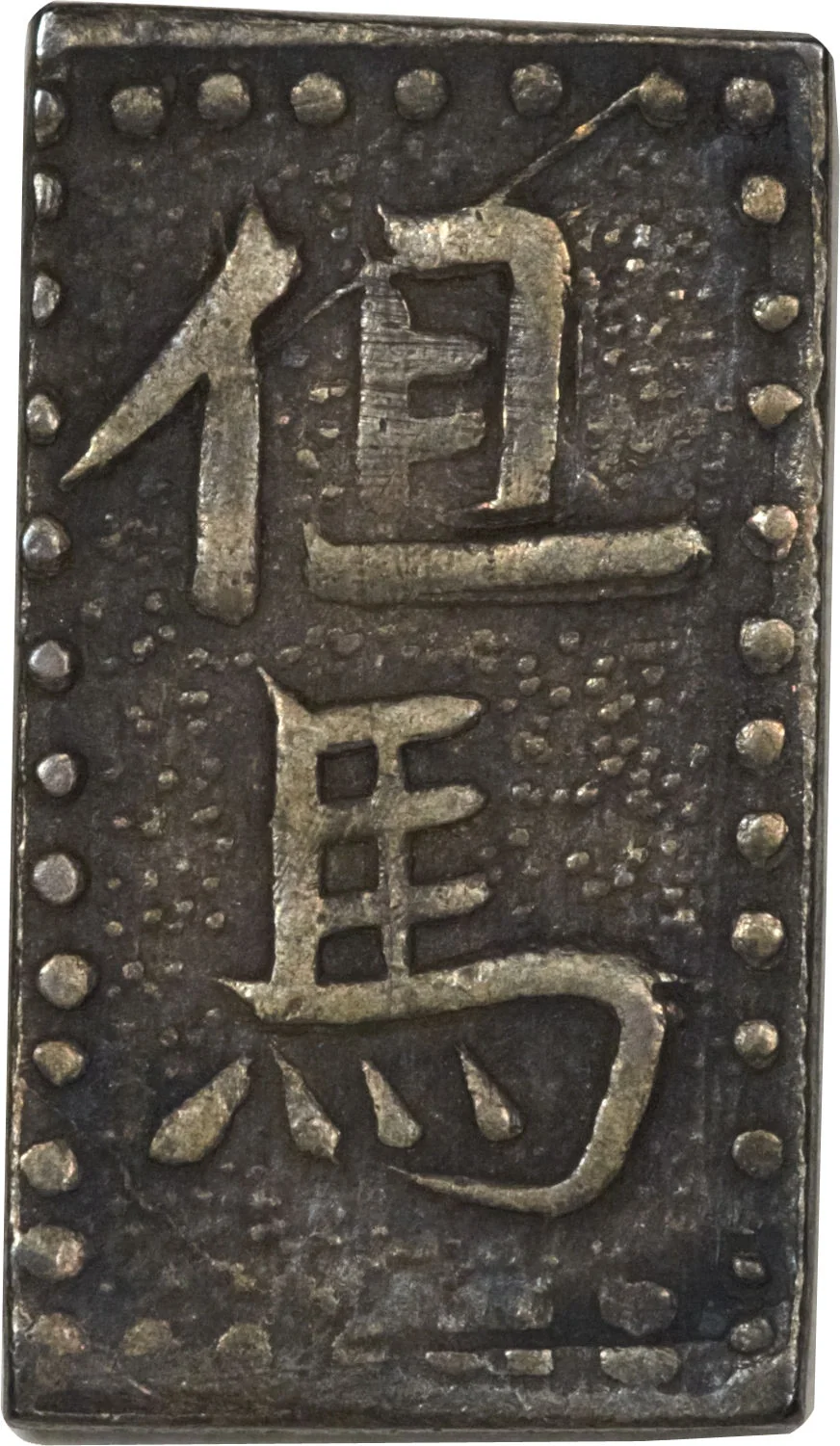
Dotted border with two vertical Chinese characters.
Inscription:
但
馬
馬
Translation:
But
Horse
Horse
Scripts: Chinese (traditional, regular script)
Language: Classical Chinese
Reverse
Description:
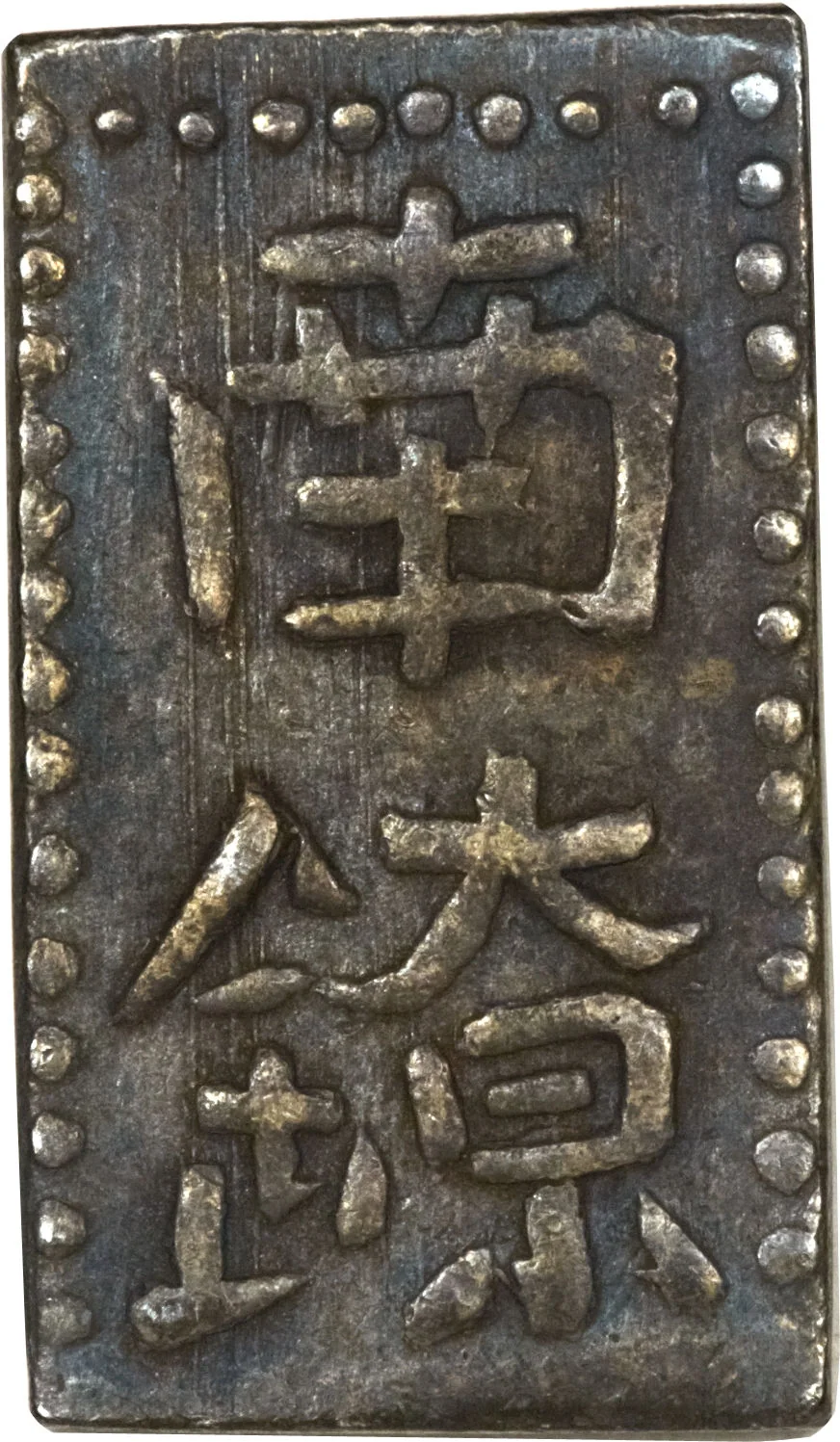
Dotted border with two vertical Chinese characters.
Inscription:
南
鐐
鐐
Translation:
Southern Liao
Scripts: Chinese (traditional, regular script)
Language: Classical Chinese
Edge
Multiple hallmarks
Mints
| Name | Mark |
|---|---|
| Ikuno Silver Mine | — |
Mintings
| Year | Mint Mark | Mintage | Quality | Collection |
|---|---|---|---|---|
| — | — | — |
Historical background
In 1823, the currency situation in Tajima Province, like much of Japan under the Tokugawa shogunate, was defined by a complex and often unstable multi-metallic system. The official currency, issued by the central bakufu, consisted of gold koban and ichibu coins, silver chōgin and mameita-gin (by weight), and copper mon coins. However, the system was not unified; gold was dominant in Edo (east), while silver was the primary unit of account in Osaka (west), with Tajima falling within the Kansai sphere of silver-based trade. This required constant conversion and the use of licensed money changers (ryōgaesho), creating friction and opportunity for arbitrage.
Provincially, the situation was further complicated by the widespread circulation of hansatsu (domain notes), paper currency issued by the local daimyo, the Matsudaira clan of the Toyama Domain, which administered part of Tajima. These notes were theoretically convertible to silver or copper but were only valid within the domain's borders, creating a closed monetary circuit that helped the domain manage its finances but restricted regional commerce. Furthermore, the early 19th century saw a surge in counterfeit coinage and the clipping of precious metal from official coins, a symptom of broader economic strain and debasement of central currency that eroded public trust.
The year 1823 fell within the Tenpō era (1830-1844), a period just prior to the severe famines and reforms that would later erupt. While not yet in crisis, the currency environment in Tajima was under quiet stress. The coexistence of official metallic coinage, local paper notes, and illicit currency created a fragmented and inefficient market. This system burdened merchants and peasants with exchange fees and uncertainty, subtly hindering economic activity and reflecting the weakening control of the central shogunate over the financial system, a precursor to the more profound monetary reforms and turmoil that would follow in the 1830s and 1840s.
Provincially, the situation was further complicated by the widespread circulation of hansatsu (domain notes), paper currency issued by the local daimyo, the Matsudaira clan of the Toyama Domain, which administered part of Tajima. These notes were theoretically convertible to silver or copper but were only valid within the domain's borders, creating a closed monetary circuit that helped the domain manage its finances but restricted regional commerce. Furthermore, the early 19th century saw a surge in counterfeit coinage and the clipping of precious metal from official coins, a symptom of broader economic strain and debasement of central currency that eroded public trust.
The year 1823 fell within the Tenpō era (1830-1844), a period just prior to the severe famines and reforms that would later erupt. While not yet in crisis, the currency environment in Tajima was under quiet stress. The coexistence of official metallic coinage, local paper notes, and illicit currency created a fragmented and inefficient market. This system burdened merchants and peasants with exchange fees and uncertainty, subtly hindering economic activity and reflecting the weakening control of the central shogunate over the financial system, a precursor to the more profound monetary reforms and turmoil that would follow in the 1830s and 1840s.
✨ Legendary