

1 Cash – Guangdong Triad Society
China
Context
Years: 1851–1857
Country: China 
Issuer: Guangdong Triad Society
Currency:
(1851—1858)
Demonetized: Yes
Material
Diameter: 25 mm
Shape: Round with a square hole
Composition: Brass
Magnetic: No
Technique: Cast
Alignment: Medal alignment

flip
References
Numista: #271976
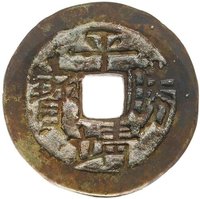
Obverse
Description:
Four Chinese characters read vertically, right to left.
Inscription:
眀
寶 通
道
寶 通
道
Translation:
Bright Treasure Circulates the Way.
Scripts: Chinese (traditional, regular script)
Language: Classical Chinese
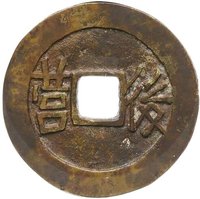
Reverse
Description:
One Chinese character above.
Inscription:
天
Translation:
Heaven
Scripts: Chinese (traditional, regular script)
Language: Chinese
Edge
Plain
Mintings
| Year | Mint Mark | Mintage | Quality | Collection |
|---|---|---|---|---|
| — | — | — |
Historical background
By 1851, the Guangdong Triad Society (Tiandihui) operated within a monetary environment defined by severe imperial crisis and foreign encroachment. The First Opium War (1839-1842) had shattered the Canton System, forcing open treaty ports and injecting vast quantities of foreign silver coinage, primarily Spanish Carolus dollars and Mexican silver dollars, into the local economy. However, this coexisted with a chaotic and debased Qing currency system. The dynasty’s primary coin, the copper-alloy cash, suffered from rampant counterfeiting and fluctuating exchange rates against silver, while the state’s own paper notes and silver sycee ingots were often unreliable for common transactions. This monetary fragmentation created widespread distrust in official currency, particularly among the peasantry, urban poor, and merchant classes who formed the Triads’ social base.
For the secret society, this instability was both a practical challenge and a strategic opportunity. Their clandestine operations—funding branches, procuring weapons, and supporting members—required a reliable medium of exchange. They likely transacted in the most trusted silver dollars for major dealings, while smaller, local activities used cash, albeit with caution. Critically, the currency chaos fueled the profound discontent the Triads exploited. Heavy indemnities paid to Britain after the Opium War drained silver from the economy, exacerbating the “silver famine” that made taxes (payable in silver) more burdensome as copper cash devalued. This economic distress, layered upon ethnic tension between Han Chinese and the Manchu Qing rulers, was central to Triad anti-Qing rhetoric and recruitment, positioning them as protectors of the economically oppressed.
Thus, on the eve of the Taiping Rebellion (which erupted in Guangxi in 1851 with Triad involvement), the currency situation in Guangdong was a microcosm of Qing weakness. The Triads navigated this landscape pragmatically, using foreign silver for substance while leveraging the systemic monetary failure as a powerful ideological tool. Their ability to operate financially within this hybrid system of foreign coin, debased imperial currency, and local trust networks was essential to their resilience and growth, setting the stage for their significant role in the mid-century rebellions that would further devastate the Qing monetary system.
For the secret society, this instability was both a practical challenge and a strategic opportunity. Their clandestine operations—funding branches, procuring weapons, and supporting members—required a reliable medium of exchange. They likely transacted in the most trusted silver dollars for major dealings, while smaller, local activities used cash, albeit with caution. Critically, the currency chaos fueled the profound discontent the Triads exploited. Heavy indemnities paid to Britain after the Opium War drained silver from the economy, exacerbating the “silver famine” that made taxes (payable in silver) more burdensome as copper cash devalued. This economic distress, layered upon ethnic tension between Han Chinese and the Manchu Qing rulers, was central to Triad anti-Qing rhetoric and recruitment, positioning them as protectors of the economically oppressed.
Thus, on the eve of the Taiping Rebellion (which erupted in Guangxi in 1851 with Triad involvement), the currency situation in Guangdong was a microcosm of Qing weakness. The Triads navigated this landscape pragmatically, using foreign silver for substance while leveraging the systemic monetary failure as a powerful ideological tool. Their ability to operate financially within this hybrid system of foreign coin, debased imperial currency, and local trust networks was essential to their resilience and growth, setting the stage for their significant role in the mid-century rebellions that would further devastate the Qing monetary system.
✨ Legendary