

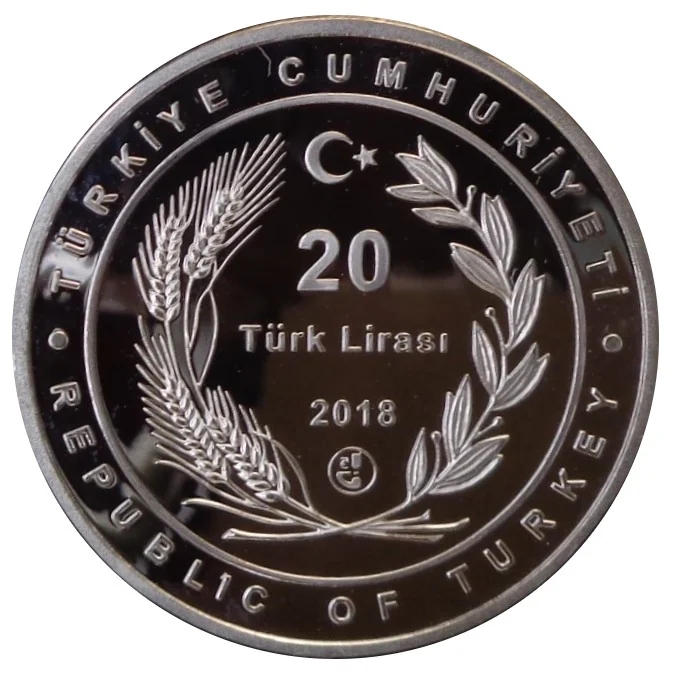
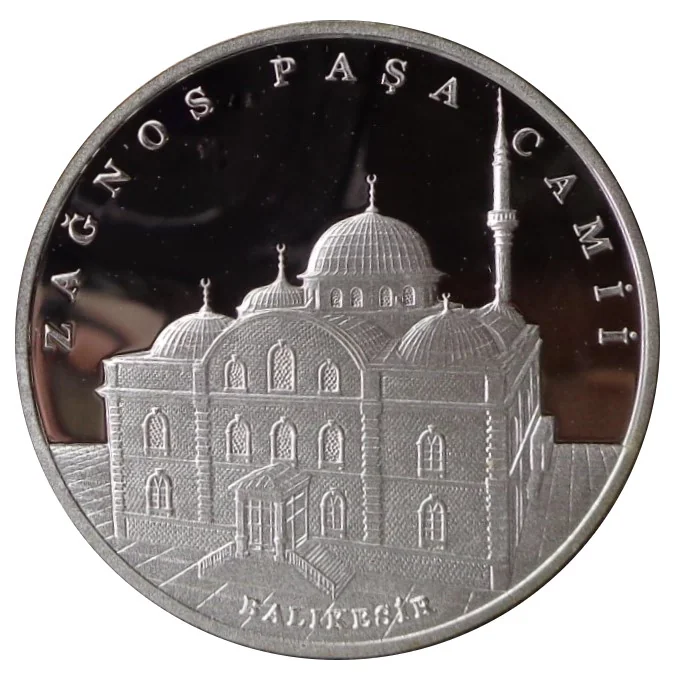
20 lira – Turkey
Add to wishlist
Non-circulating coins
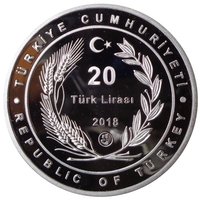
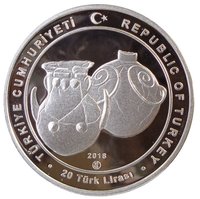
Commemoration: Zagan Pasha Mosque
Turkey
Context
Material
Diameter: 38.61 mm
Weight: 31.1 g
Silver Weight:: 28.77 g
Shape: Round
Composition: 92.5% Silver
Standard: Silver ounce
Magnetic: No
Technique: Milled
Alignment: Medal alignment
flip
References
KM: #
Numista: #268880
Value
Exchange value: 20 TRY
Bullion value: $71.33
Inflation-adjusted value: 165.60 TRY
Obverse
Reverse
Edge
Milled.
Categories
| Building> Religious building |
Mints
| Name | Mark |
|---|---|
| Turkish State Mint | — |
Mintings
| Year | Mint Mark | Mintage | Quality | Collection |
|---|---|---|---|---|
| 2018 | — | 2,500 | Proof |
Historical background
In 2018, Turkey faced a severe currency crisis, marked by a dramatic collapse in the value of the Turkish lira. The currency lost nearly 40% of its value against the US dollar during the year, with a sharp acceleration occurring in August. This crisis was the culmination of long-building economic vulnerabilities, including high inflation, a large current account deficit, and significant corporate debt denominated in foreign currencies. Investor confidence was further eroded by concerns over the independence of the Central Bank of the Republic of Turkey (CBRT) and its reluctance to raise interest rates aggressively to combat inflation, which soared into double digits.
The situation was exacerbated by geopolitical tensions, particularly a diplomatic rift with the United States over the detention of an American pastor, which led to the imposition of US sanctions and tariffs. This external pressure intersected with domestic economic policy, where President Recep Tayyip Erdoğan’s unorthodox belief that high interest rates cause inflation, rather than curb it, limited conventional monetary policy responses. The lira's freefall threatened to trigger a wave of defaults in the private sector, which had borrowed heavily in euros and dollars, and posed a serious risk to the stability of the banking system.
In response, the government and central bank eventually took emergency measures in the latter half of the year. The CBRT significantly raised interest rates in September, and authorities introduced steps to curb short-term currency speculation and encourage lira-based savings. While these actions provided temporary stabilization, the crisis left a lasting impact, pushing the economy into recession, severely reducing purchasing power for Turkish citizens, and highlighting deep structural issues within Turkey's economic model that would continue to pose challenges in the following years.
The situation was exacerbated by geopolitical tensions, particularly a diplomatic rift with the United States over the detention of an American pastor, which led to the imposition of US sanctions and tariffs. This external pressure intersected with domestic economic policy, where President Recep Tayyip Erdoğan’s unorthodox belief that high interest rates cause inflation, rather than curb it, limited conventional monetary policy responses. The lira's freefall threatened to trigger a wave of defaults in the private sector, which had borrowed heavily in euros and dollars, and posed a serious risk to the stability of the banking system.
In response, the government and central bank eventually took emergency measures in the latter half of the year. The CBRT significantly raised interest rates in September, and authorities introduced steps to curb short-term currency speculation and encourage lira-based savings. While these actions provided temporary stabilization, the crisis left a lasting impact, pushing the economy into recession, severely reducing purchasing power for Turkish citizens, and highlighting deep structural issues within Turkey's economic model that would continue to pose challenges in the following years.
✨ Legendary