

5⁄10 kreuzer – Austrian Empire
Add to wishlist
Austria
Context
Years: 1885–1891
Country: Austria
Issuer: Austrian Empire
Ruler: Francis Joseph I
Currency:
(1857—1892)
Demonetization: 30 June 1898
Total mintage: 2,000,000
Material
References
KM: #
Numista: #26810
Obverse
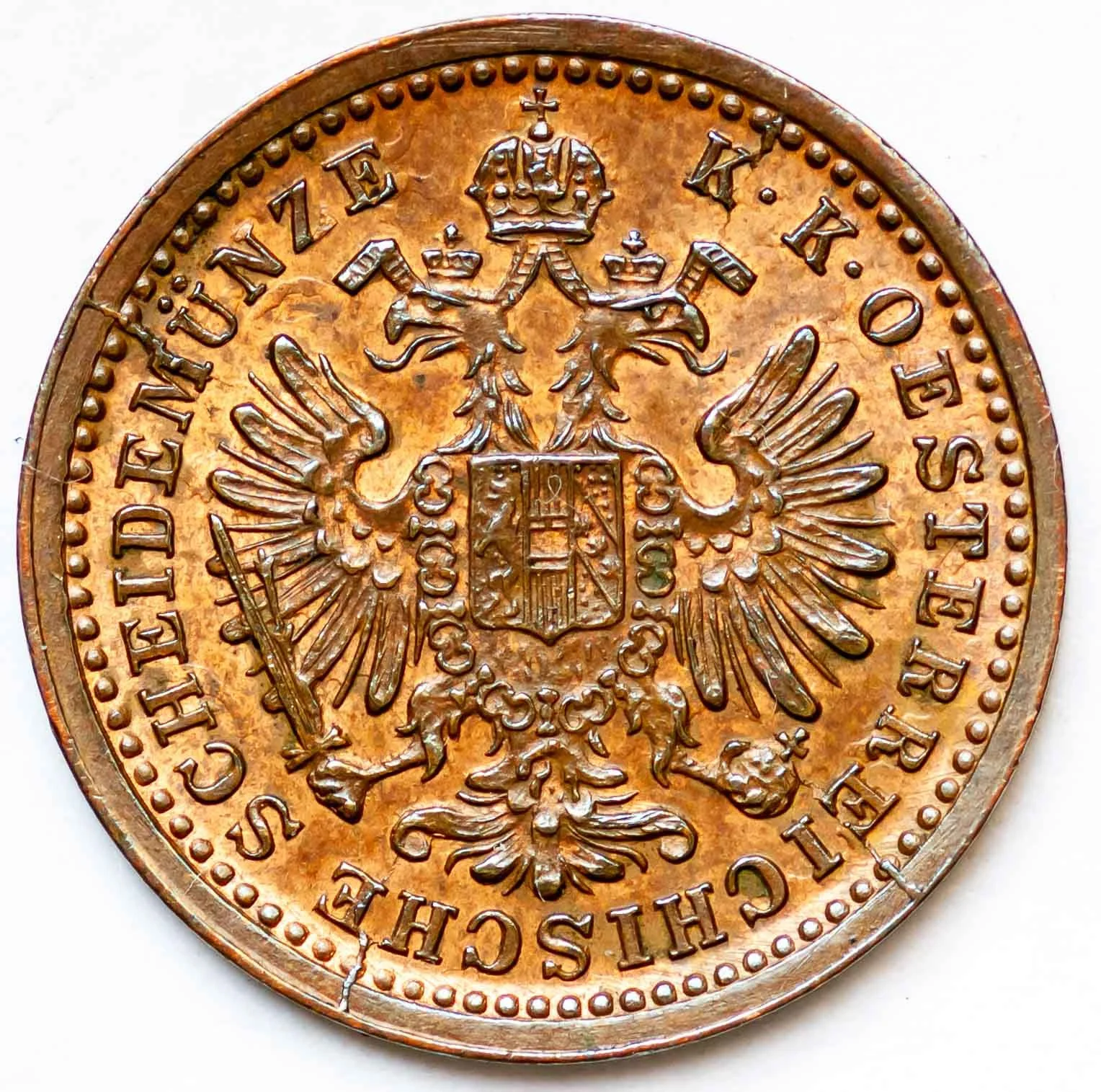
Description:
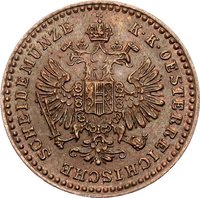
Imperial eagle bearing Habsburg-Lorraine and Austrian coats of arms.
Inscription:
K·K·OESTERREICHISCHE SCHEIDEMÜNZE
Translation:
I·I·Austrian small change coin
Script: Latin
Language: German
Engraver: Franz Gaul
Reverse
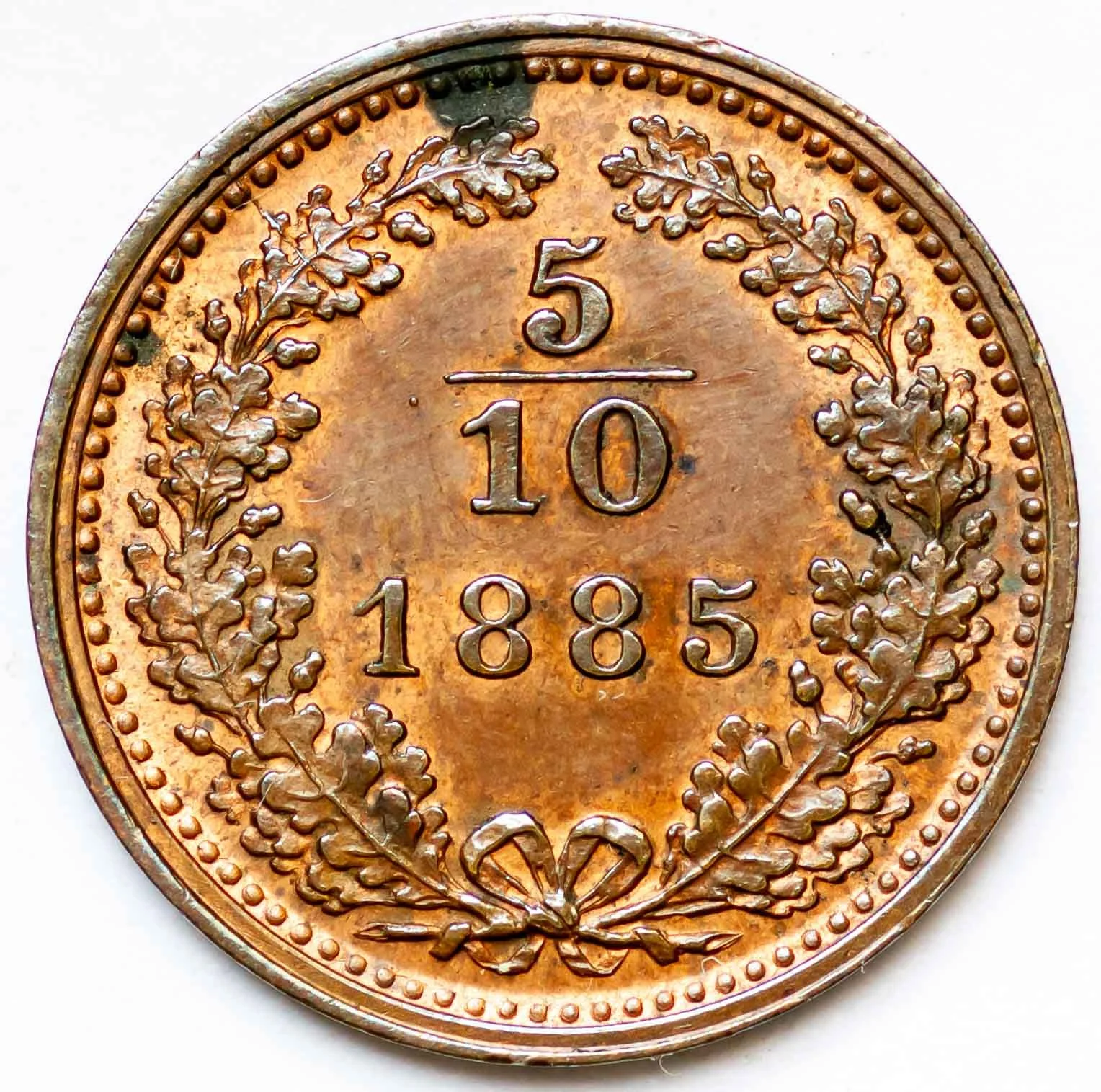
Description:
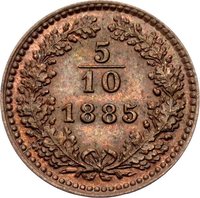
Face value above date within oak wreath.
Inscription:
5
10
1885
10
1885
Script: Latin
Engraver: Johann Weiss
Edge
Plain
Mintings
| Year | Mint Mark | Mintage | Quality | Collection |
|---|---|---|---|---|
| 1885 | 1885-1889 | — | ||
| 1891 | — | 2,000,000 |
Historical background
By 1885, the currency situation in the Austro-Hungarian Empire was one of transition and fragility, dominated by the paper Gulden (Florin) of the Austro-Hungarian Bank. The empire had abandoned the silver standard in 1879, rendering its currency de facto inconvertible "fiat" money. This move, driven by global pressures from the cheaper silver discovered in the Americas, severed the direct link between banknotes and precious metal, leaving the Gulden's value vulnerable to market speculation and government fiscal policy. Consequently, the exchange rate against gold-backed currencies like the British Pound or German Mark was unstable and a persistent concern for international trade and domestic economic planning.
Internally, the system was complex and unwieldy. While accounts were kept in Gulden, the physical circulation included both paper banknotes and silver coins that were now token currency, their metal value less than their face value. A significant complicating factor was the existence of the Kreuzer, with 100 Kreuzer equaling 1 Gulden, which remained in everyday use for small transactions. This created a dual system where large commercial and state operations functioned in paper, while much of the populace dealt in small silver coins and copper kreuzers, leading to occasional confusion and inefficiency.
The underlying pressure in 1885 was the empire's committed path toward establishing a modern, gold-standard currency. Plans for this reform, which would eventually create the Krone (or Korona) in 1892, were already in advanced preparation. Therefore, the monetary situation of 1885 was essentially a holding pattern, characterized by managed instability. The government and the Austro-Hungarian Bank were actively working to build sufficient gold reserves and stabilize state finances to enable the forthcoming, decisive shift to a gold-based Krone, hoping it would provide the solidity and international credibility the paper Gulden lacked.
Internally, the system was complex and unwieldy. While accounts were kept in Gulden, the physical circulation included both paper banknotes and silver coins that were now token currency, their metal value less than their face value. A significant complicating factor was the existence of the Kreuzer, with 100 Kreuzer equaling 1 Gulden, which remained in everyday use for small transactions. This created a dual system where large commercial and state operations functioned in paper, while much of the populace dealt in small silver coins and copper kreuzers, leading to occasional confusion and inefficiency.
The underlying pressure in 1885 was the empire's committed path toward establishing a modern, gold-standard currency. Plans for this reform, which would eventually create the Krone (or Korona) in 1892, were already in advanced preparation. Therefore, the monetary situation of 1885 was essentially a holding pattern, characterized by managed instability. The government and the Austro-Hungarian Bank were actively working to build sufficient gold reserves and stabilize state finances to enable the forthcoming, decisive shift to a gold-based Krone, hoping it would provide the solidity and international credibility the paper Gulden lacked.
🌱 Fairly Common