

5 rupees – Nepal
Add to wishlist
Nepal
Context
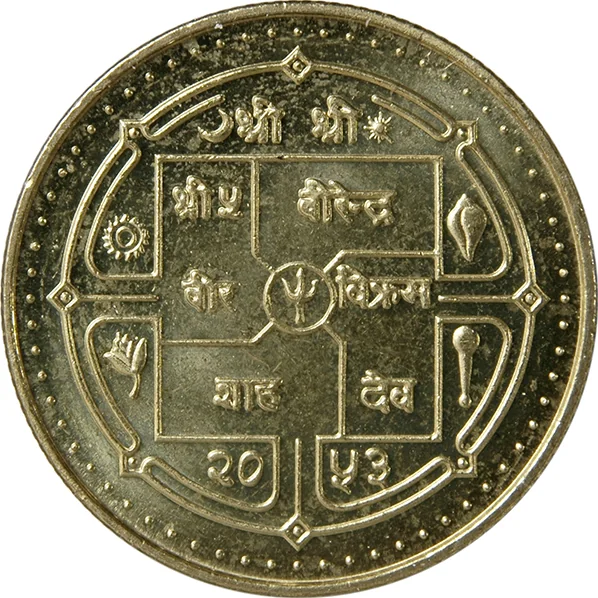
Year: 1996
Vikram Samvat Year:: 2053
Issuer: Nepal
Ruler: Birendra Bir Bikram Shah
Currency:
(since 1932)
Material
References
KM: #
Numista: #26792
Value
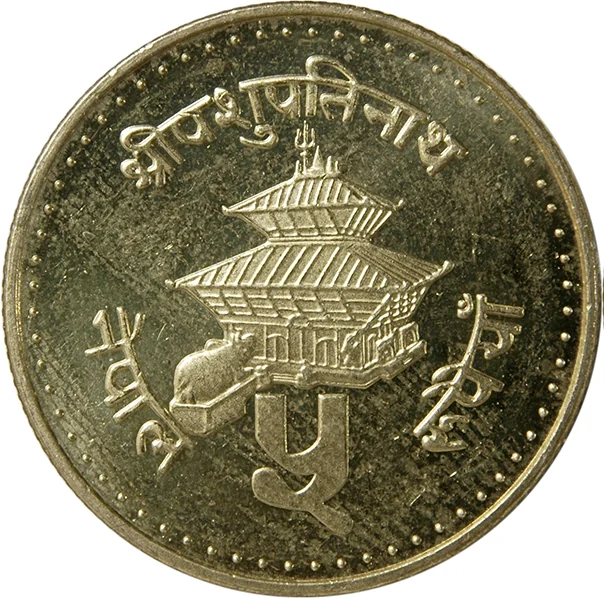
Exchange value: 5 NPR
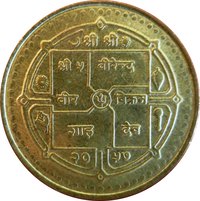
Obverse
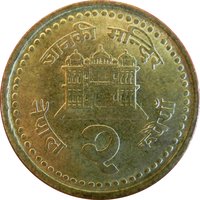
Reverse
Edge
Plain
Mintings
| Year | Mint Mark | Mintage | Quality | Collection |
|---|---|---|---|---|
| 1996 | — | — |
Historical background
In 1996, Nepal's currency situation was characterized by a dual exchange rate system and was on the cusp of significant liberalization. The Nepalese rupee (NPR) was pegged to the Indian rupee (INR) at a fixed rate of 1.6 NPR to 1 INR for trade transactions, a cornerstone of the 1960 Treaty of Trade. However, a separate, less favorable floating market rate existed for other transactions, creating complexity and opportunities for arbitrage. This system was managed under a controlled financial regime by the Nepal Rastra Bank (NRB), with strict regulations on foreign exchange and limited convertibility of the rupee.
The year 1996 fell within a period of economic transition following the restoration of multiparty democracy in 1990. Pressure from international financial institutions and the need for greater economic integration were pushing the country toward reform. Key changes were imminent; in fact, by early 1997, the government would unify the dual exchange rates and move to a full peg of 1.6 NPR to 1 INR for all transactions. This shift was part of a broader structural adjustment program aimed at promoting exports, attracting foreign investment, and stabilizing the macroeconomic environment.
Furthermore, the currency situation existed against a backdrop of significant political and economic challenges. The year 1996 marked the launch of the Maoist insurgency (the People's War), which would eventually destabilize the country for a decade. While the immediate impact on the currency in 1996 was limited, the ensuing conflict would later strain public finances, affect investor confidence, and complicate monetary policy. Thus, the currency regime of 1996 represented a final chapter of an older controlled system, poised for reform but soon to be tested by prolonged domestic instability.
The year 1996 fell within a period of economic transition following the restoration of multiparty democracy in 1990. Pressure from international financial institutions and the need for greater economic integration were pushing the country toward reform. Key changes were imminent; in fact, by early 1997, the government would unify the dual exchange rates and move to a full peg of 1.6 NPR to 1 INR for all transactions. This shift was part of a broader structural adjustment program aimed at promoting exports, attracting foreign investment, and stabilizing the macroeconomic environment.
Furthermore, the currency situation existed against a backdrop of significant political and economic challenges. The year 1996 marked the launch of the Maoist insurgency (the People's War), which would eventually destabilize the country for a decade. While the immediate impact on the currency in 1996 was limited, the ensuing conflict would later strain public finances, affect investor confidence, and complicate monetary policy. Thus, the currency regime of 1996 represented a final chapter of an older controlled system, poised for reform but soon to be tested by prolonged domestic instability.
🌱 Common