

20 Lire – Vatican City
Circulating commemorative coins
Commemoration: Offer forgiveness, receive peace.
Vatican City
Context
Year: 1997
Issuer: Vatican City 
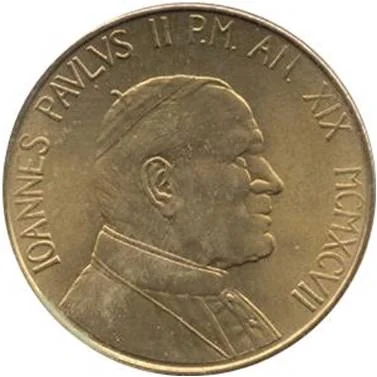
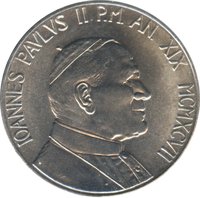
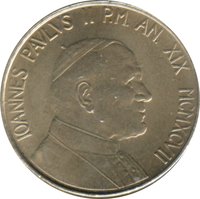
Ruler: John Paul II
Currency:
(1929—2001)
Demonetization: 1 March 2002
Total mintage: 30,000
Material
References
KM: #Click to copy to clipboard281
Numista: #26750
Value
Exchange value: 20 VAL
Obverse
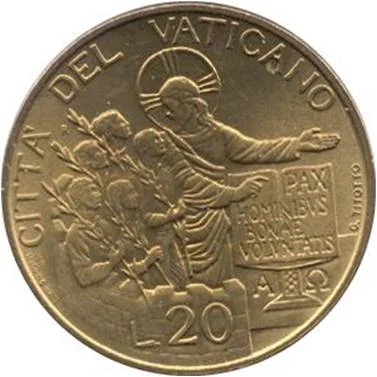
Reverse
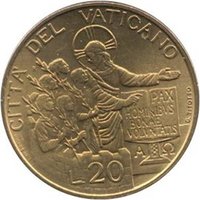
Description:
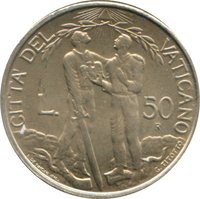
Jesus teaches peace.
Inscription:
CITTA' DEL VATICANO
R L.20
R L.20
Translation:
Vatican City
L. 20
L. 20
Script: Latin
Language: Italian
Engraver: Luciana De Simoni
Designer: Gabriella Titotto
Edge
Plain
Categories
| Person> Religious figure |
| Religion> Religious objects |
Mints
| Name | Mark |
|---|---|
| Rome | R |
Mintings
| Year | Mint Mark | Mintage | Quality | Collection |
|---|---|---|---|---|
| 1997 | R | 30,000 |
Historical background
In 1997, the currency situation in Vatican City was defined by its unique status as a non-member monetary enclave within the Eurozone's precursor system. While Italy, which completely surrounds the city-state, was a founding member of the European Monetary Union (EMU), the Vatican was not. However, under the terms of the Lateran Treaty and subsequent financial agreements, it had the long-standing right to issue its own coinage, the Vatican lira, which was pegged at par and was legally interchangeable with the Italian lira. This allowed the Holy See to produce limited quantities of coins for collectors and commemorative purposes, which served as a significant source of numismatic revenue, while Italian lira banknotes circulated as the primary paper currency for daily transactions.
The pivotal development of 1997 was the Vatican's proactive negotiation to secure its place within the upcoming single European currency. Recognizing that the imminent replacement of the Italian lira with the euro would void its existing monetary agreement, the Holy See engaged in intense diplomatic talks with the European Union and Italy. The critical outcome was a December 1997 agreement in principle, which stipulated that the Vatican could continue minting its own euros, albeit under strict quotas and European Central Bank supervision, despite not being an EU member state. This ensured the continuity of its numismatic program and its practical monetary integration.
Therefore, by the end of 1997, the Vatican lira remained in circulation but was effectively a currency in transition. The groundwork had been successfully laid for the Vatican to adopt the euro, which it would do at the official launch on 1 January 1999 (for electronic transfers) and 1 January 2002 (for cash). The year marked a decisive shift from a national-currency peg to a carefully negotiated special status within the new multinational currency system, preserving the Vatican's fiscal autonomy and its lucrative coinage rights for the future.
The pivotal development of 1997 was the Vatican's proactive negotiation to secure its place within the upcoming single European currency. Recognizing that the imminent replacement of the Italian lira with the euro would void its existing monetary agreement, the Holy See engaged in intense diplomatic talks with the European Union and Italy. The critical outcome was a December 1997 agreement in principle, which stipulated that the Vatican could continue minting its own euros, albeit under strict quotas and European Central Bank supervision, despite not being an EU member state. This ensured the continuity of its numismatic program and its practical monetary integration.
Therefore, by the end of 1997, the Vatican lira remained in circulation but was effectively a currency in transition. The groundwork had been successfully laid for the Vatican to adopt the euro, which it would do at the official launch on 1 January 1999 (for electronic transfers) and 1 January 2002 (for cash). The year marked a decisive shift from a national-currency peg to a carefully negotiated special status within the new multinational currency system, preserving the Vatican's fiscal autonomy and its lucrative coinage rights for the future.
🌟 Limited