

50 Kurush – Ottoman Empire
Turkey
Context
Year: 1876
Islamic (Hijri) Year: 1293
Country: Turkey 
Issuer: Ottoman Empire
Ruler: Abdul Hamid II
Currency:
(1844—1923)
Demonetized: Yes
Material
References
KM: #Click to copy to clipboard740
Numista: #267005
Value
Bullion value: $536.65
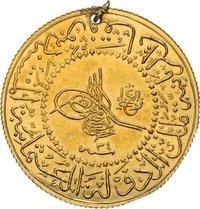
Obverse
Description:
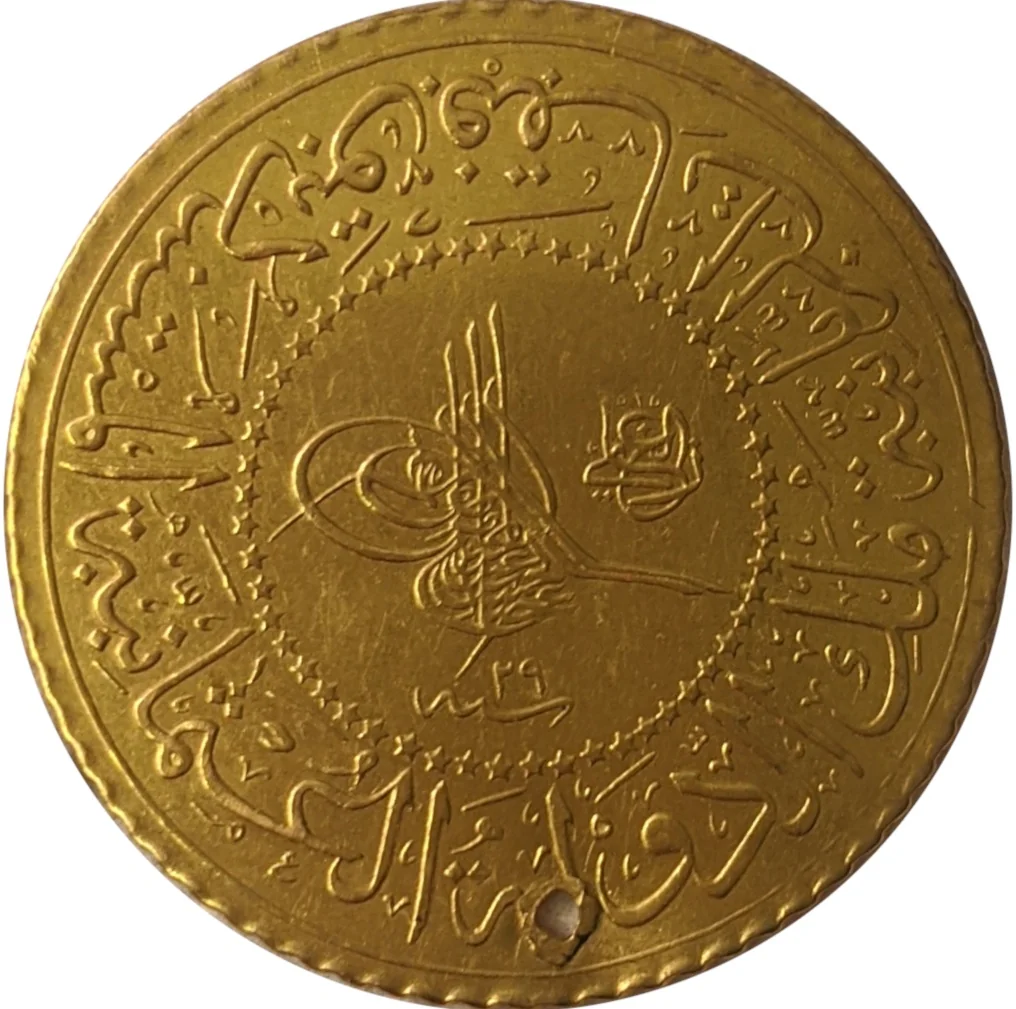
Sultan Abdulhamid II's tughra, with "el-Ghazi" to the right and his regnal year below. Encircled by inward-pointing stars and the phrase "حلك الدولة العثمانية المستندتو فقات الربانية".
Script: Arabic
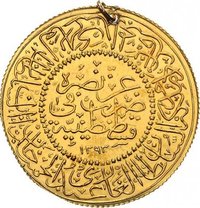
Reverse
Description:
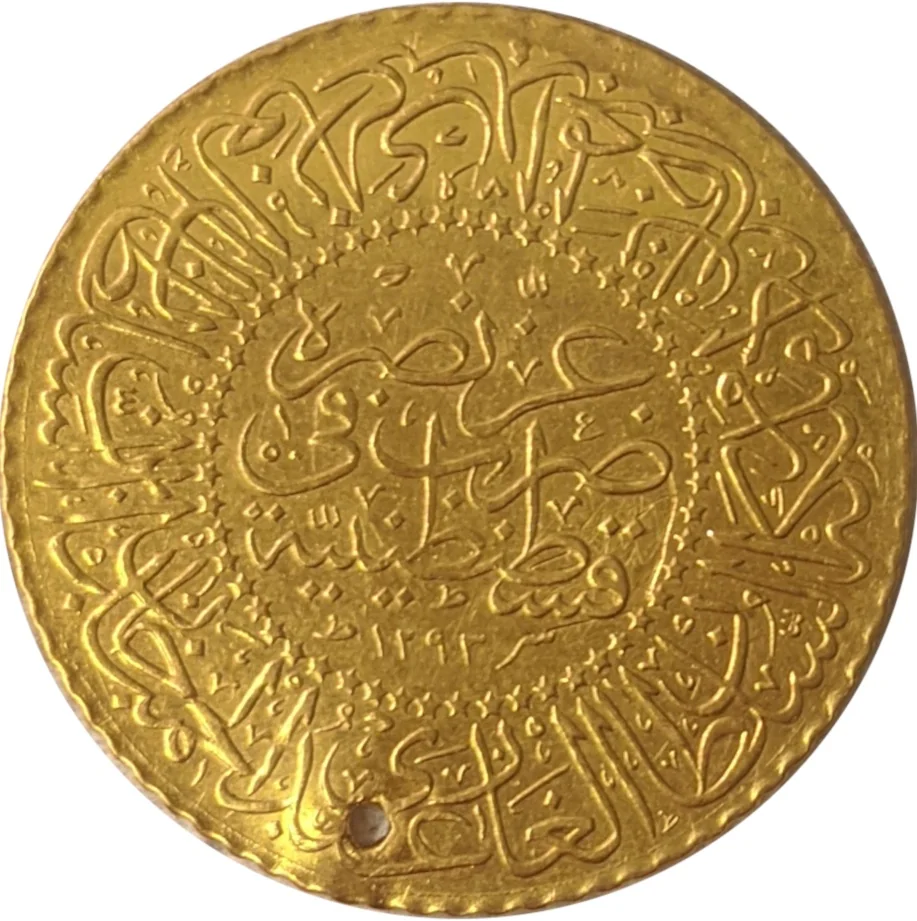
A five-pointed star circle surrounds an inscription: "Year of ascension" above and "Sultan al-Ghazi Abdülhamid Khan, son of Sultan al-Ghazi Abdülmecid Khan, may his reign endure" below.
Inscription:
السلطان الفاری عبدالحميد خان ابن السلطان الفای عبدالمجيد خان داملگی حر
ضرب في
قس طنطينية
عــز نصره
١٢٩٣
ضرب في
قس طنطينية
عــز نصره
١٢٩٣
Translation:
The Sultan al-Ghazi Abdul Hamid Khan, son of the Sultan al-Ghazi Abdul Majid Khan, may his reign endure.
Struck in
Constantinople
May his victory be glorious!
1293
Struck in
Constantinople
May his victory be glorious!
1293
Script: Arabic
Languages: Arabic, Ottoman Turkish
Edge
Mints
| Name | Mark |
|---|---|
| Constantinople | — |
Mintings
| Year | Mint Mark | Mintage | Quality | Collection |
|---|---|---|---|---|
| 1876 | — | — |
Historical background
By 1876, the Ottoman Empire's currency system was in a state of severe crisis, emblematic of the broader financial and political turmoil engulfing the state. The empire had long relied on a bimetallic system of gold lira and silver kuruş, but chronic budget deficits, driven by military expenses, administrative costs, and a sprawling bureaucracy, led to relentless borrowing. This culminated in the declaration of state bankruptcy in October 1875, when the Porte suspended interest payments on its massive foreign debt, shattering international confidence and devastating the value of Ottoman paper money.
The immediate monetary landscape was dominated by the depreciated kaime, or paper money, first issued during the Crimean War. Originally intended as temporary, these notes had become a permanent fixture, circulating at a steep and volatile discount against gold. By 1876, their value had plummeted, causing rampant inflation, hoarding of specie, and a collapse in public trust. The currency chaos was exacerbated by a lack of centralized control, as provincial authorities and even private banks issued their own notes, creating a fragmented and unstable monetary environment.
This financial disintegration occurred amidst a perfect storm of political events: the deposition of Sultan Abdülaziz, the brief reign of Murad V, and the accession of Abdülhamid II, all within a few months. Concurrently, the Great Eastern Crisis erupted with revolts in the Balkans, leading to war with Serbia and Montenegro and drawing in the Great Powers. The currency crisis of 1876 was therefore not merely an economic issue but a critical symptom of the empire's struggle for survival, setting the stage for the establishment of the Ottoman Public Debt Administration in 1881, which would place major fiscal revenues under foreign creditor control.
The immediate monetary landscape was dominated by the depreciated kaime, or paper money, first issued during the Crimean War. Originally intended as temporary, these notes had become a permanent fixture, circulating at a steep and volatile discount against gold. By 1876, their value had plummeted, causing rampant inflation, hoarding of specie, and a collapse in public trust. The currency chaos was exacerbated by a lack of centralized control, as provincial authorities and even private banks issued their own notes, creating a fragmented and unstable monetary environment.
This financial disintegration occurred amidst a perfect storm of political events: the deposition of Sultan Abdülaziz, the brief reign of Murad V, and the accession of Abdülhamid II, all within a few months. Concurrently, the Great Eastern Crisis erupted with revolts in the Balkans, leading to war with Serbia and Montenegro and drawing in the Great Powers. The currency crisis of 1876 was therefore not merely an economic issue but a critical symptom of the empire's struggle for survival, setting the stage for the establishment of the Ottoman Public Debt Administration in 1881, which would place major fiscal revenues under foreign creditor control.
✨ Legendary