

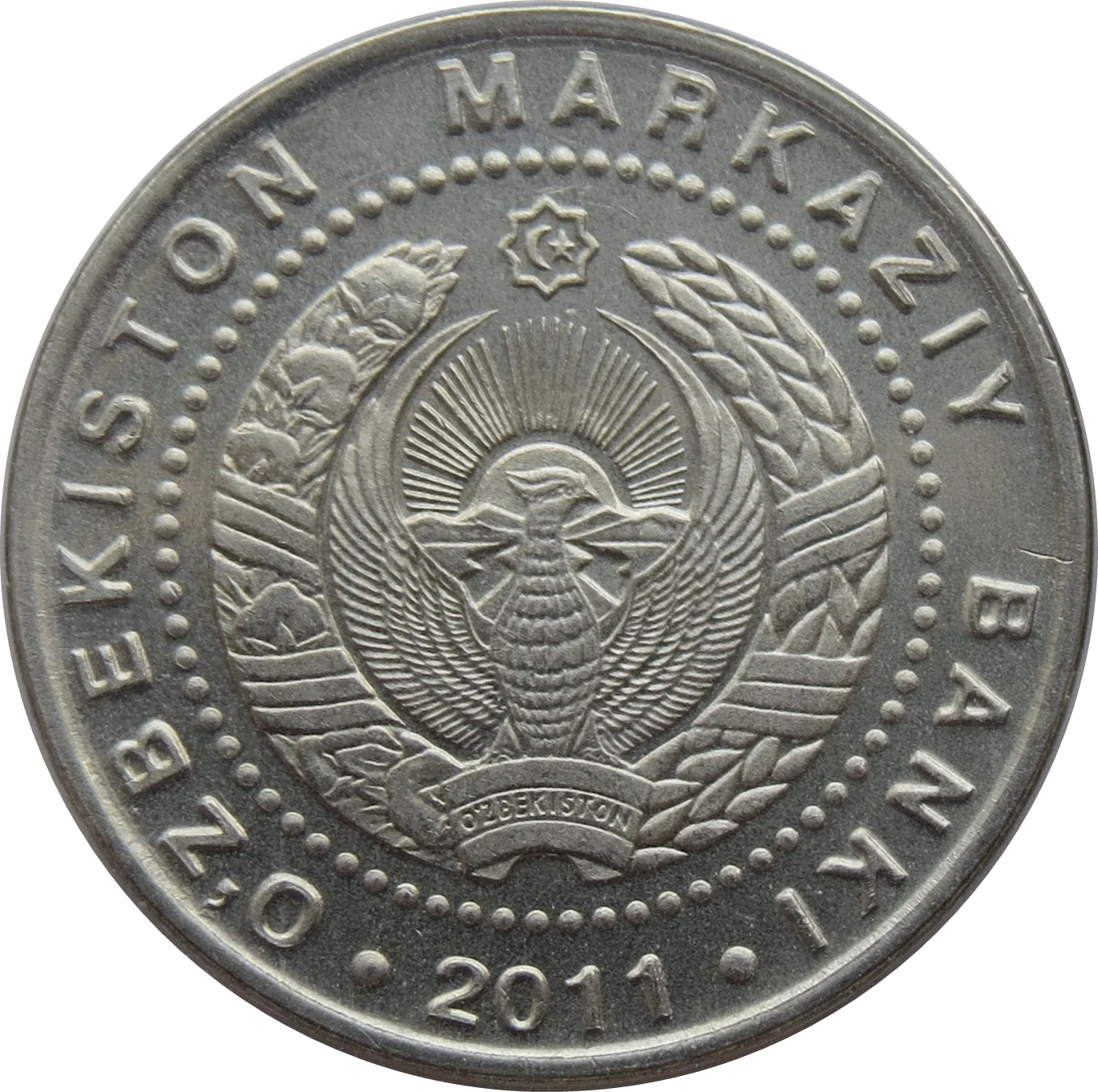
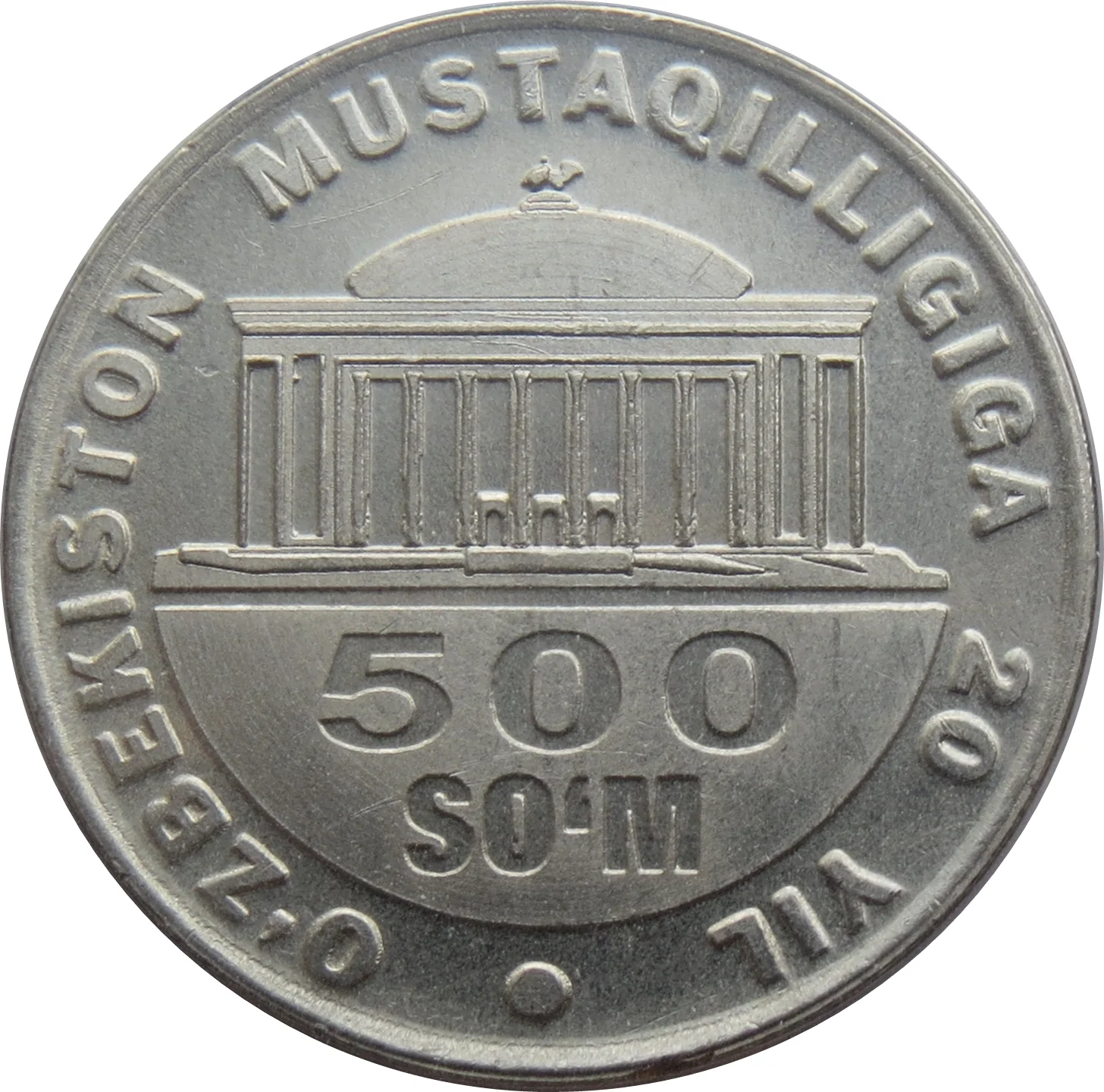
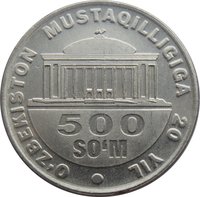
500 Soʻm (Uzbekistan's Independence) – Uzbekistan
Circulating commemorative coins
Commemoration: 20th Anniversary of Uzbekistan's Independence
Uzbekistan
Context
Material
References
KM: #Click to copy to clipboard34
Numista: #26626
Value
Exchange value: 500 UZS
Obverse
Reverse
Edge
Plain
Categories
| Animal> Bird |
| Mythology> Fantastic animal |
| Building |
| Event> Independence |
| Symbols> Coat of Arms |
| Symbol> Sun |
Mintings
| Year | Mint Mark | Mintage | Quality | Collection |
|---|---|---|---|---|
| 2011 | — | — |
Historical background
In 2011, Uzbekistan’s currency situation was characterized by a stark and problematic dual exchange rate system. The official exchange rate, set by the Central Bank of Uzbekistan, was artificially strong, hovering around 1,680 Uzbek som (UZS) to the US dollar. However, this rate was inaccessible to most citizens and businesses for meaningful transactions. The real economy operated on a pervasive black market, where the dollar traded for approximately 2,700 to 2,900 UZS, nearly double the official rate. This significant gap created major distortions, incentivizing corruption and rent-seeking as access to cheap dollars at the official rate became a source of immense privilege.
The root causes of this disparity were fundamental economic policies. The government maintained strict capital controls, limiting access to foreign currency for imports and restricting convertibility. This was driven by a desire to control inflation, conserve hard currency reserves for prioritized state-owned enterprises and strategic imports, and maintain a façade of stability. However, the policy severely hampered the private sector and foreign investment, as businesses faced immense difficulty obtaining currency for legitimate operations and repatriating profits. The gap between the rates acted as a hidden tax on the economy, discouraging formal trade and investment.
Consequently, the currency regime in 2011 was a major constraint on Uzbekistan’s economic development. It fostered a large shadow economy, created uncertainty for both domestic and international businesses, and isolated the country from global financial markets. While providing the government with short-term control, the system entrenched inefficiencies and corruption, setting the stage for the profound economic reforms, including currency liberalization, that would begin later in the decade under new leadership.
The root causes of this disparity were fundamental economic policies. The government maintained strict capital controls, limiting access to foreign currency for imports and restricting convertibility. This was driven by a desire to control inflation, conserve hard currency reserves for prioritized state-owned enterprises and strategic imports, and maintain a façade of stability. However, the policy severely hampered the private sector and foreign investment, as businesses faced immense difficulty obtaining currency for legitimate operations and repatriating profits. The gap between the rates acted as a hidden tax on the economy, discouraging formal trade and investment.
Consequently, the currency regime in 2011 was a major constraint on Uzbekistan’s economic development. It fostered a large shadow economy, created uncertainty for both domestic and international businesses, and isolated the country from global financial markets. While providing the government with short-term control, the system entrenched inefficiencies and corruption, setting the stage for the profound economic reforms, including currency liberalization, that would begin later in the decade under new leadership.
🌱 Common