

10 Mark – German New Guinea
Papua New Guinea
Context
Year: 1895
Country: Papua New Guinea 
Issuer: German New Guinea
Ruler: William II
Currency:
(1894—1895)
Demonetization: 15 April 1911
Total mintage: 2,000
Material
References
KM: #Click to copy to clipboard8
Numista: #26581
Value
Bullion value: $596.55
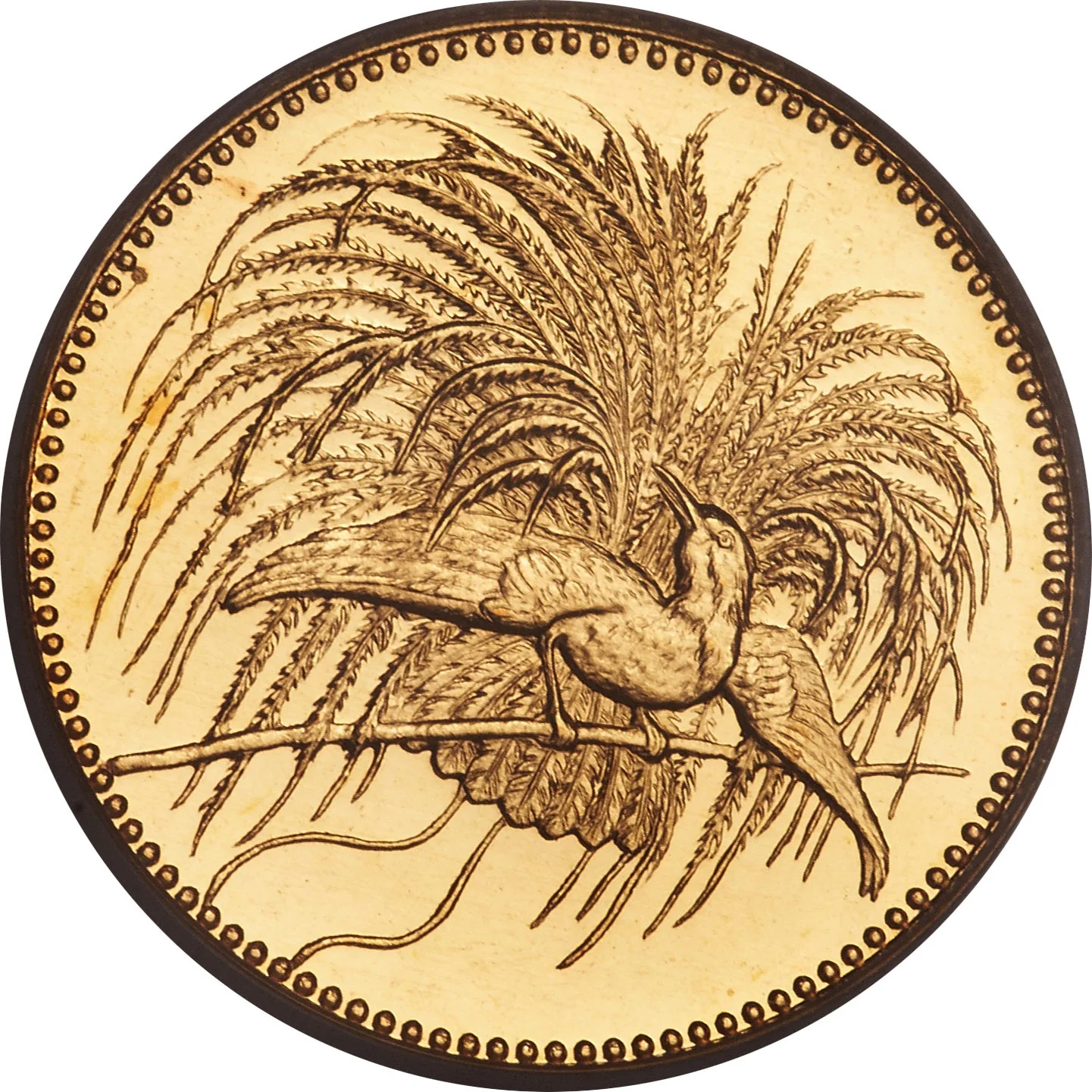
Obverse
Description:
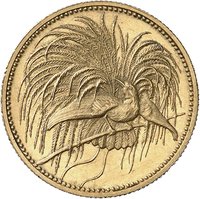
A vibrant, tropical flower resembling a colorful bird in flight.
Engraver: Otto Schultz
Reverse
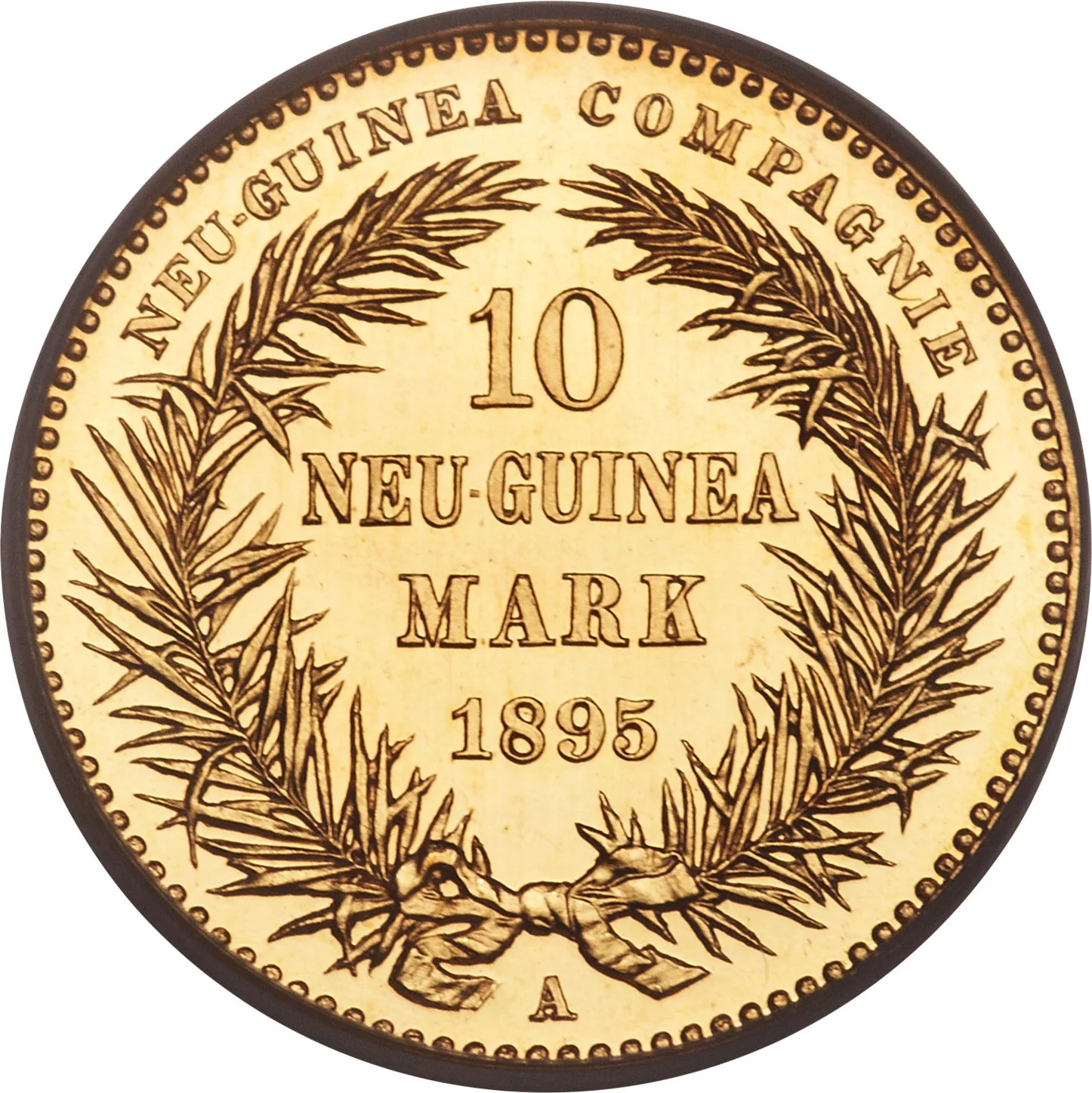
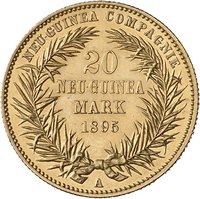
Description:
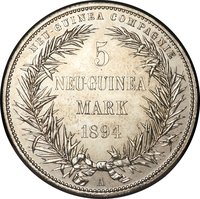
Denomination and date in wreath.
Inscription:
NEU-GUINEA COMPAGNIE
10
NEU-GUINEA
MARK
1895
A
10
NEU-GUINEA
MARK
1895
A
Translation:
New Guinea Company
10
New Guinea
Mark
1895
A
10
New Guinea
Mark
1895
A
Script: Latin
Engraver: Emil Weigand
Edge
Reeded
Mints
| Name | Mark |
|---|---|
| Berlin | A |
Historical background
In 1895, the currency situation in German New Guinea was a complex and transitional one, reflecting the territory's status as a young and economically underdeveloped protectorate. The German New Guinea Company, which administered the colony until 1899, faced significant challenges in establishing a unified monetary system. The traditional shell money, particularly diwarra (strings of tambu or pearl shells), remained the dominant and culturally entrenched medium of exchange for indigenous trade and bride prices, especially in the Bismarck Archipelago. This created a dual economy where traditional and European systems operated in parallel.
Alongside traditional money, a bewildering variety of foreign coinage circulated, a common feature in many Pacific ports of the era. British sovereigns and shillings, German marks, and even American gold dollars were used in trade, particularly by European planters, traders, and administrators dealing with imports and exports. The lack of an official, exclusive currency led to inefficiencies and confusion in commercial transactions with the outside world. To address this, the German New Guinea Company had begun issuing its own private coinage in 1894—the New Guinea Mark—which was pegged to the German Mark, but these coins saw limited circulation and were primarily used for company business and paying indigenous workers on plantations.
Thus, the monetary landscape in 1895 was fragmented. No single currency had achieved supremacy, operating instead in layered spheres: shell money for the indigenous social and local economy, a jumble of foreign specie for external trade, and the fledgling, company-issued New Guinea Mark attempting to bridge the gap. This instability would prompt the German imperial government, upon assuming direct control in 1899, to formally introduce the German Mark as the sole official currency, although the practical dominance of shell money in village life would persist for decades.
Alongside traditional money, a bewildering variety of foreign coinage circulated, a common feature in many Pacific ports of the era. British sovereigns and shillings, German marks, and even American gold dollars were used in trade, particularly by European planters, traders, and administrators dealing with imports and exports. The lack of an official, exclusive currency led to inefficiencies and confusion in commercial transactions with the outside world. To address this, the German New Guinea Company had begun issuing its own private coinage in 1894—the New Guinea Mark—which was pegged to the German Mark, but these coins saw limited circulation and were primarily used for company business and paying indigenous workers on plantations.
Thus, the monetary landscape in 1895 was fragmented. No single currency had achieved supremacy, operating instead in layered spheres: shell money for the indigenous social and local economy, a jumble of foreign specie for external trade, and the fledgling, company-issued New Guinea Mark attempting to bridge the gap. This instability would prompt the German imperial government, upon assuming direct control in 1899, to formally introduce the German Mark as the sole official currency, although the practical dominance of shell money in village life would persist for decades.
💎 Extremely Rare