Logo Title
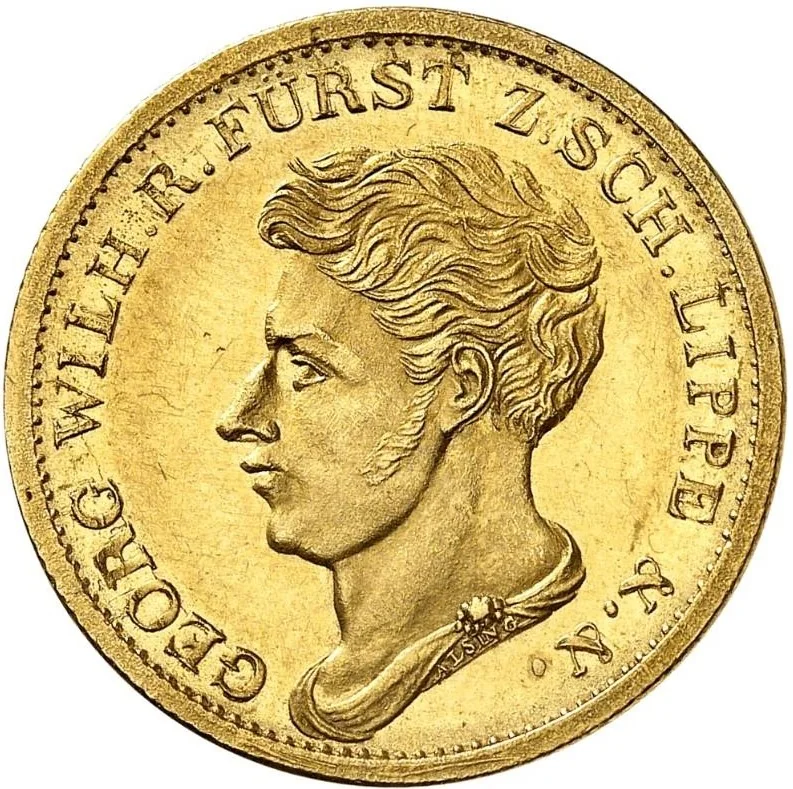
obverse
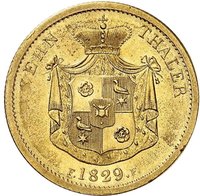
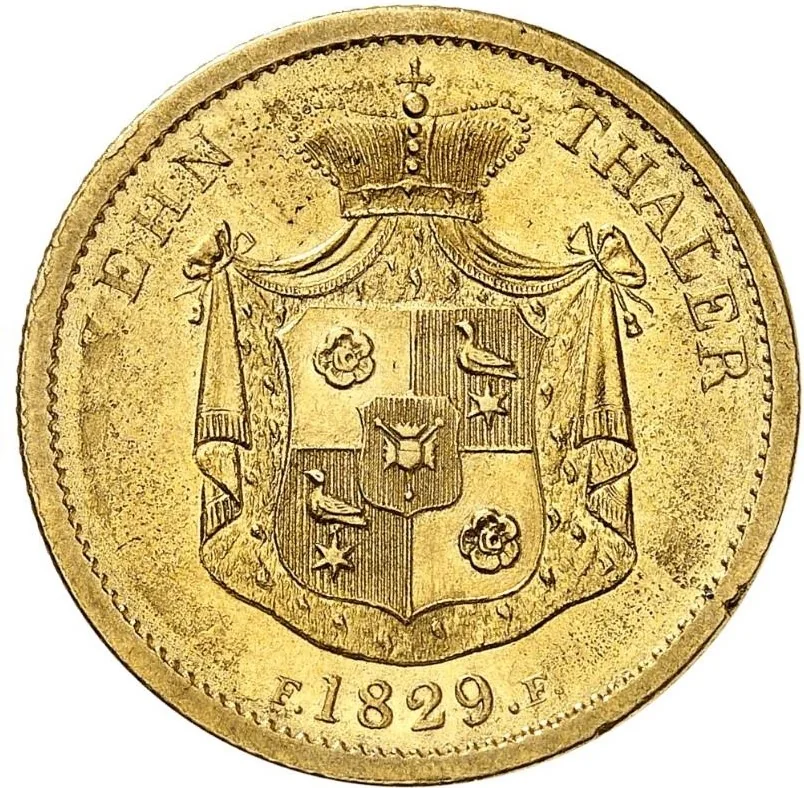
reverse
Fritz Rudolf Künker GmbH & Co. KG, Osnabrück and Lübke & Wiedemann KG, Leonberg

10 Thalers – Principality of Schaumburg-Lippe

Germany
Context
Year: 1829
Country: Germany Country flag
Currency:
(1807—1865)
Demonetized: Yes
Total mintage: 179
Material
Weight: 13.29 g
Gold weight: 11.96 g
Shape: Round
Composition: 90% Gold
Magnetic: No
Technique: Milled
Alignment: Medal alignment
Obverse
OBVERSE ↑
flip
Reverse
REVERSE ↑
References
KM: #Click to copy to clipboard37
Numista: #265077
Value
Bullion value: $1999.22

Obverse

Description:
Leftward bust
Inscription:
GEORG WILH R FÜRST Z SCH LIPPE & &
Translation:
George Wilhelm, Prince of Lippe, etc. etc.
Script: Latin
Language: German

Reverse

Description:
Arms in crowned mantle, dated below.
Inscription:
ZEHN THALER

F 1829 F
Script: Latin

Edge


Mintings

YearMint MarkMintageQualityCollection
1829179

Historical background

In 1829, the currency situation in the Principality of Schaumburg-Lippe was complex and fragmented, typical of the German Confederation prior to unification. The principality did not issue its own independent coinage but operated within a multi-layered monetary system. The primary standard was the Reichsthaler, a legacy unit from the Holy Roman Empire, divided into 24 Gutegroschen, each of 12 Pfennige. However, daily transactions were more commonly conducted using regional currencies, particularly the Hannovarian Thaler and its subdivisions, due to Schaumburg-Lippe's geographical and economic ties to the Kingdom of Hanover.

This monetary landscape was further complicated by the concurrent circulation of coins from neighboring states like Prussia, Brunswick, and the free cities, leading to a practical bimetallic system of silver and small change. The value and acceptance of these various coins relied on published exchange tables (Kurantparitäten), creating a cumbersome environment for trade. For larger commercial dealings and state accounts, the Reichsthaler served as the accounting unit, but the physical coins in circulation were a heterogeneous mix, requiring merchants and citizens to be adept at currency conversion.

Ultimately, the situation in 1829 was one of transitional instability. The principality was caught between decaying imperial monetary traditions and the emerging push for standardization among German states. This fragmentation would persist until the 1838 Dresden Coinage Convention, which Schaumburg-Lippe later joined, aligning its currency with the Prussian Thaler standard and taking a significant step toward the simplified monetary unions that would precede German unification.
Legendary