

25 Euro – Malta
Malta
Material
Diameter: 22 mm
Weight: 7.77 g
Gold weight: 7.77 g
Shape: Round
Composition: 99.99% Gold
Standard: Silver quarter ounce
Magnetic: No
Technique: Milled
Alignment: Medal alignment

flip
References
KM: #Click to copy to clipboard196
Numista: #264715
Value
Exchange value: 25 EUR = $29.54
Bullion value: $1296.12
Obverse
Description:
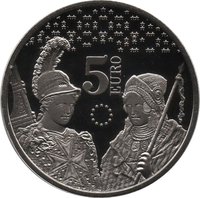
The coin's obverse features "Melita," inspired by Edward Caruana Dingli's 1922 stamp.
Inscription:
TWENTY FIVE EURO ✠ MELITA · 2018
Script: Latin
Reverse
Description:
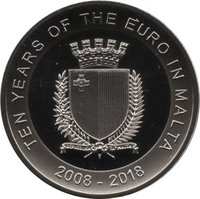
The reverse features Malta's coat of arms.
Inscription:
€ 25 ~ 1/4 OZ 999.9 FINE GOLD
REPUBBLIKA TA' MALTA
✠ MALTA ✠
REPUBBLIKA TA' MALTA
✠ MALTA ✠
Edge
Ribbed Edge
Categories
| Symbol> Allegory |
| Symbols> Coat of Arms |
| Building> Lighthouse |
| Symbol> Cross |
| Transportation> Watercraft |
Mints
| Name | Mark |
|---|---|
| Produits Artistiques Métaux Précieux (PAMP) | — |
Mintings
| Year | Mint Mark | Mintage | Quality | Collection |
|---|---|---|---|---|
| 2018 | — | — | Prooflike | |
| 2018 | — | — | Proof | |
| 2019 | — | — | Prooflike | |
| 2019 | — | — | Proof | |
| 2020 | — | — | Prooflike | |
| 2020 | — | — | Proof | |
| 2021 | — | — | Prooflike | |
| 2021 | — | — | Proof | |
| 2022 | — | — | Prooflike | |
| 2022 | — | — | Proof | |
| 2023 | — | — | Prooflike | |
| 2023 | — | — | Proof | |
| 2024 | — | — | Prooflike | |
| 2024 | — | — | Proof | |
| 2025 | — | — | Proof | |
| 2025 | — | — | Prooflike |
Historical background
In 2018, Malta was a member of the Eurozone, having adopted the euro as its official currency on 1 January 2008. Consequently, the country's monetary policy was set by the European Central Bank (ECB), and its currency situation was intrinsically linked to the broader Eurozone's economic performance and policy decisions. The year was marked by a period of robust economic growth for Malta, which consistently boasted one of the highest GDP growth rates and lowest unemployment levels in the EU. This strong domestic performance, however, existed within the context of a relatively stable but politically sensitive euro, which faced ongoing challenges such as the aftermath of the Greek debt crisis and the looming uncertainty of Brexit.
Domestically, the Maltese economy's strength translated into low inflation and a stable financial environment for consumers and businesses. The central focus regarding currency was not on exchange rate volatility—as Malta no longer had a national currency to devalue or revalue—but on maintaining financial stability and competitiveness within the single currency area. Key discussions centred on the potential risks of economic overheating, the sustainability of the public debt, and the need to align national fiscal policies with Eurozone rules. Furthermore, Malta's growing reputation as a fintech and blockchain hub prompted discussions about digital finance, though the euro remained the unchallenged legal tender.
Internationally, the euro's exchange rate against major currencies like the US dollar and British pound was a relevant factor for Malta's vital tourism and export sectors. A stronger euro could make the island a more expensive destination, while fluctuations impacted trade. The protracted Brexit negotiations were of particular concern, given the close economic and historical ties between Malta and the UK. Overall, Malta's 2018 currency situation was one of embedded stability provided by the euro, which supported its economic boom, while policymakers monitored external Eurozone risks and internal imbalances to safeguard the nation's financial health within the monetary union.
Domestically, the Maltese economy's strength translated into low inflation and a stable financial environment for consumers and businesses. The central focus regarding currency was not on exchange rate volatility—as Malta no longer had a national currency to devalue or revalue—but on maintaining financial stability and competitiveness within the single currency area. Key discussions centred on the potential risks of economic overheating, the sustainability of the public debt, and the need to align national fiscal policies with Eurozone rules. Furthermore, Malta's growing reputation as a fintech and blockchain hub prompted discussions about digital finance, though the euro remained the unchallenged legal tender.
Internationally, the euro's exchange rate against major currencies like the US dollar and British pound was a relevant factor for Malta's vital tourism and export sectors. A stronger euro could make the island a more expensive destination, while fluctuations impacted trade. The protracted Brexit negotiations were of particular concern, given the close economic and historical ties between Malta and the UK. Overall, Malta's 2018 currency situation was one of embedded stability provided by the euro, which supported its economic boom, while policymakers monitored external Eurozone risks and internal imbalances to safeguard the nation's financial health within the monetary union.

✨ Legendary